

















SEP 27: On the occasion of CSIR’s Foundation Day (26th September 2025), a major milestone in indigenous technology was achieved with the inauguration of the SODAR (Sound Detection and Ranging) system facility at the India Meteorological Department (IMD), New Delhi. The system has been designed and developed by the CSIR–Advanced Materials and Processes Research Institute (AMPRI), Bhopal.
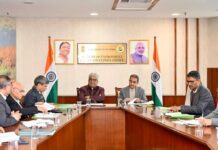
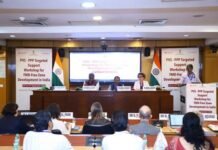
The inauguration was led by Dr. M. Ravichandran, Secretary, Ministry of Earth Sciences (MoES), in the presence of Dr. Mrutyunjay Mohapatra, Director General of Meteorology, IMD, and Prof. Dr. Thallada Bhaskar, Director, CSIR-AMPRI. Senior scientists from AMPRI and CSIR-NIScPR also attended the ceremony.
Dr. N. Kalaiselvi, Director General of CSIR and Secretary, DSIR, joined virtually and highlighted the initiative as a strong step towards indigenisation of weather-related technologies for the benefit of society.
During the event, a Memorandum of Understanding (MoU) was signed between CSIR-AMPRI and IMD, marking a significant collaborative framework in the field of climate and environmental studies. The agreement was formalized by Prof. Bhaskar and Dr. Mohapatra.
The partnership focuses on addressing scientific and societal challenges such as weather forecasting, climate variability, and disaster risk reduction. Through this MoU, SODAR system data from different locations will be shared for forecasting, validation, and advanced research initiatives.
According to Dr. Ravichandran, the collaboration holds immense promise for improving India’s forecasting capabilities. Dr. Mohapatra noted that the AMPRI-developed SODAR unit will significantly contribute by providing additional atmospheric data for more accurate weather predictions.
This joint effort is expected to drive innovation in meteorology, climate science, and environmental studies, strengthening India’s research capacity while directly benefiting communities through better preparedness against climate challenges and natural disasters.

, a major milestone in indigenous technology was achieved with the inauguration)