
















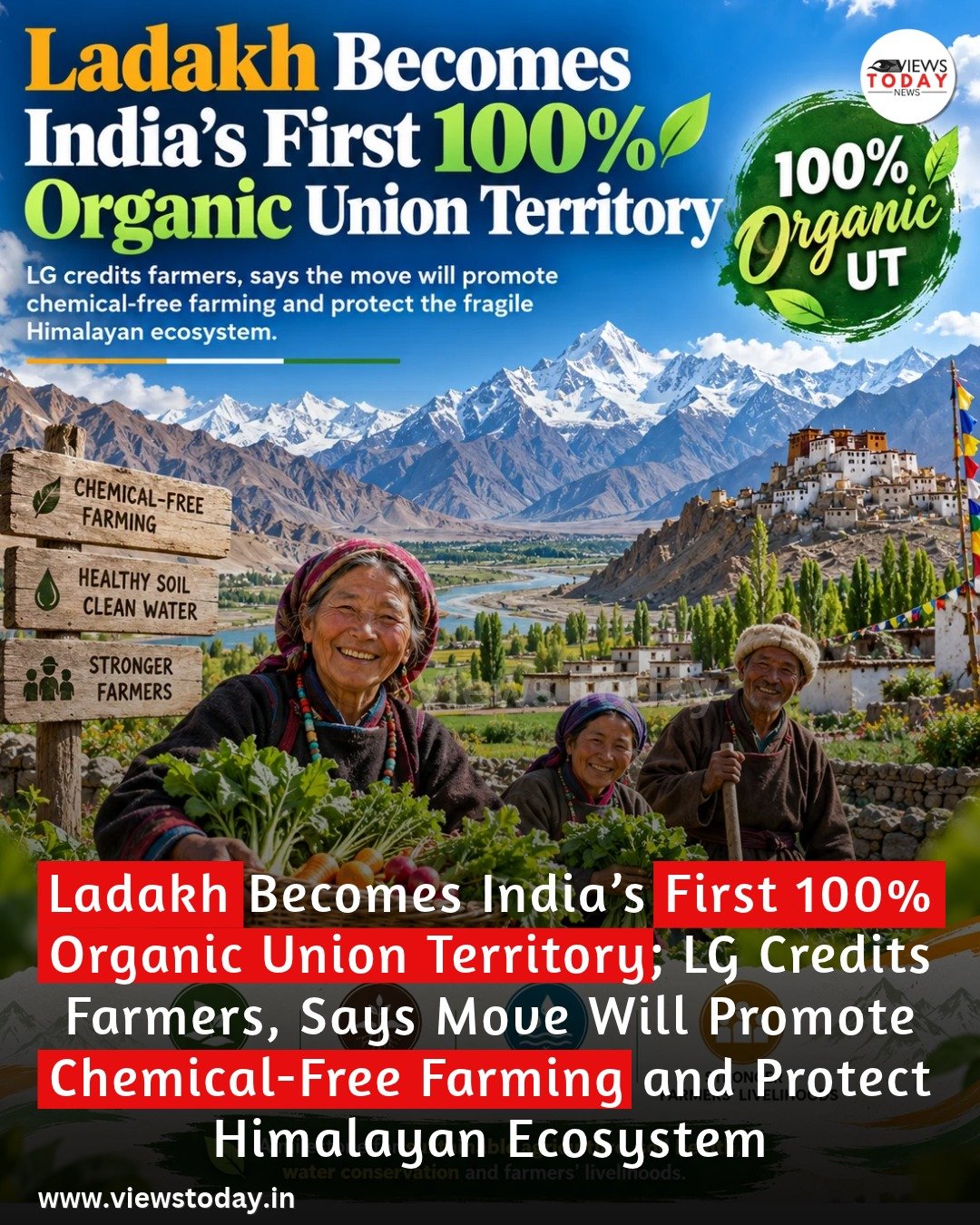
Leh, October 25: Ladakh has achieved a significant milestone in sustainable agriculture by becoming India’s first Union Territory to attain 100% organic status, according to a statement shared by the Lieutenant Governor of Ladakh, highlighting the dedication of local farmers and the administration’s efforts to promote chemical-free farming.
The achievement reflects Ladakh’s growing commitment to environmentally responsible agricultural practices and the vision of Prime Minister Narendra Modi to encourage organic farming, conserve natural resources and strengthen rural livelihoods.
The Lieutenant Governor congratulated the farmers and all stakeholders whose sustained efforts contributed to the milestone. The development is expected to enhance the recognition of Ladakh’s agricultural produce while supporting a farming model suited to the region’s distinctive high-altitude environment.
Focus on Chemical-Free Farming and Environmental Protection
Ladakh’s move towards organic agriculture places emphasis on restricting chemical fertilisers and promoting organic certification practices. These efforts are intended to protect the fragile Himalayan ecosystem, improve soil health, and safeguard water resources.
Given Ladakh’s unique geographical conditions and sensitive natural environment, sustainable farming practices are particularly important. Reducing dependence on chemical inputs can support long-term soil management and encourage agricultural methods that are better aligned with local ecological conditions.
The transition also highlights the importance of coordinated efforts involving farmers, government departments and other stakeholders to maintain organic standards and promote responsible cultivation.
Boost Expected for Farmers’ Income and Local Produce
The organic status is expected to create opportunities for Ladakh’s agricultural sector by improving the market positioning of locally produced goods. Organic certification and stronger market connections can help farmers reach consumers who increasingly seek traceable and sustainably produced food.
Improved access to markets could also help farmers secure better returns, provided that certification standards, supply chains, storage facilities and marketing support are maintained effectively.
For local farming communities, the milestone offers an opportunity to build greater recognition for Ladakh’s produce and develop livelihoods linked to environmentally sustainable agriculture.
Ladakh’s Potential as a Model for High-Altitude Agriculture
Ladakh’s achievement may offer valuable lessons for other regions seeking to promote organic cultivation under challenging climatic and geographical conditions. Its experience highlights the importance of farmer participation, suitable agricultural policies and continued institutional support
Maintaining the achievement will require sustained monitoring, adherence to organic standards, awareness among farmers and effective access to buyers. Investment in processing, packaging, transportation and market development could further strengthen the commercial potential of local produce.
The development represents an important step in linking agricultural growth with environmental conservation. By placing sustainability at the centre of farming, Ladakh aims to protect its natural heritage while creating better economic opportunities for its agricultural communities.
The milestone is also aligned with broader efforts to promote sustainable livelihoods, responsible resource management and environmentally conscious agricultural development across India.