
















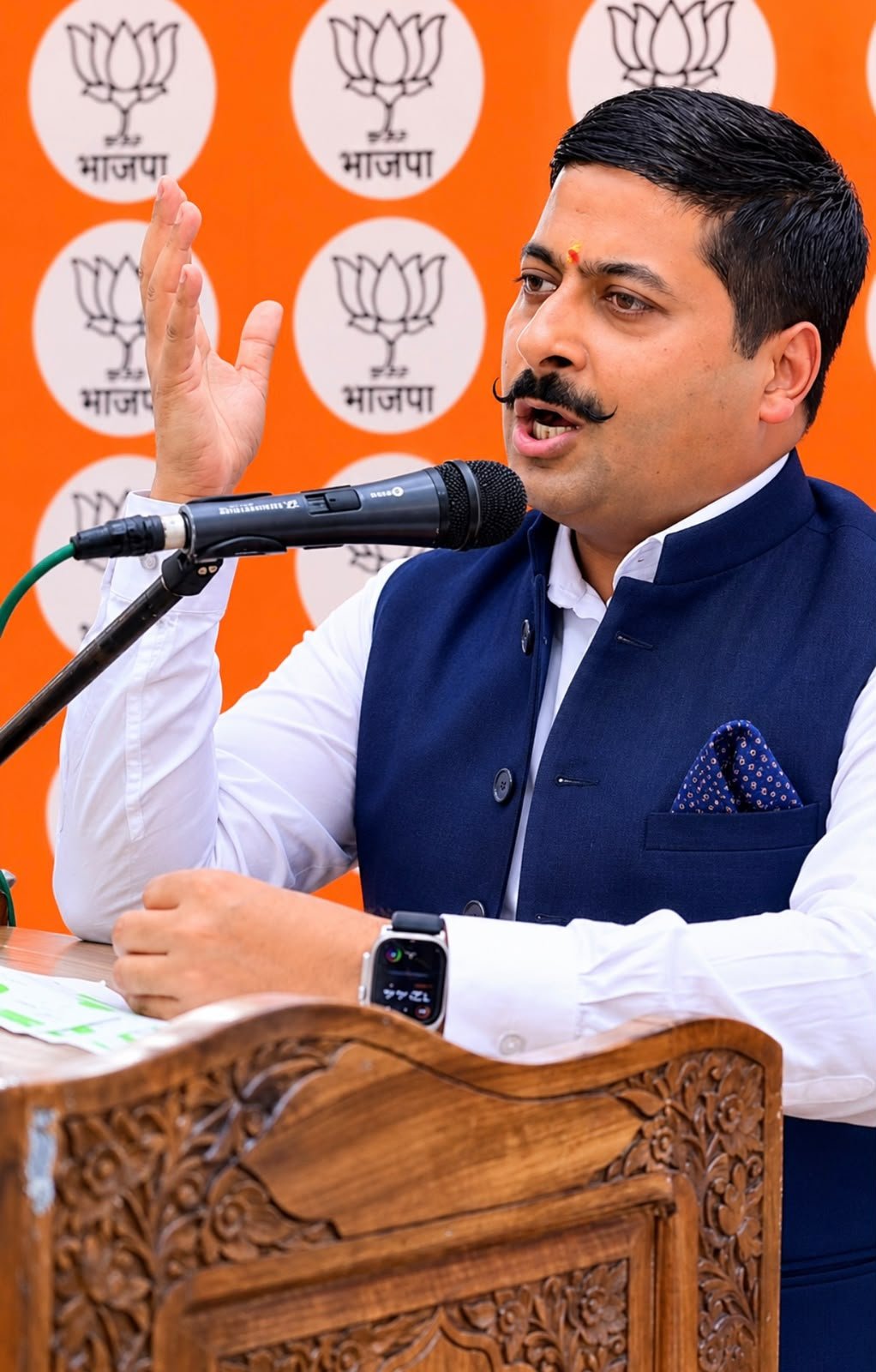
Jammu, October 23, 2026: BJP spokesperson and Convenor of International Affairs Gaurav Gupta on Friday defended Prime Minister Narendra Modi’s foreign policy, arguing that international interest in India’s refining capabilities reflects the country’s growing importance in global energy markets.
Referring to US Secretary of State Marco Rubio’s reported visit to Reliance Industries’ Jamnagar refinery in Gujarat, Gupta said India’s ability to process different grades of crude oil has strengthened its position in the international energy sector.
He argued that the reported American interest in India’s capacity to refine Venezuelan crude demonstrates the commercial value of the country’s industrial infrastructure and its relevance to global energy supply chains.
Gupta also challenged opposition leaders who have criticised the Modi government’s handling of relations with the United States and Russia, maintaining that India’s foreign policy should be assessed based on national interests rather than external expectations.
India’s Refining Capacity Draws International Attention
Highlighting the scale of Reliance Industries’ Jamnagar refining complex, Gupta referred to its combined capacity of approximately 1.4 million barrels per day.
He said India’s refining infrastructure and technical expertise have made the country an important player in international energy markets.
According to Gupta, global engagement with Indian industry reflects the value of investments in infrastructure, technology and industrial capabilities developed over the years.
He maintained that India’s economic and industrial strengths provide the country with opportunities to engage with major powers on commercial terms while protecting its strategic priorities.
Energy Security at the Centre of Foreign Policy
Addressing criticism over India’s continued engagement with Russia on crude oil purchases, Gupta said energy security, economic stability and strategic autonomy must remain central to the country’s decisions.
He argued that India’s energy policy cannot be judged solely by whether it aligns with Washington’s preferences, adding that decisions on oil imports have implications for domestic consumers, industries and the wider economy.
Gupta also referred to earlier US pressure on India over Russian crude purchases, including tariff-related measures, and argued that changing international circumstances underline the importance of a flexible diplomatic approach.
He said India must retain the freedom to assess its energy requirements and determine its partnerships according to national priorities.
Balancing Relations with Global Powers
Gupta said India’s engagement with the United States, Russia, Venezuela and other countries should be guided by practical cooperation and mutual benefit.
He maintained that strong diplomatic relations do not require India to compromise its independent decision-making. Instead, he argued, the country should continue to pursue partnerships that support energy security, economic growth and technological development.
According to the BJP spokesperson, the ability to maintain working relationships with countries that have differing geopolitical interests is an important feature of strategic autonomy.
He added that India’s international standing should be assessed through its industrial capabilities, economic resilience and ability to negotiate partnerships in a complex global environment.
BJP Leader Challenges Opposition’s Criticism
Concluding his remarks, Gupta questioned the opposition’s portrayal of the Modi government’s foreign policy as weak.
He said the reported interest in India’s refining expertise, alongside the country’s continued emphasis on independent energy decisions, demonstrated the importance of protecting national interests while engaging with global powers.
Gupta urged opposition leaders to assess India’s diplomacy through its economic and strategic outcomes rather than political allegations.
He reiterated that the government’s approach, as he described it, was to expand international cooperation while preserving India’s freedom to make decisions on energy, trade, technology and defence.
His remarks place the spotlight on the continuing political debate over India’s energy imports, relations with major powers and the role of strategic autonomy in shaping the country’s foreign policy.