














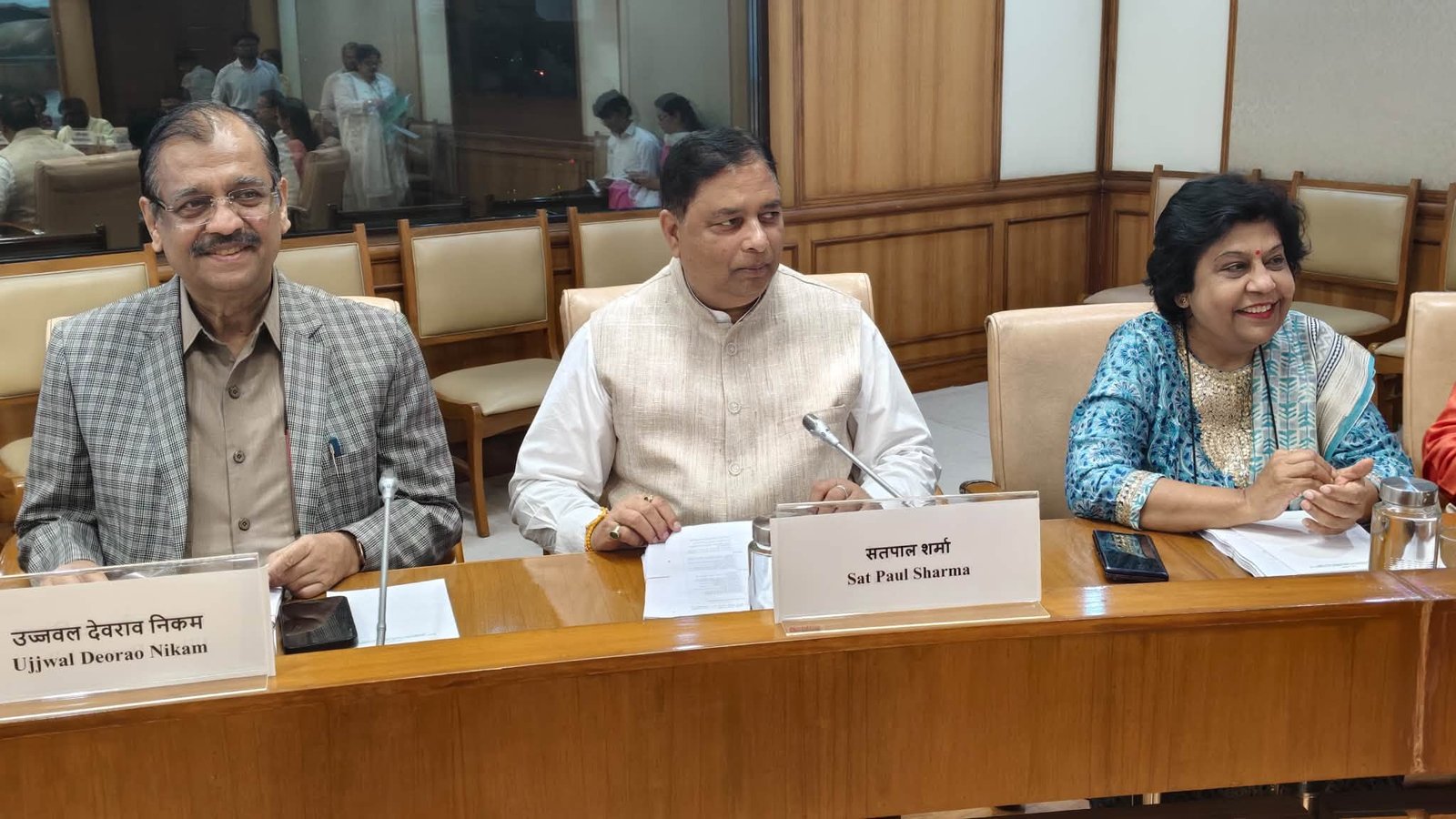
Jammu and Kashmir BJP President and Rajya Sabha MP Sat Sharma CA attended a meeting of the Joint Parliamentary Committee (JPC) examining the Foreign Contribution (Regulation) Amendment Bill, 2026, at Parliament House in New Delhi on Thursday.
The meeting formed part of the committee’s ongoing examination of the proposed amendments to the Foreign Contribution (Regulation) Act, 2010, which governs the acceptance and utilisation of foreign contributions by individuals, associations and organisations in India.
During the proceedings, the committee heard the views and suggestions of stakeholders from different fields, including the legal, educational, social, religious and policy research sectors. The consultations are intended to provide the panel with a wider range of perspectives before it finalises its recommendations.
The proposed legislation aims to strengthen transparency and accountability in the receipt and utilisation of foreign contributions. Its provisions are being examined by the parliamentary panel as part of the legislative scrutiny process.
The 31-member Joint Parliamentary Committee is chaired by BJP MP Sanjay Jaiswal and includes representatives from both the Lok Sabha and Rajya Sabha. It has been assigned the responsibility of examining the Bill and submitting its report to Parliament within the prescribed timeframe.
Sat Sharma’s participation reflects his role in the parliamentary process through which the proposed legislation is being examined. The committee’s consultations provide an opportunity for members to consider stakeholder submissions and deliberate on the provisions before the Bill moves forward in Parliament.
The examination of the FCRA Amendment Bill is an important part of the legislative process, allowing Parliament to assess the proposed changes through discussions, expert inputs and wider consultations before further consideration.
 Amendment Bill)