
















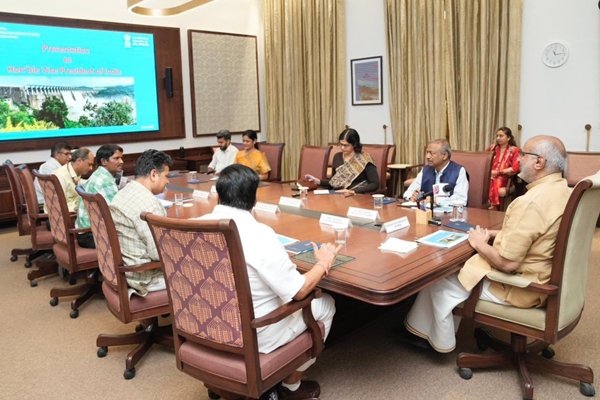
9 June: Vice President C. P. Radhakrishnan reviewed various initiatives undertaken by the Ministry of Jal Shakti to promote water conservation, sustainable resource management, and improved water security across the country.
During the review meeting, discussions focused on ongoing programmes aimed at enhancing water availability, encouraging efficient usage, and strengthening conservation practices in both urban and rural areas. Officials presented updates on key projects designed to address water-related challenges and ensure long-term sustainability.
The Vice President emphasized the importance of water conservation as a national priority, noting that growing populations, urbanization, and climate-related pressures have increased the need for responsible management of water resources. He stressed that protecting and conserving water is essential for ensuring future economic growth, agricultural productivity, and environmental sustainability.
Officials from the Ministry of Jal Shakti highlighted the progress made under various schemes focused on rainwater harvesting, groundwater recharge, watershed development, and community participation in water management. These initiatives are intended to improve water availability while promoting sustainable consumption practices.
The review also examined efforts to raise public awareness about water conservation. Authorities noted that community involvement and behavioural changes play a crucial role in ensuring the success of conservation programmes. Public participation has been encouraged through awareness campaigns, local projects, and educational initiatives.
Experts participating in the discussions emphasized that water security is closely linked to sustainable development. Efficient management of water resources can help support agriculture, industry, public health, and environmental protection while reducing the risks associated with water scarcity.
The Vice President observed that technological innovation can significantly contribute to better water management. Modern monitoring systems, efficient irrigation methods, and data-driven planning are increasingly being utilized to improve conservation efforts and optimize resource use.
Officials also reviewed progress in projects aimed at restoring water bodies, improving irrigation efficiency, and strengthening infrastructure for water supply and distribution. Such initiatives are considered vital for addressing regional disparities in water availability and ensuring equitable access to resources.
Water conservation has emerged as a major policy focus in India due to increasing pressure on natural resources and the need to build resilience against climate variability. Government programmes have sought to combine infrastructure development with community engagement to create sustainable solutions.
The Vice President highlighted the importance of collaborative efforts involving government agencies, local communities, educational institutions, and civil society organizations. He noted that effective water conservation requires collective responsibility and long-term commitment from all stakeholders.
Environmental experts have consistently advocated for integrated water management approaches that balance developmental needs with ecological sustainability. They believe that conservation measures implemented today will play a critical role in safeguarding water resources for future generations.
The review concluded with a reaffirmation of the government’s commitment to strengthening water conservation initiatives and promoting responsible resource management. Officials expressed confidence that continued efforts under the Ministry of Jal Shakti will contribute to enhanced water security and sustainable development across the country.
As India faces growing demands on its water resources, initiatives focused on conservation, efficiency, and public participation are expected to remain central to national development and environmental strategies.