















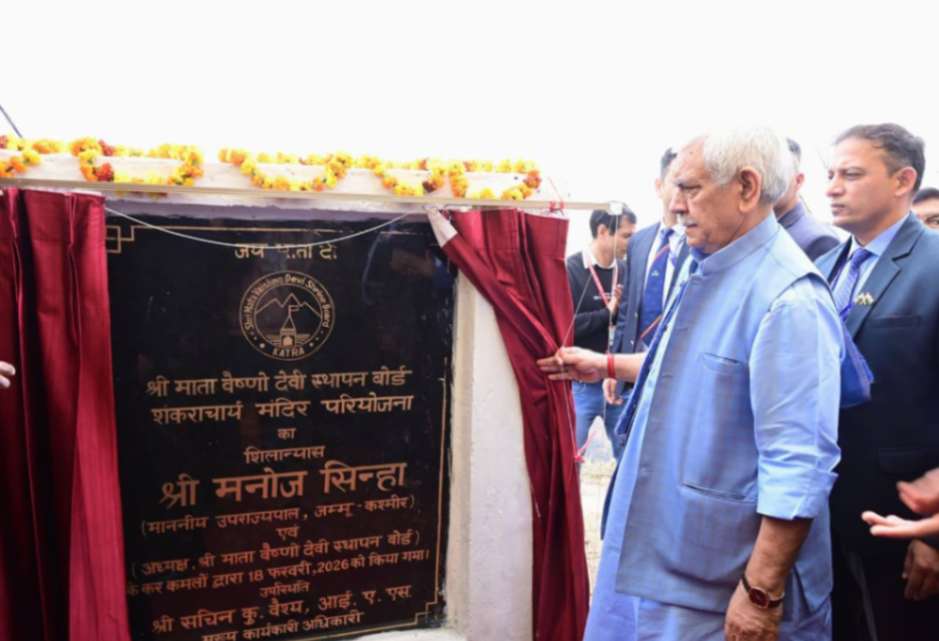
Feb 20:Lieutenant Governor Manoj Sinha today laid the foundation stone of the long-awaited Sri Shankaracharya Temple in Katra, marking a significant step toward strengthening spiritual infrastructure in the region.
The temple project, estimated at ₹31.51 crore, will be fully funded by the Shri Mata Vaishno Devi Shrine Board. The initiative is expected to enhance pilgrimage facilities and further elevate Katra’s status as a major spiritual destination.
A Major Boost to Spiritual Tourism
Katra, the base camp for pilgrims visiting the revered Vaishno Devi Temple, witnesses millions of devotees every year. The construction of the Sri Shankaracharya Temple is seen as a landmark addition to the region’s religious landscape.
Officials said the new temple will not only provide devotees with an additional sacred site for worship but also complement the spiritual ecosystem of the area. The project is expected to attract more pilgrims and visitors, thereby strengthening the local tourism economy.
The Lieutenant Governor emphasised that the temple will contribute to transforming Katra into a vibrant global spiritual hub. He noted that the development aligns with ongoing efforts to upgrade pilgrimage infrastructure and enhance the overall experience of devotees.
Support for Local Landowners
A significant aspect of the project is the inclusion of 50 commercial shops within the temple complex. These shops will be allotted to landowners who donated 41 kanals of land for the construction of the temple.
The move reflects a community-centric approach, ensuring that those who contributed land for the sacred cause also benefit economically from the project. The commercial spaces are expected to create sustainable livelihood opportunities while integrating local stakeholders into the development process.
Empowering Women Through SHGs
In a parallel initiative aimed at economic empowerment, the Shrine Board has announced a substantial increase in procurement from Self-Help Groups (SHGs). The annual procurement will be enhanced from ₹5 crore to ₹12 crore.
This decision is expected to benefit approximately 1,500 women associated with SHGs in the region. By expanding procurement of locally produced goods and services, the Shrine Board aims to strengthen grassroots entrepreneurship and support women-led enterprises.
The increased financial commitment will not only improve income opportunities for women but also stimulate the regional economy. It underscores the broader objective of linking religious tourism with inclusive economic growth.
Employment and Regional Growth
The temple project is projected to generate both direct and indirect employment during its construction and operational phases. From skilled labour and artisans to shopkeepers and service providers, a wide section of the community is expected to benefit.
The Lieutenant Governor highlighted that infrastructure projects of this nature play a dual role — strengthening spiritual heritage while creating economic opportunities. By enhancing facilities and expanding tourism potential, the region stands to gain from increased footfall and related business activity.
Strengthening Cultural and Spiritual Identity
The Sri Shankaracharya Temple is anticipated to become an important centre for spiritual learning and religious gatherings. Its establishment reflects continued investment in preserving and promoting cultural and spiritual traditions.
With the Shrine Board fully funding the ₹31.51 crore project, the initiative demonstrates a commitment to long-term infrastructure development in pilgrimage towns. Katra’s transformation into a more comprehensive spiritual destination aligns with broader efforts to position Jammu & Kashmir as a premier religious tourism hub.
Way Forward
As construction begins, stakeholders expect the temple to emerge as a landmark of faith and development. The integration of commercial facilities, support for SHGs and enhanced infrastructure signals a holistic approach to religious tourism.
The foundation stone laying ceremony marks the beginning of a project that is expected to redefine Katra’s spiritual and economic landscape. Once completed, the Sri Shankaracharya Temple will stand as both a sacred symbol and a catalyst for sustainable regional growth.