


















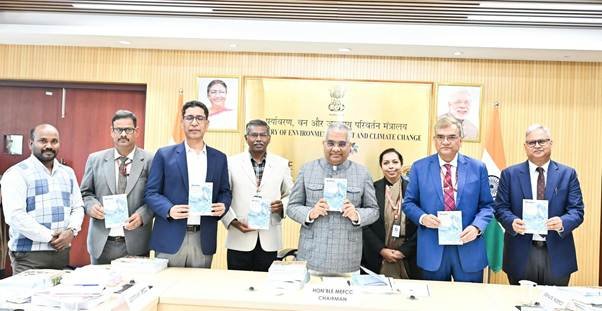
Union Minister for Environment, Forest and Climate Change Bhupender Yadav chaired the 92nd meeting of the Standing Committee of the National Board for Wildlife (SC-NBWL) in New Delhi on Monday, with a special focus on strengthening marine and terrestrial wildlife conservation across the country.
The meeting reviewed several conservation initiatives, recognised the contributions of frontline forest personnel and local communities, and examined development proposals requiring wildlife clearance.
Wildlife Week 2026 Initiatives Highlighted
During the meeting, the committee considered the report on Wildlife Week 2026, celebrated under the theme ‘Connecting Habitats, Thriving Wildlife’.
The Environment Minister highlighted several major conservation initiatives undertaken during the celebrations, including the reintroduction of tigers in Buxa, the release of Great Indian Bustards in Rajasthan and the expansion of Project Cheetah to a third site.
He also congratulated individuals and organisations recognised for their contributions to wildlife protection and conservation.
The minister felicitated frontline personnel for their work in anti-poaching operations, wildlife monitoring and specialised conservation activities. Community conservation awards were also presented to organisations working towards protecting marine biodiversity and natural habitats.
Nameri Tiger Reserve in Assam was additionally accredited under the Conservation Assured | Tiger Standards (CA|TS).
Special Focus on Marine Wildlife Conservation
The 92nd meeting was centred on marine conservation, with scientists from the Wildlife Institute of India (WII) presenting research and assessments covering several important areas.
Key subjects included the management effectiveness of coastal and marine protected areas, nationwide monitoring of marine turtles, recovery of dugongs and their habitats, and measures to reduce the impact of linear infrastructure on wildlife.
The presentations highlighted the importance of scientific research, habitat protection and coordination among government agencies, infrastructure planners, environmental experts and conservation organisations.
Major Conservation Reports and Publications Released
Several important publications were released during the meeting to strengthen research and policy planning for marine biodiversity conservation.
These included the Management Effectiveness Evaluation of Coastal and Marine Protected Areas, covering 108 protected areas through the 2024–26 assessment.
The Pan-India Assessment and Monitoring of Marine Turtles covered three nesting seasons from 2022 to 2025, approximately 1,300 kilometres of coastline and 360 beach stretches.
Another publication, Milestones of Recovery of Dugongs and their Habitats in India (2016–2026), documented a decade of conservation efforts. It included India’s first drone-based dugong population estimate in Tamil Nadu, which recorded an estimated population of 270 ± 16.
The committee also released a report on the status of Arabian Sea Humpback Whales in India, identifying seven potential sighting hotspots and highlighting threats such as entanglement in fishing gear.
Three additional marine turtle publications focusing on marking protocols, tracking and species information were released as outcomes of the Marine Turtle Action Plan 2021–2026.
New Field Manual for Small Cat Conservation
The minister also released a Field Manual on Small Cats, covering nine species of small cats found in India.
The manual provides practical guidance on species identification, field surveys and wildlife monitoring. It has been developed under the Government of India–GEF Small Cats Conservation Project in collaboration with the governments of Arunachal Pradesh, Uttar Pradesh and Rajasthan, with support from the United Nations Development Programme (UNDP) and the Global Tiger Forum.
133 Development Proposals Examined
The Standing Committee also considered 133 proposals from different parts of the country involving roads, defence infrastructure, drinking water supply and other essential development activities requiring wildlife clearance under the Wild Life (Protection) Act, 1972.
The proposals were assessed by considering their ecological impact, public welfare requirements, national development priorities and proposed mitigation measures.
The meeting highlighted the government’s approach towards balancing infrastructure development with the protection of wildlife and their natural habitats.
The discussions and initiatives reviewed during the meeting underline India’s continued efforts to strengthen scientific conservation, protect biodiversity and promote sustainable development.