
















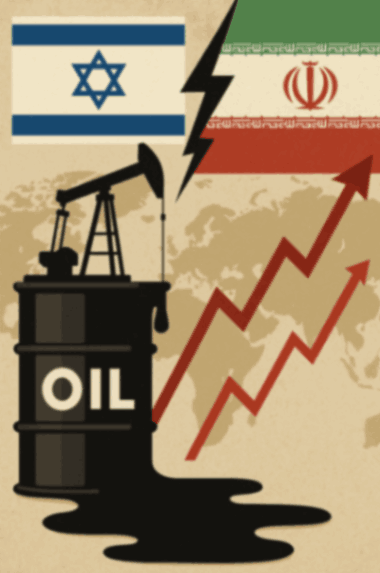
June 21: While Iran contributes just around 4% to the global oil supply, its geopolitical weight far exceeds its production figures—primarily due to its strategic location near the Strait of Hormuz. This narrow maritime chokepoint is one of the world’s most critical oil transit routes, handling nearly 20% of all global crude oil shipments. Any escalation in tensions between Iran and Israel risks disrupting this artery of energy flow, causing volatility in international oil prices and sparking concerns in financial and strategic circles worldwide.
The Strait of Hormuz connects the Persian Gulf with the Arabian Sea and beyond. Countries like Saudi Arabia, Iraq, the UAE, and Kuwait rely heavily on this route to export their oil. Even minor military confrontations or threats of closure in the region have historically led to spikes in oil prices, underscoring the chokepoint’s significance.
Current friction between Iran and Israel, which includes proxy conflicts, cyber threats, and retaliatory posturing, adds another layer of risk to an already fragile global energy landscape—especially amid broader conflicts like the Russia-Ukraine war and instability in parts of North and West Africa.
Markets remain jittery, not merely due to fears of supply cuts from Iran but because any naval conflict or sanction-driven blockade could hamper oil tanker movement, potentially slashing daily global supply by several million barrels. This would not only affect oil-importing nations but also derail recovery efforts in energy-dependent economies.
In conclusion, Iran may not be a top-tier oil producer in quantity, but its position at the helm of a vital energy corridor gives it disproportionate leverage in influencing global oil stability. As diplomatic tensions simmer, the world watches the Strait of Hormuz closely—fully aware that even a spark could ignite widespread economic consequences.