











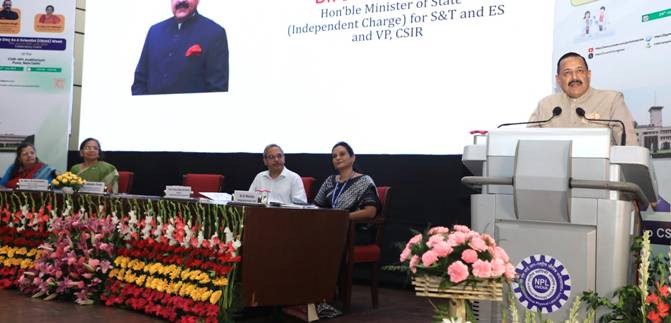
JULY 25: At the CSIR Jigyasa ODAS (One Day as a Scientist) week celebrations held at CSIR-NPL, Union Minister Dr. Jitendra Singh hailed the rising aspirations among India’s youth and highlighted the need to meet them with the 3 A’s—Awareness, Aptitude, and Avenue.
Dr. Singh emphasized that scientific passion in students must be supported through structured guidance and exposure. In a notable proposal, he recommended a “One Day as a Teacher” model, where CSIR scientists visit schools, especially in rural and small-town India, to inspire entire communities and validate student efforts.
To further deepen engagement, he advised that each participating student be accompanied by a parent during ODAS activities. This move aims to bridge the communication gap between students’ scientific interests and familial understanding, helping parents appreciate the value of innovation and inquiry.
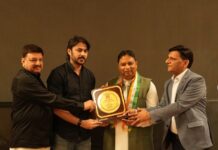
Highlighting the success of the EPIC Hackathon 2024, the Minister awarded top honors to Japteg Bamrah of Jammu’s IIIM for his “SolarMech” project—an energy-efficient Stirling engine powered by solar heat. His design is tailored for power-scarce rural areas.
Other winning entries included:
-
Drishyamitram by Uddhav Gupta and Udbhav Bandhani (Ghaziabad), a smart walkway for the visually impaired;
-
Waste Heat Energy Generator by Shreya Vinod (Roorkee), capturing AC exhaust heat using thermoelectric materials;
-
I-Stetho by Soyal Parija (Bhubaneswar), a wireless stethoscope integrated with IoT for safe medical diagnostics.
Dr. Singh also urged CSIR labs to link with private sector mentors for promising student projects to ensure long-term support and scalability. He encouraged data tracking of student journeys to align future programmes with evolving interests.
Underlining the alignment of NEP 2020 with programmes like Jigyasa, Dr. Singh said education today encourages flexibility and exploration, replacing forced choices with self-driven learning.
The event reflected India’s growing scientific curiosity, with over 14,000 students participating in ODAS across 37 CSIR labs, reinforcing the vision of a discovery-driven generation ahead of 2047.

 week celebrations held at CSIR-NPL, Union Minister Dr. Jitendra Singh hailed the rising aspirations among India’s youth)