















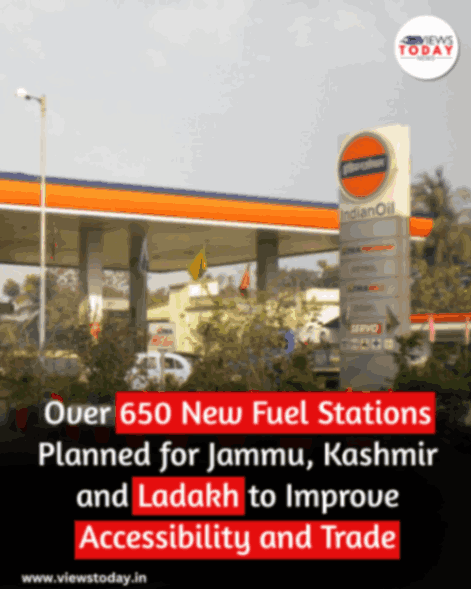
2 Aug: The announcement of 677 new petrol pumps across Jammu & Kashmir and Ladakh is more than just a routine infrastructure update — it is a powerful indicator of the region’s accelerating transformation. As Indian Oil, Bharat Petroleum, and Hindustan Petroleum roll out their expansion plans, the move signals not only economic intent but a commitment to bridging accessibility gaps in some of India’s most remote and strategic areas.
For decades, both J&K and Ladakh have grappled with limited fuel infrastructure, especially in the far-flung villages and high-altitude zones. With 643 new pumps in Jammu & Kashmir and 34 in Ladakh, the government is sending a strong message: essential services must reach every corner of the country — not just the urban and commercially viable zones.
Beyond mere convenience, these pumps could dramatically impact rural livelihoods, agricultural transport, tourism, and emergency services. In regions where weather conditions can isolate entire districts for weeks, fuel availability isn’t just about mobility — it’s about survival and economic continuity.
What’s particularly commendable is the focus on inclusive entrepreneurship. By encouraging SC/ST applicants and allowing initial applications without land, oil PSUs are opening the door to aspirants who were traditionally left out of such opportunities. This democratization of access to business opportunities could create a ripple effect of local employment and self-reliance.
Moreover, this development aligns with the broader national vision — that of a connected, developed Bharat. Infrastructure creates the foundation on which aspirations are built. With improved connectivity and logistics, sectors like horticulture, tourism, and MSMEs in J&K and Ladakh can scale new heights.
However, the success of this initiative will depend on transparency in dealer selection, environmental safeguards during construction, and consistent quality of service. Sustainable fuel alternatives must also be part of the long-term roadmap, especially in ecologically sensitive regions like Ladakh.
In conclusion, these 677 petrol pumps are not just fuel stations — they’re stations of progress. They reflect a government looking beyond the map’s obvious routes and investing in the dignity, connectivity, and opportunity of its most distant citizens.