




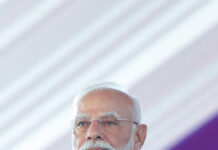

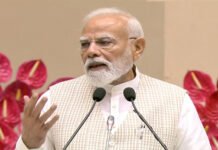







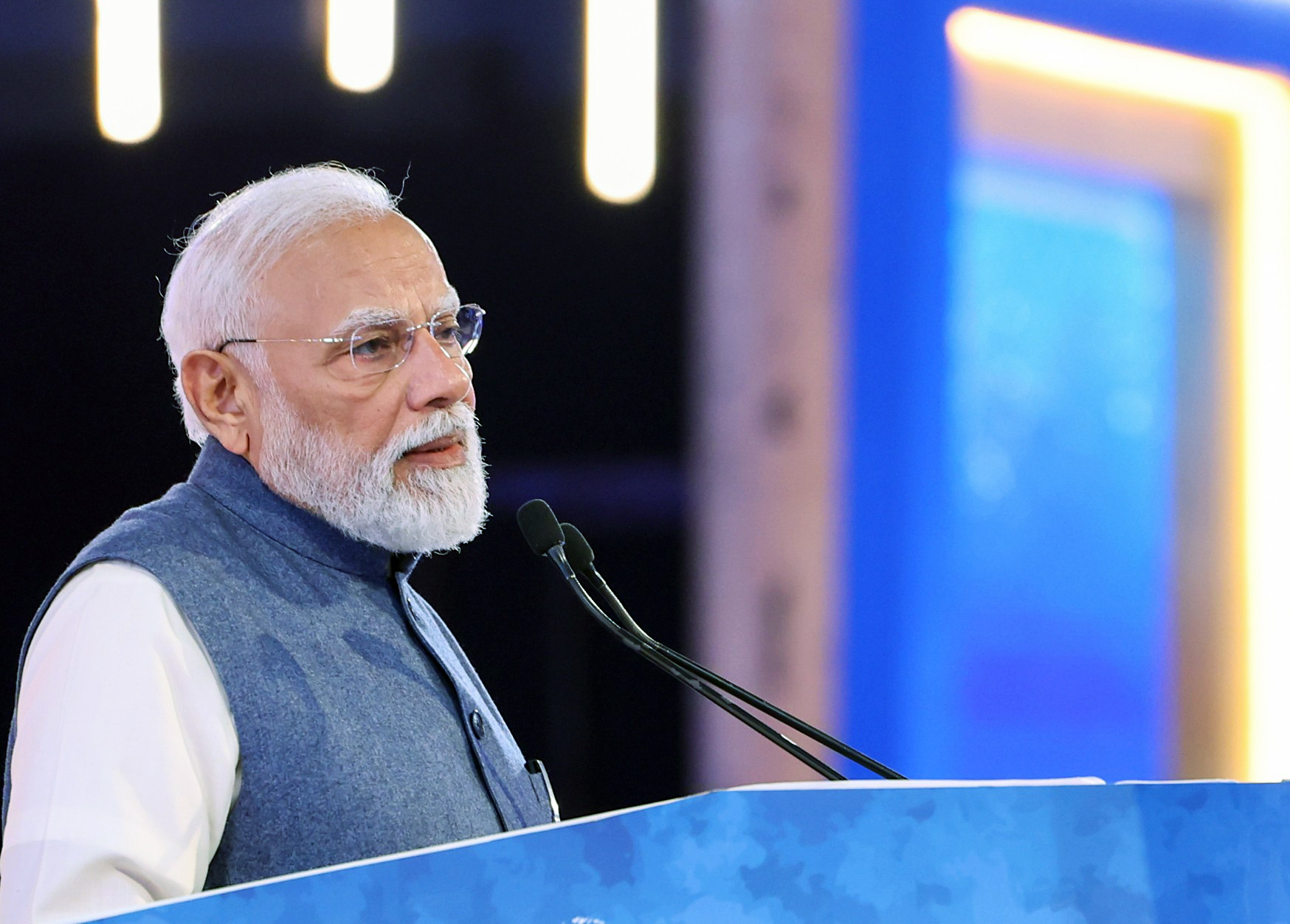
8 June: Prime Minister Narendra Modi has reaffirmed that Garib Kalyan (welfare of the poor) remains the central pillar of India’s development journey, stating that the country’s transformation over the past decade has been driven by policies aimed at improving the lives of underprivileged and marginalized communities.
Addressing a public gathering, the Prime Minister emphasized that inclusive development and social welfare have guided the government’s approach across sectors ranging from housing and healthcare to sanitation, financial inclusion, and employment generation.
According to Modi, the objective of development is not merely economic growth but ensuring that the benefits of progress reach every section of society, particularly those who have historically remained outside the mainstream of development. He said welfare initiatives have empowered millions of citizens by improving access to basic amenities and essential services.
The Prime Minister highlighted that programmes focused on housing, clean drinking water, healthcare coverage, electricity connectivity, and financial inclusion have contributed significantly to improving living standards across the country. He noted that these efforts have helped bridge socio-economic gaps while strengthening the foundation of a more inclusive India.
Modi stated that empowering the poor creates a multiplier effect on national development. When citizens gain access to opportunities, education, healthcare, and social security, they become active participants in the country’s growth story rather than mere beneficiaries of welfare schemes.
The Prime Minister also underscored the importance of technology-driven governance in ensuring transparency and efficient delivery of government benefits. Digital platforms and direct benefit transfer mechanisms, he said, have reduced leakages and enabled welfare assistance to reach intended beneficiaries more effectively.
Observers note that the concept of Garib Kalyan has featured prominently in several government initiatives over the years. Programmes targeting rural development, women’s empowerment, entrepreneurship, food security, and social welfare have been positioned as key instruments for improving quality of life and reducing economic disparities.
Economic analysts point out that inclusive growth remains a critical challenge for developing economies. Ensuring that economic progress translates into tangible improvements in living conditions is often considered essential for long-term social and economic stability.
The Prime Minister further stressed that India’s development model seeks to combine economic expansion with social justice. He said the government remains committed to creating opportunities for all citizens while prioritizing the needs of vulnerable and economically weaker sections.
Modi also highlighted the role of citizens, local communities, and institutions in contributing to nation-building efforts. He noted that collective participation is necessary to achieve sustainable and equitable development outcomes.
As India continues to pursue ambitious economic and infrastructure goals, the Prime Minister reiterated that the welfare of the poor will remain a guiding principle in policymaking. He expressed confidence that continued efforts toward inclusive development would help build a stronger, more prosperous, and self-reliant nation.
The remarks underscore the government’s emphasis on balancing economic growth with social welfare, ensuring that development reaches the grassroots level and benefits citizens across all regions of the country.