















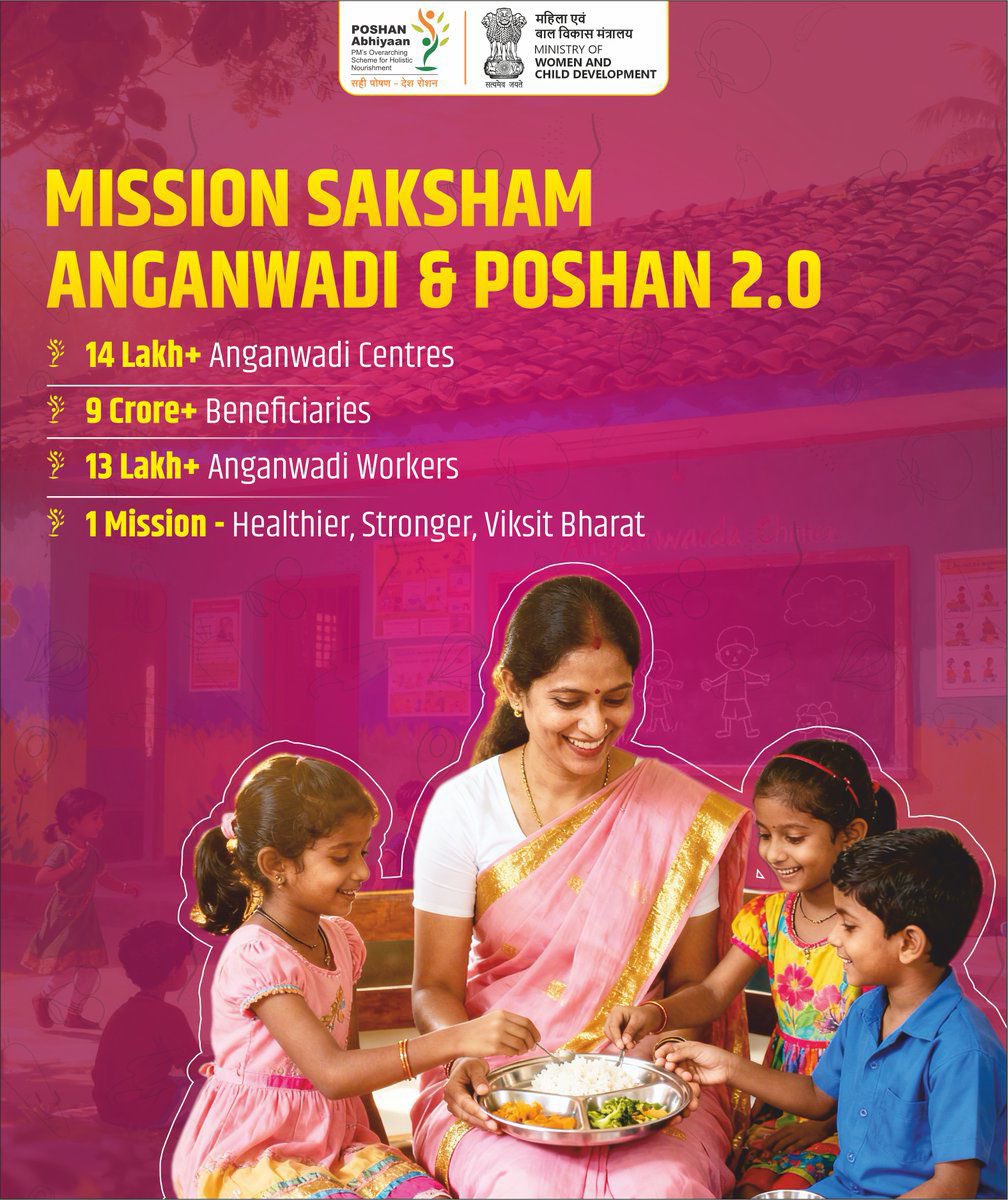
New Delhi, August 7: The government has reiterated its commitment to improving nutrition among children, pregnant women, lactating mothers and adolescent girls through Mission Saksham Anganwadi and Poshan 2.0.
Under the programme, supplementary nutrition is being provided to all eligible beneficiaries through Take-Home Ration (THR), morning snacks and hot cooked meals. The initiative covers children aged six months to six years, pregnant women, lactating mothers and adolescent girls in the 14–18 age group.
The information was shared by Minister of State for Women and Child Development Savitri Thakur in the Lok Sabha in response to a question.
Focus on Quality and Dietary Diversity
The supplementary nutrition programme follows the nutritional standards prescribed under Schedule II of the National Food Security Act, 2013, which were revised in January 2023.
Unlike the earlier calorie-focused approach, the revised standards place greater emphasis on balanced nutrition and dietary diversity. The nutritional requirements include quality protein, healthy fats and essential micronutrients such as calcium, zinc, iron, dietary folate, vitamin A, vitamin B6 and vitamin B12.
Children identified as Severely Acute Malnourished (SAM) between six months and five years are also provided additional nutrition through Take-Home Ration.
New Guidelines for Supplementary Nutrition
The Ministry has recently issued comprehensive guidelines aimed at improving the quality, diversity and acceptability of supplementary nutrition provided under the programme.
The guidelines call for adherence to prescribed nutritional norms and quality standards. They also stress the importance of nutrition and health education for caregivers.
Special attention is being given to promoting the appropriate use of Take-Home Ration and educating caregivers about age-appropriate complementary feeding practices.
The guidelines also encourage awareness campaigns aimed at reducing excessive consumption of edible oils, salt and sugar, in line with the Dietary Guidelines for Indians, 2024, issued by the Indian Council of Medical Research-National Institute of Nutrition (ICMR-NIN).
Local Foods to Shape Menus
States and Union Territories have been given flexibility to prepare menus based on local food habits, cultural preferences and the availability of indigenous ingredients.
The government has encouraged the inclusion of locally available cereals, millets, pulses, vegetables, nuts and other nutrient-rich foods. This approach is expected to improve dietary diversity while making supplementary meals more acceptable to beneficiaries.
States and UTs have also been advised to seek inputs from nutrition experts and institutions, including ICMR-NIN, agricultural universities and home science colleges, while developing region-specific recipes.
Community Participation at the Centre
Community mobilisation and awareness are another important component of Mission Poshan 2.0. The government aims to encourage long-term behavioural changes by educating communities about nutrition and healthy eating practices.
Awareness activities are conducted during Poshan Maah and Poshan Pakhwada, observed during September and March-April respectively.
Since 2018, more than 150 crore Jan Andolan activities have reportedly been carried out through 16 campaigns, reaching beneficiaries as well as communities at large.
Over 10 Crore Community-Based Events Reported
Community-Based Events (CBEs) have also become an important part of efforts to improve nutrition-related practices.
All Anganwadi Workers are required to organise two Community-Based Events every month. According to data reported on the Poshan Tracker, around 10.5 crore CBEs were conducted between April 2022 and June 2026.
The continued focus on nutrition quality, locally suitable food, caregiver awareness and community participation highlights the government’s broader approach towards tackling malnutrition and promoting healthier dietary practices.