













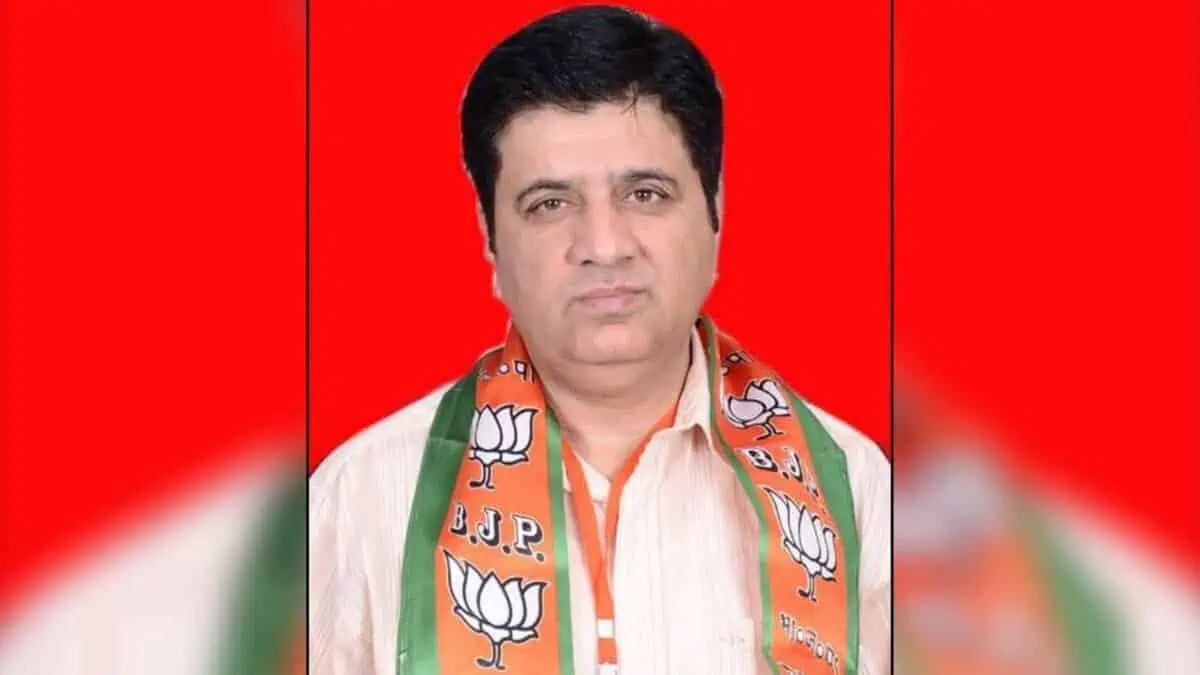
The successful conclusion of the 18th BRICS Summit in New Delhi has once again brought India’s expanding role in global diplomacy into focus. For Advocate Sunil Sethi, the summit represents an important moment in India’s foreign-policy journey under Prime Minister Narendra Modi.
Sethi views the BRICS platform not merely as an international gathering of heads of government, but as an opportunity for India to articulate its strategic concerns, strengthen partnerships and contribute to discussions shaping the emerging global order.
In his assessment, the significance of diplomacy cannot always be measured by dramatic announcements or by whether a particular country is publicly named. Often, its impact can be found in the language that diverse nations are willing to accept together and the issues that become part of a common international position.
According to Sethi, the New Delhi BRICS Declaration provides an important example of this approach.
Terrorism and the Importance of International Consensus
One key area Sethi highlights is India’s position on terrorism.
The BRICS declaration strongly condemned the April 22, 2025 terrorist attack in Pahalgam and reiterated opposition to terrorism in all its forms. It also referred to concerns surrounding the cross-border movement of terrorists, terrorist financing and the availability of safe havens.
For Sethi, the importance of this language goes beyond whether an individual country was mentioned by name.
His argument is that the broader international acceptance of these principles strengthens India’s long-standing position that terrorism cannot be viewed through selective definitions or political convenience.
India has consistently maintained that those responsible for terrorism and the networks that facilitate, finance or shelter terrorist activities must be addressed together. The inclusion of these concerns in a multilateral declaration, therefore, carries significance for India’s wider diplomatic efforts.
Sethi believes that international diplomacy frequently advances through consensus-building. Bringing countries with different geopolitical interests around a common position can sometimes have a longer-term impact than a confrontation.
Modi’s Foreign Policy and Strategic Engagement
Sethi’s broader understanding of Prime Minister Modi’s foreign policy centres on active engagement with multiple global powers while protecting India’s strategic interests.
India today maintains important relationships across different geopolitical groupings. New Delhi engages with the United States and European nations while maintaining longstanding ties with Russia and expanding partnerships with countries in the Gulf, Indo-Pacific and wider Asian region.
At the same time, India remains an active participant in multilateral groupings such as BRICS.
According to Sethi, this reflects an approach in which India seeks to maintain strategic flexibility rather than allowing its foreign policy to depend entirely on any single international partnership.
The BRICS presidency provided India with an opportunity to demonstrate this diplomatic approach on a larger platform. The summit in New Delhi brought together leaders of major emerging economies and provided space for discussions covering security, economic cooperation, technology, development and global governance.
Sethi sees such engagement as important for a country seeking a larger role in international decision-making.
Beyond Traditional Diplomacy
Another aspect of the BRICS summit that Sethi considers significant is its broad agenda.
Modern diplomacy, in his view, cannot be restricted to traditional political and security issues. Economic strength, technological capability, infrastructure, innovation, and human development increasingly influence a country’s international standing.
The BRICS discussions covered areas including economic cooperation, science and technology, digital connectivity, artificial intelligence, industrial development, skills, sustainable infrastructure, tourism, sports and people-to-people exchanges.
For Sethi, this wider agenda reflects the changing nature of India’s international engagement.
India’s foreign policy is increasingly connected with its domestic development ambitions. International partnerships can create opportunities for investment, technological cooperation, manufacturing, innovation and infrastructure development, while India’s growing economic and technological capabilities can simultaneously strengthen its position abroad.
The Significance of Hosting BRICS in New Delhi
Sethi also places importance on India’s role as the host of the BRICS summit.
A major international summit is not limited to the leaders’ meeting itself. It requires extensive preparation, ministerial consultations, diplomatic discussions, business engagements, and interactions among officials and experts.
India’s BRICS chairship involved hundreds of meetings and engagements across different parts of the country before the leaders gathered in New Delhi.
For Sethi, the scale of this engagement demonstrates the organisational and diplomatic responsibility involved in hosting a major multilateral forum.
The summit consequently represented more than a two-day event in the national capital. It was the culmination of a year of engagement involving multiple sectors and stakeholders.
That broader engagement, according to Sethi, helped place India at the centre of discussions involving some of the world’s major emerging economies.
Linking International Influence With Domestic Development
Sethi’s assessment of the Modi government’s policies also extends beyond foreign affairs.
He believes India’s international aspirations need to be supported by stronger domestic capabilities. Infrastructure, digital systems, manufacturing, technology, connectivity, and efficient implementation are all important components of that process.
Government mechanisms such as PRAGATI have been designed to monitor major projects and address implementation-related bottlenecks involving different departments and levels of government.
From Sethi’s perspective, this connection between domestic implementation and international influence is important.
A country seeking a stronger voice in global affairs requires economic capacity, modern infrastructure, technological expertise, and institutions capable of delivering large-scale projects.
Foreign policy and domestic development, therefore, cannot be viewed as completely separate areas.
India’s Approach to a Changing World
The international environment is becoming increasingly complex. Countries can be strategic partners in one area while having differences in another. Economic interests, security concerns, technology, and geopolitical considerations frequently overlap.
Sethi believes India’s approach under Modi reflects an attempt to operate effectively within this complicated environment.
Rather than limiting engagement to one geopolitical camp, India has continued to maintain relationships across different centres of global power.
The BRICS platform is particularly relevant in this context because its members do not necessarily share identical views on every international issue. Building consensus among countries with different interests requires sustained diplomatic engagement.
For Sethi, India’s ability to host the summit, facilitate discussions, and contribute to a common declaration demonstrates the importance of consensus-driven diplomacy.
A Stronger Indian Voice on Global Issues
The reference to the Pahalgam terrorist attack in the BRICS declaration is particularly important in Sethi’s assessment.
He acknowledges that the declaration did not name Pakistan. However, he argues that the substantive language surrounding terrorism, cross-border movement, financing, and safe havens remains relevant to India’s diplomatic position.
From this perspective, the value of the declaration lies in the principles that were incorporated into a collective international document.
Sethi’s argument is that diplomacy should not always be judged through the narrow question of whether one country has been publicly singled out. The gradual creation of international consensus around issues important to India can also contribute to the country’s long-term diplomatic objectives.
Modi’s Global Outreach Through Sethi’s Perspective
Sethi’s overall assessment of Modi’s foreign-policy approach can be understood through three broad themes: strategic autonomy, sustained global engagement and the articulation of India’s national interests.
The BRICS summit brought all three elements together.
India hosted a diverse group of countries, facilitated multilateral discussions and contributed to a declaration addressing terrorism alongside economic development, technology and global governance.
For Sethi, this combination is important because India’s global ambitions are not limited to diplomatic visibility.
India’s international engagement increasingly intersects with its aspirations in artificial intelligence, digital technology, manufacturing, infrastructure, innovation and sustainable development.
The objective, in this view, is to ensure that India’s voice in global institutions is accompanied by the domestic capacity necessary to support its ambitions.
The Real Measure: Implementation
While diplomatic declarations can establish common positions, their long-term significance depends on what follows.
Sethi’s perspective ultimately places considerable importance on implementation.
International commitments need sustained cooperation to produce meaningful results, just as domestic policy announcements need effective execution to create tangible outcomes.
This principle applies equally to India’s foreign-policy ambitions.
A stronger international presence must be supported by economic growth, infrastructure, technological advancement and institutional capacity within the country.
The BRICS summit, therefore, can be viewed as part of a much broader process rather than as an isolated diplomatic event.
For Sunil Sethi, it represents an example of India’s effort under Prime Minister Narendra Modi to combine strategic engagement with the pursuit of national interests.
India’s growing participation in multilateral forums, its emphasis on economic and technological cooperation, and its continued articulation of concerns such as terrorism indicate an increasingly active role in international diplomacy.
The significance of the New Delhi BRICS summit, in Sethi’s view, ultimately lies in this larger picture: India is seeking to strengthen its voice abroad while simultaneously building the economic, technological, and institutional foundations needed to support that voice at home.