



















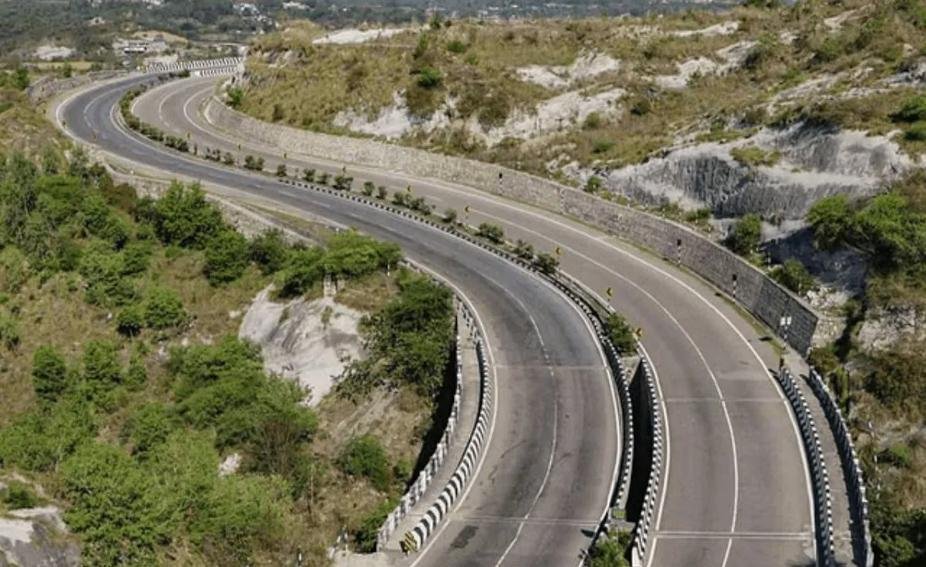
Jammu: A new four-lane highway corridor proposed between Katra and Kulgam could provide an alternative road connection between the Jammu and Kashmir regions, potentially reducing travel distance and journey time between Jammu and Srinagar.
The proposed Katra–Reasi–Mahore–Gulabgarh–Nandimarg–Kulgam corridor is being planned as a link to National Highway-44 (NH-44). The National Highways Authority of India (NHAI) has already initiated the process for preparing a Detailed Project Report (DPR) for the proposed four-laning project.
An official NHAI tender for DPR consultancy covers feasibility studies, traffic surveys, alignment planning, engineering designs and other technical assessments required to evaluate the corridor. The tender was issued through NHAI’s Regional Office in Jammu under reference JKDIV/14/2025-NHAI-RO Jammu/E 290669.
Proposed Route Through Reasi and South Kashmir
The proposed alignment would take a different route from the existing Jammu-Srinagar highway, passing through Katra, Reasi, Mahore, Gulabgarh and Nandimarg before reaching Kulgam and connecting with NH-44.
The route would open a new highway connection through several mountainous and relatively remote areas of Reasi and adjoining regions. Areas including Mahore, Gulabgarh, Arnas and Dharmari could potentially benefit from improved road connectivity if the project progresses as proposed.
The project is also being discussed as an additional route between the Jammu region and the Kashmir Valley, alongside the existing NH-44 and the Mughal Road.
DPR Stage Will Determine Final Alignment
While various reports have cited a corridor length of roughly 195–197 km, a construction cost of around ₹20,000 crore, and a possible journey time of approximately three to three-and-a-quarter hours, these figures should be treated as preliminary at this stage.
The official NHAI tender currently establishes the DPR preparation process; it does not itself confirm a final project cost, completed alignment or guaranteed travel time. The DPR and subsequent approvals will determine the project’s technical configuration and implementation details.
The tender process demonstrates that the proposal has moved beyond a purely conceptual stage. NHAI first invited bids in May 2026 for preparing the DPR, with technical bids scheduled for opening in June. A subsequent tender for the same DPR consultancy was also listed by NHAI under a new tender ID.
Tunnels and Bridges Could Be Key Components
The mountainous terrain along the proposed route means that tunnels, bridges, viaducts and other major structures are expected to form an important part of the eventual highway design.
One of the reported proposals is a long tunnel through the Pir Panjal range in the Gulabgarh-Nandimarg and Kulgam sector. Reports have suggested a tunnel of approximately 7–8 km, although its exact length and configuration will ultimately depend on engineering and geological studies undertaken during the DPR process.
The requirement for major structures reflects the difficult terrain through which the corridor would pass and could be central to achieving an efficient, all-weather route.
Potential Impact on Jammu-Srinagar Connectivity
If eventually constructed as planned, the corridor could provide an additional road option between Jammu and the Kashmir Valley.
It could also help distribute traffic currently dependent on NH-44, particularly during periods when the existing highway faces congestion, landslides, snowfall or other weather-related disruptions.
For communities along the proposed route, the impact could extend beyond inter-city travel. Improved connectivity could support the movement of agricultural and commercial goods, facilitate access to markets and services, and potentially strengthen tourism in the Reasi-Mahore-Gulabgarh belt.
The proposed corridor could also complement the existing road network rather than simply serve as a replacement for NH-44.
Tourism and Economic Opportunities
Katra is already an important pilgrimage destination and serves as the base for visitors travelling to the Shri Mata Vaishno Devi shrine. A modern highway connection extending from Katra towards Reasi and South Kashmir could create new opportunities for tourism circuits connecting different parts of Jammu and Kashmir.
For remote mountainous areas, better road infrastructure can also improve access for local businesses and residents while reducing dependence on routes vulnerable to seasonal disruptions.
However, the extent of these benefits will depend on the final alignment, construction standards, connectivity with existing roads and the eventual completion of the project.
Project Still at Planning Stage
Despite the scale of the proposal, the Katra-Kulgam corridor remains in the DPR and planning phase. The NHAI tender confirms that detailed technical and feasibility work is being undertaken, but the final alignment, construction cost, timeline and operational travel time cannot yet be treated as definitive.
The proposed highway therefore represents a significant infrastructure plan for Jammu and Kashmir, but its eventual impact will depend on the findings of the DPR, statutory approvals, funding, land and engineering requirements, and subsequent execution.
If implemented, the Katra-Reasi-Mahore-Gulabgarh-Nandimarg-Kulgam corridor could add a major new dimension to road connectivity between the Jammu region and Kashmir Valley while opening improved transport links for several remote areas along its route.