


















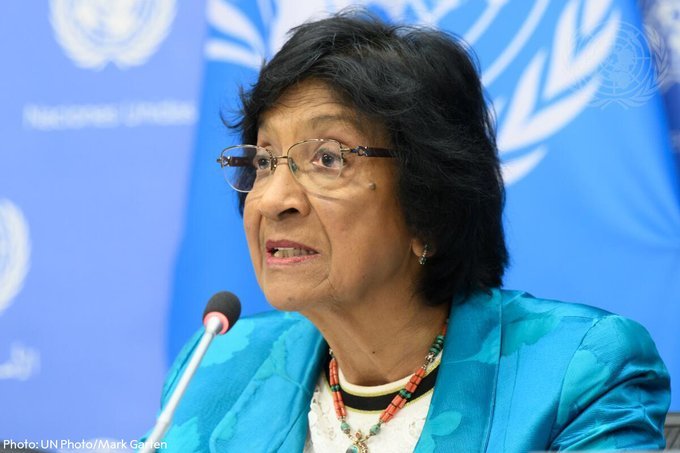
Oslo, October 9, 2026: Former United Nations High Commissioner for Human Rights Navanethem “Navi” Pillay has been awarded the 2026 Nobel Peace Prize for her efforts to promote peace and international law.
The Norwegian Nobel Committee announced the award on Friday, recognising Pillay’s longstanding contribution to international justice, human rights and the development of legal institutions aimed at addressing serious violations of international law.
Pillay, a South African-born jurist of Indian Tamil origin, has held several prominent positions in the international legal system, including serving as a judge at the International Criminal Tribunal for Rwanda and the International Criminal Court. She has also served as the UN High Commissioner for Human Rights from 2008 to 2014.
The award comes as the Nobel Peace Prize marks its 125th anniversary, commemorating the legacy of Alfred Nobel, whose will established the prestigious international awards.
Nobel Committee Recognises Commitment to International Law
The Nobel Committee highlighted Pillay’s role in strengthening international legal principles and promoting accountability for serious crimes.
Her professional journey has included defending activists during South Africa’s apartheid era and serving in international judicial institutions dealing with war crimes, crimes against humanity and genocide.
As president of the International Criminal Tribunal for Rwanda, Pillay played an important role in the development of international jurisprudence concerning sexual violence during armed conflict. The tribunal’s landmark decisions helped establish that rape and sexual violence could constitute crimes against humanity and acts of genocide under particular circumstances.
Her career has reflected a sustained emphasis on the role of legal institutions in protecting human dignity and addressing violations of fundamental rights.
From South Africa to International Judicial Institutions
Born in Durban, South Africa, in 1941, Pillay began her legal career during the apartheid period, when racial discrimination shaped access to justice and public institutions.
She became the first non-white woman appointed to South Africa’s High Court in 1995. Her subsequent international appointments brought her into some of the world’s most prominent judicial and human rights institutions.
After serving at the Rwanda tribunal, she became a judge at the International Criminal Court before being appointed UN High Commissioner for Human Rights in 2008.
In 2019, Pillay was appointed an ad hoc judge of the International Court of Justice in proceedings concerning allegations of genocide against Myanmar. She also chaired the UN Independent International Commission of Inquiry on the Occupied Palestinian Territory from 2021 to 2025.
Nobel Peace Prize Highlights Role of Justice in Peacebuilding
The 2026 award draws attention to the relationship between international law, accountability and efforts to prevent conflict.
The Nobel Peace Prize has historically recognised individuals and organisations working across diplomacy, human rights, disarmament and peacebuilding. Pillay’s selection places particular emphasis on the importance of international legal institutions in addressing serious violations and supporting peaceful resolutions to disputes.
The prize is scheduled to be presented in Oslo on December 10, the anniversary of Alfred Nobel’s death.
Pillay’s recognition underscores the continuing international debate over how legal institutions can uphold accountability, protect fundamental rights and contribute to a more peaceful world.