



















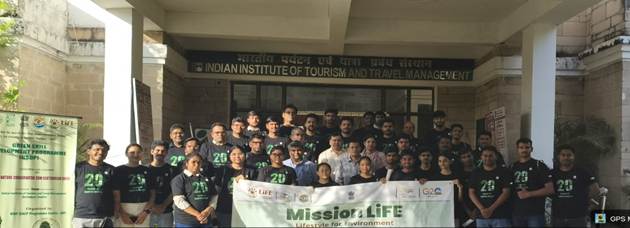
GWALIOR, MARCH 29: Reinforcing the message of environmental responsibility and sustainable living, the World Wide Fund for Nature India in collaboration with the Ministry of Environment, Forest and Climate Change (MoEFCC) organised a series of awareness and outreach activities in Gwalior to commemorate 20 years of Earth Hour.
The campaign, built around the global call to “Give an Hour for Earth,” witnessed enthusiastic participation from students, environmental trainees, and institutions, highlighting the growing importance of climate action at both individual and community levels.
Engaging Youth for a Greener Future
The programme was conducted under WWF-India’s Environmental Information, Awareness, Capacity Building & Livelihood Programme (EIACP), with participation from trainees of the Green Skill Development Programme (GSDP). These young participants, representing over 15 states and union territories, played an active role in spreading awareness about sustainable practices.
Senior officials, including Nameeta Prasad and Lipika Roy, attended the event and emphasised the need for consistent efforts in environmental conservation.
Awareness Activities Across Key Institutions
As part of the campaign, awareness drives and exhibitions were organised at The Scindia School, where students actively engaged in discussions on sustainability and responsible living.
The initiative extended to the Indian Institute of Tourism and Travel Management, bringing together future professionals in tourism and travel to reflect on the importance of eco-conscious practices within the industry.
Symbolic Switch-Off Sends a Strong Message
A key highlight of the observance was the symbolic switch-off of lights from 8:30 PM to 9:30 PM, aligning with the global Earth Hour movement. This gesture served as a reminder of the urgent need to conserve energy and reduce environmental impact.
The campaign was not limited to Gwalior. Across the country, iconic landmarks, government buildings, and institutions joined the movement, collectively reinforcing the message of climate responsibility.
From Awareness to Action
Speaking on the occasion, G. Areendran stressed the importance of empowering youth through knowledge and skill-building programmes. He highlighted that awareness must translate into action, with individuals adopting sustainable habits in their daily lives.
Participants also pledged to support Mission LiFE (Lifestyle for Environment), a national initiative promoting mindful consumption and environmentally responsible behavior.
A Global Movement with Local Impact
Celebrating its 20th anniversary this year, Earth Hour has grown into one of the world’s largest grassroots environmental movements since its inception in 2007. Spanning over 190 countries, the initiative has evolved beyond a symbolic act into a platform encouraging meaningful engagement.
In India, the campaign now includes activities such as tree plantation drives, clean-up initiatives, biodiversity walks, and sustainability workshops—encouraging citizens to dedicate time and effort toward protecting the planet.
Collective Responsibility for a Sustainable Future
The strong participation across institutions and communities reflects a rising awareness about environmental challenges and the role individuals can play in addressing them. The campaign underscored that small actions, when adopted collectively, can lead to significant change.
As Earth Hour completes two decades, the message remains clear: protecting the environment is not a one-hour commitment but a continuous responsibility shared by all.