


















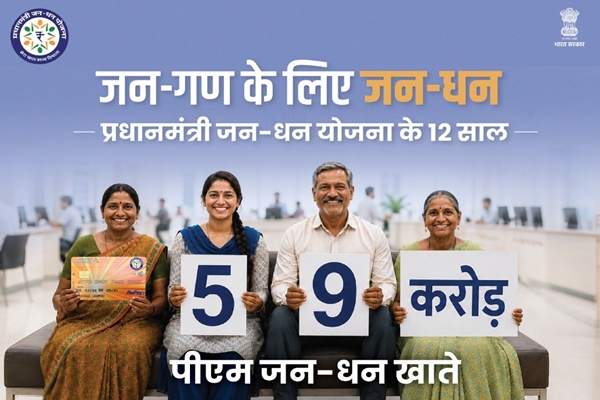
New Delhi, August 28, 2026: The Pradhan Mantri Jan Dhan Yojana (PMJDY) has completed 12 years, marking a major milestone in India’s journey towards financial inclusion. Launched by Prime Minister Narendra Modi on August 28, 2014, the flagship programme has expanded access to formal banking services, particularly for people in rural areas and economically weaker sections.
According to the latest figures cited by Akashvani News, more than 59 crore Jan Dhan accounts have been opened so far, with total deposits reaching approximately ₹3.17 lakh crore. The average deposit per account stands at around ₹5,356.
Expanding Banking Access Across Rural India
One of the key achievements of the Jan Dhan Yojana has been its reach beyond India’s traditional banking network. Around 78% of Jan Dhan accounts have been opened in rural and semi-urban areas, highlighting the programme’s role in bringing formal financial services closer to underserved communities.
The scheme has also recorded significant participation among women. Approximately 56% of the accounts are held by women, strengthening their direct access to banking facilities and supporting greater financial independence.
From Bank Accounts to Wider Financial Inclusion
PMJDY was conceived as a national mission to provide universal access to basic banking facilities. Over the years, the programme has become an important platform for connecting beneficiaries with savings, digital payments, insurance, pensions and other financial services.
The scheme has also supported India’s broader Jan Dhan-Aadhaar-Mobile (JAM) framework, helping facilitate the direct transfer of government assistance and other benefits into beneficiaries’ bank accounts.
More than 41 crore RuPay cards have also been issued to Jan Dhan account holders, further expanding access to digital and card-based financial services.
A Significant Role in India’s Financial Transformation
The impact of PMJDY extends beyond the number of accounts opened. The initiative has helped bring millions of people into the formal financial system and provided them with greater opportunities to save, receive government benefits and access other financial services.
The programme’s progress has also coincided with a broader expansion of India’s digital financial ecosystem. According to Akashvani, India’s Financial Inclusion Index rose from 53.9 in 2018 to 67 in 2026, reflecting deeper access to financial services.
As PMJDY enters its 13th year, its challenge will be to ensure that financial inclusion continues to move beyond simply opening accounts. Regular usage, access to credit, insurance, pensions, digital literacy and financial security will remain important for turning banking access into meaningful economic empowerment.
The completion of 12 years therefore represents both a major achievement and an opportunity to deepen India’s financial inclusion journey further, particularly for communities that remain underserved.