




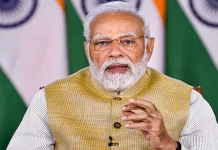







Prime Minister Narendra Modi today held comprehensive talks with Malaysian Prime Minister Anwar Ibrahim in Kuala Lumpur, with both leaders agreeing to deepen cooperation in defence, security, trade, innovation and people-to-people exchanges. The discussions marked a significant step forward in strengthening India-Malaysia strategic relations.
Following the talks, a wide range of agreements and documents were exchanged between the two countries. These covered cooperation in disaster management, audiovisual co-production, combating and preventing corruption, semiconductor development, health and medicine, scholarships, and a key digital payments agreement between NPCI International Payments Limited and Malaysia’s PAYNET, aimed at enhancing cross-border financial connectivity.
Addressing the media, Prime Minister Modi said that cooperation between India and Malaysia will expand further in maritime security, defence collaboration and counter-terrorism. Reiterating India’s firm stance, he said there would be no double standards and no compromise on terrorism.
Mr Modi highlighted that bilateral engagement is also gaining momentum across energy, infrastructure, manufacturing and the digital economy. He described India and Malaysia as maritime neighbours sharing a special bond, strengthened by strong people-to-people ties and the presence of a large Indian diaspora in Malaysia.
The Prime Minister said the audiovisual co-production agreement would promote cultural exchanges in film and music, with particular emphasis on Tamil cinema. He also referred to initiatives aimed at expanding university collaborations, skill development programmes and start-up engagement. As part of this academic outreach, India announced the establishment of the Thiruvalluvar Centre to promote research and studies.
During the visit, Mr Modi also interacted with business leaders, discussing investment opportunities and collaboration across sectors. Semiconductor cooperation featured prominently, with Phison Electronics Corporation Founder and CEO Pua Khein Seng briefing the Prime Minister on India’s semiconductor vision.
Earlier, Mr Modi reaffirmed India’s strong commitment to ASEAN and congratulated Malaysia on assuming the ASEAN chairmanship. Both sides agreed to complete the review of the ASEAN-India Trade in Goods Agreement (AITIGA) at the earliest. The Prime Minister noted that the Indo-Pacific region is emerging as a major engine of growth, and that India and Malaysia are working together for development, peace and stability in the region.
Summarising the visit, Secretary (East) P. Kumaran said semiconductors remain a cornerstone of bilateral cooperation. He announced the formation of the Malaysia-India Digital Council to advance engagement in the semiconductor ecosystem, digital public infrastructure, e-governance, cybersecurity, artificial intelligence, fintech and payment linkages.
Mr Kumaran said India’s strengths in chip design and Malaysia’s long experience in manufacturing, assembly, testing and packaging can complement each other effectively. He added that counter-terrorism cooperation between the two nations also covers transnational crimes, including human trafficking and violent extremism, under an ongoing national security dialogue mechanism.
During his third official visit to Malaysia, Prime Minister Modi also met Persons of Indian Origin and veterans of the Indian National Army, underscoring the deep historical and cultural links between the two countries.