


















President Droupadi Murmu has called upon Indian Police Service (IPS) officers to adopt a people-centric approach to policing, emphasising the importance of addressing public grievances with sensitivity, ensuring accountability and building public trust in law enforcement institutions.
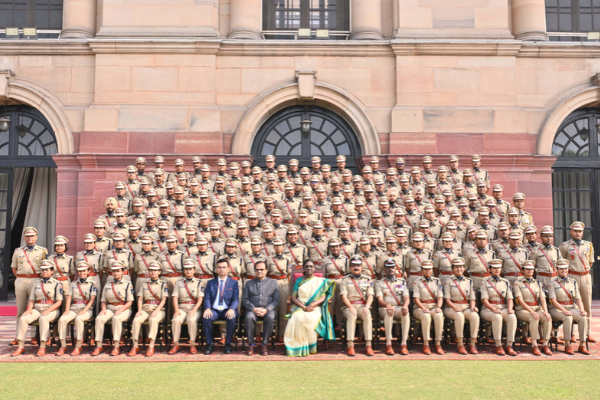
Addressing probationers of the 2025 batch of the Indian Police Service at Rashtrapati Bhavan on Tuesday, the President said that police officers and constables serve as important symbols of governance for ordinary citizens. She observed that people’s perception of good governance is closely linked to the effective functioning of the police system.
Highlighting the importance of accessible and responsive policing, President Murmu urged the officer trainees to pay particular attention to the concerns of socially and economically weaker sections, who often find it difficult to approach senior officials.
She stressed that citizens feel supported when police personnel listen to their complaints patiently and respond with sensitivity and attentiveness.
Public Trust Must Remain at the Centre of Policing
The President underlined that the authority of police officers comes from laws and established rules, but their actual respect in society depends on their professional conduct, performance and values.
She encouraged the probationers to approach their responsibilities with a spirit of public service rather than a sense of superiority. According to her, commitment to serving citizens should remain the guiding principle of policing.
She also highlighted the importance of encouraging public participation and strengthening teamwork within police organisations.
Emphasis on Technology and Teamwork
Addressing the changing demands of law enforcement, President Murmu advised the young officers to remain open to learning from every member of their teams.
She pointed out that junior personnel may sometimes possess greater proficiency in using technology than their senior colleagues. Officers, therefore, should not hesitate to learn from younger team members and make effective use of their knowledge.
The President also said that prioritising the welfare of police personnel can improve their capabilities, motivation and enthusiasm, ultimately strengthening the functioning of the police force.
Misinformation and Cybercrime Emerging Challenges
President Murmu also drew attention to the growing challenges posed by misinformation, cybercrime and emerging digital technologies.
She observed that organised misinformation campaigns can create fear and influence impressionable minds, particularly among young people. Such activities may operate at local, regional or national levels.
She noted that smart policing and timely intervention can prevent these situations from escalating.
The President further emphasised that cybercrimes are becoming increasingly widespread and serious. She urged police officers to strengthen public awareness about cyber threats and adapt their working methods to address evolving forms of digital crime.
Highlighting the risks associated with deepfake content and sophisticated technologies, she called upon the officers to remain alert and stay ahead of criminals who increasingly exploit technological advancements.
Building a Responsive Police Force
The President’s interaction with the IPS probationers highlighted the need for a policing system that combines professional competence, technological preparedness and compassion towards citizens.
Her message underscored that effective policing goes beyond maintaining law and order. It also involves ensuring that every citizen, particularly those from vulnerable sections of society, has access to justice and feels heard by the authorities.
The address serves as guidance for the young IPS officers as they prepare to take on responsibilities in different parts of the country.