
















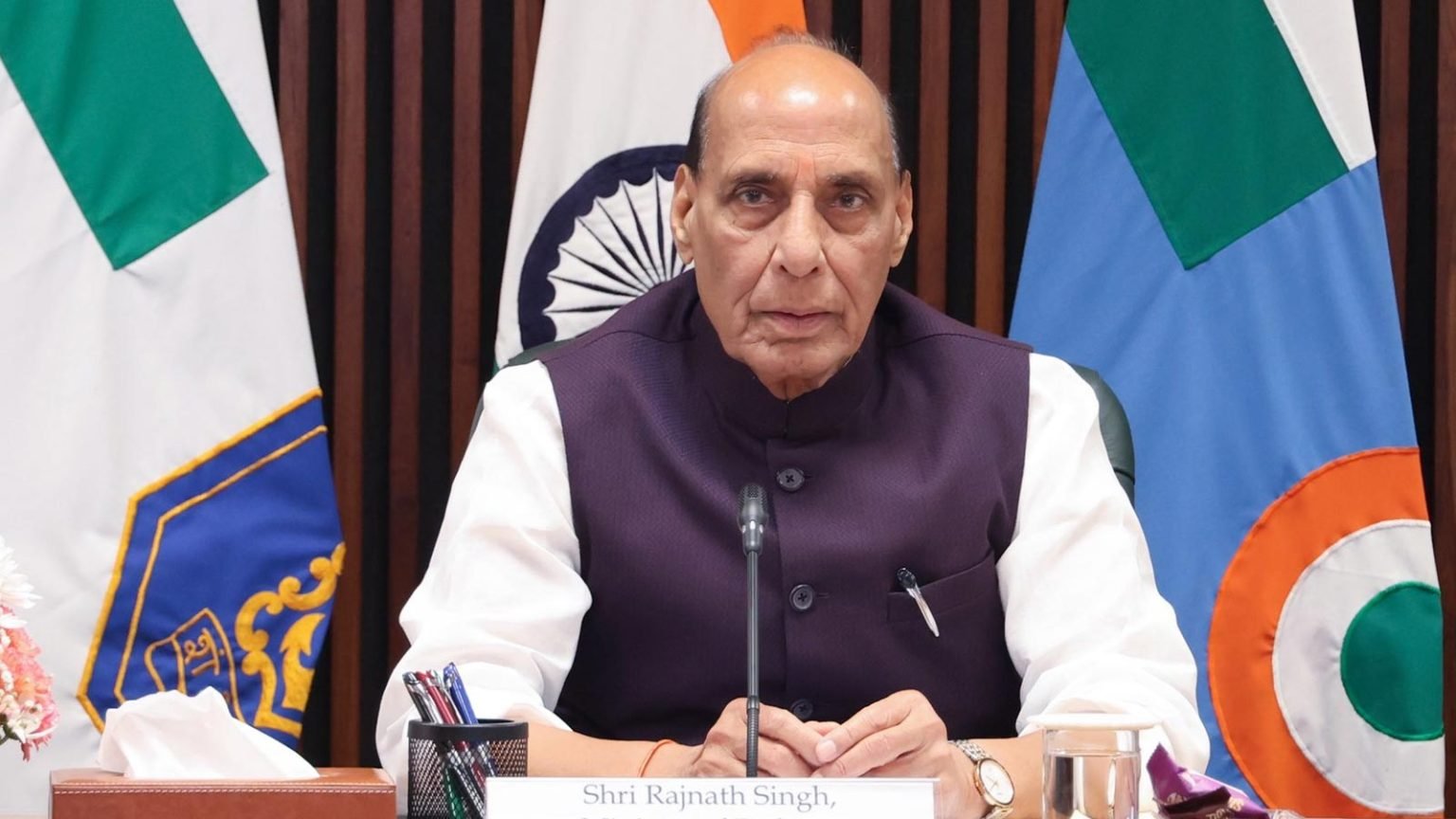
New Delhi: Defence Minister Rajnath Singh has said that India is developing its defence capabilities by keeping in view the changing nature of warfare over the next 10, 20 and 25 years, with a focus on creating a self-reliant and future-ready defence ecosystem.
Speaking at an event organised by a media house in New Delhi, Singh said India needs to move beyond simply importing advanced technologies and instead work towards defining, developing and mastering critical defence technologies.
The Defence Minister said future battlefields are expected to be increasingly driven by technology, making technological leadership an important factor in national security and military preparedness. He stressed that India’s defence planning must therefore look beyond immediate requirements and anticipate challenges that could emerge in the coming decades.
Focus on Technology and Future Security Challenges
According to Singh, modern warfare has undergone a significant transformation and is no longer confined to conventional military forces and weapons. The security environment has become increasingly multi-sectoral, requiring capabilities across different technological and strategic domains.
He said India’s approach is consequently focused not only on developing weapons and systems required today but also on preparing for the demands of future conflicts.
The Defence Minister also highlighted the changes witnessed in India’s defence sector over the past 12 years. He said the country’s defence capabilities have expanded considerably, accompanied by a significant shift in the approach towards strengthening national security.
Greater Role for Domestic Defence Industry
Singh highlighted the government’s increased allocation for defence capital expenditure and efforts to encourage domestic manufacturing.
He said nearly 75 per cent of the capital acquisition budget of ₹1.39 lakh crore has been earmarked for procurement from the domestic defence industry. The move is aimed at strengthening Indian defence manufacturing and reducing dependence on imports.
The Defence Minister also pointed to the armed forces’ five Positive Indigenisation Lists, which together cover 509 defence equipment, weapon systems and platforms. These initiatives are intended to encourage Indian companies and manufacturers to develop and produce defence equipment within the country.
India Seeks Peace Alongside Strong Defence
Singh reiterated that India believes in peace and does not seek conflict with other countries. He said India has no intention of occupying another country’s territory or intimidating other nations.
At the same time, he stressed that the pursuit of peace cannot come at the cost of national security.
The Defence Minister drew a distinction between peace and weakness, underlining India’s stated position that while the country seeks peaceful relations, it will not compromise on its security interests.
India’s evolving defence strategy, according to Singh’s remarks, is therefore centred on strengthening indigenous capabilities while preparing for a rapidly changing technological and security environment. The emphasis on long-term planning, domestic procurement and technological development is intended to help build a defence ecosystem capable of responding to future challenges.