


















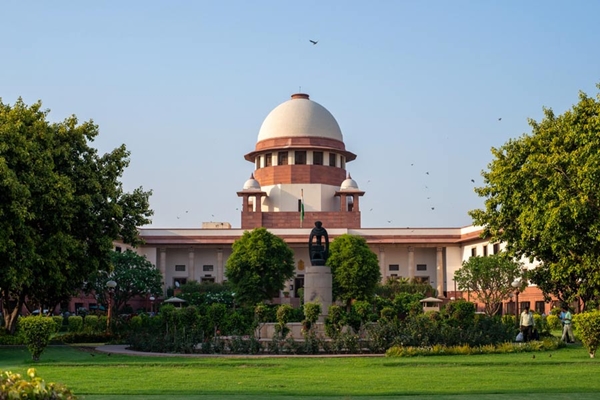
Jan 31: In a landmark judgment strengthening women’s rights and dignity, the Supreme Court of India has ruled that the right to menstrual hygiene is an integral part of the right to life under Article 21 of the Constitution. The apex court issued a series of binding directions to States, Union Territories and educational institutions to ensure health, equality and dignity for adolescent girls and women.
A Bench comprising Justice J.B. Pardiwala and Justice R. Mahadevan directed all States and Union Territories to ensure that every school provides biodegradable sanitary napkins free of cost to adolescent girls. The ruling came while hearing a petition seeking free sanitary pads and adequate sanitation facilities for school-going girls across the country.
Menstrual Hygiene Linked to Health, Education and Dignity
The Court observed that lack of access to menstrual hygiene products and persistent social stigma surrounding menstruation adversely affect girls’ health, privacy, education and overall well-being. It noted that many girls are forced to miss school during their menstrual cycle due to the absence of basic facilities, which in turn impacts their academic performance and confidence.
Highlighting menstruation as a biological and natural process, the Bench emphasised that denying hygienic facilities amounts to a violation of fundamental rights, including the right to dignity, equality and bodily autonomy.
Mandatory Facilities in All Schools
The Supreme Court ordered authorities to ensure that all schools are equipped with functional, clean and hygienic gender-segregated toilets. It also directed the pan-India implementation of the Union Government’s national initiative, the ‘Menstrual Hygiene Policy for School-going Girls’, covering students from Classes 6 to 12.
The Court made it clear that compliance is mandatory for both government and private educational institutions. It warned that private schools could face derecognition if they fail to provide separate toilets for girls and boys or deny access to free sanitary napkins for students.
Strict Compliance and Accountability
The apex court stressed that menstrual hygiene cannot be treated as a welfare measure alone but must be recognised as a constitutional obligation. States and Union Territories have been directed to ensure effective implementation, monitoring and accountability mechanisms to guarantee that the benefits reach every eligible student.
The judgment also underlines the importance of using biodegradable sanitary products, aligning public health measures with environmental sustainability.
A Step Towards Gender Equality
Legal experts and public health advocates have welcomed the verdict, describing it as a progressive step toward gender justice and inclusive education. By recognising menstrual hygiene as a fundamental right, the Supreme Court has reinforced the idea that women’s health and dignity are central to human rights discourse.
The ruling is expected to bring transformative change by breaking taboos, improving school attendance among girls, and ensuring a safer, more inclusive learning environment across India.