
















Mumbai, September 16, 2026: India on Wednesday reaffirmed its commitment to protecting the ozone layer and advancing climate action as the Union Ministry of Environment, Forest and Climate Change organised the national celebration of the 32nd World Ozone Day in Mumbai.
Held under the theme “Global Action for a Cooler Planet,” the event brought together government representatives, international organisations, industry stakeholders, academic experts and school students to highlight India’s efforts towards ozone-layer protection, sustainable cooling and climate-responsive development.
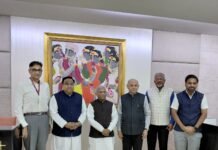
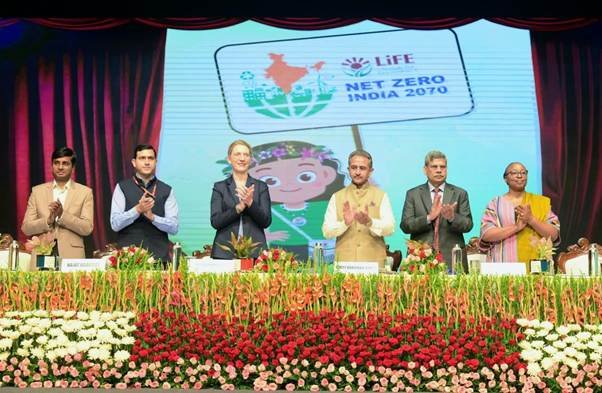
The event was presided over by Union Minister of State for Environment, Forest and Climate Change Kirti Vardhan Singh and Maharashtra Minister for Environment and Climate Change Pankaja Munde.
Secretary, MoEF&CC Tanmay Kumar, UNDP Country Head Angela Lusigi and GIZ Country Director and Head, GIZ India, Ulrike Ebeling, along with senior government officials and representatives from industry and academia, also participated in the programme.
India’s Net Zero Portal and NAPCC Dashboard Launched
A key highlight of the World Ozone Day celebration was the launch of India’s Net Zero Portal and the National Action Plan on Climate Change (NAPCC) Dashboard.
The Net Zero Portal has been developed as a central repository to track, coordinate and showcase India’s climate commitments. It will also enable industries, organisations and government bodies to voluntarily register and display their progress towards achieving net-zero emissions.
The NAPCC Dashboard provides a centralised digital gateway for India’s overarching climate action framework. It is intended to provide tracking and insights across the country’s various national missions under the National Action Plan on Climate Change.
The digital initiatives are aimed at improving visibility, coordination and monitoring of climate-related action across different stakeholders.
India Has Met Montreal Protocol Commitments
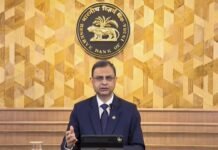
Addressing the gathering, MoS EFCC Kirti Vardhan Singh said India has demonstrated that economic growth and environmental protection can progress together.
The Minister highlighted India’s implementation of its commitments under the Montreal Protocol on Substances that Deplete the Ozone Layer, saying the country has achieved its targets without compromising development.
He stressed that addressing environmental challenges requires collective action involving governments, scientists, industry, officials and citizens.
Singh also highlighted Mission LiFE (Lifestyle for Environment) as a framework for translating environmental responsibility into practical everyday choices. He urged citizens to use natural resources mindfully and avoid wasteful consumption.
Minister Shares Three Sustainable Cooling Measures
The Minister called for greater awareness around energy-efficient and climate-friendly cooling practices and suggested three measures for citizens.
These include getting air-conditioners serviced by certified and skilled technicians who can safely handle refrigerants, keeping AC temperatures at a comfortable level, preferably around 24 degrees Celsius, and choosing high star-rated, energy-efficient appliances that use climate-friendly refrigerants.
Such measures, he said, can contribute to lower electricity consumption and reduced carbon emissions while supporting more sustainable cooling.
Maharashtra Focuses on Sustainable Development
Maharashtra Environment and Climate Change Minister Pankaja Munde said the state is working towards Prime Minister Narendra Modi’s vision of Viksit Bharat by 2047 through sustainable development, decarbonisation and environment-friendly growth.
She said Maharashtra is developing roadmaps and action plans that integrate ozone-layer protection with broader climate action.
The state is also focusing on energy-efficient and climate-responsive cooling systems and buildings, particularly in view of rapid urbanisation and rising temperatures.
UNDP Highlights India’s Progress
UNDP Country Head Angela Lusigi highlighted India’s implementation of the Montreal Protocol as an example of efforts to pursue economic growth alongside environmental protection.
She noted India’s progress in phasing out ozone-depleting substances and said several targets had been achieved ahead of schedule.
According to Lusigi, India’s transition has also involved the promotion of lower-impact technologies, support for small and medium enterprises and training of technicians to work with newer refrigerants, creating opportunities for green employment.
India-Germany Cooperation on Climate-Friendly Cooling
GIZ Country Director and Head, GIZ India, Ulrike Ebeling, highlighted cooperation between India and Germany on climate-friendly cooling solutions.
The partnership is supporting implementation of the HCFC Phase-out Management Plan Stage III (2025–2030), with particular emphasis on the refrigeration and air-conditioning servicing sector.
Ebeling also highlighted efforts towards establishing a nationally recognised certification system for air-conditioning technicians, with a target of training 25,000 technicians by 2030.
Strengthening training capacity is intended to help build a skilled workforce capable of handling newer, environmentally preferable cooling technologies.
248 ITIs Adopted by 12 RAC Manufacturers
The World Ozone Day event also saw the announcement of an industry-training partnership under which 248 Industrial Training Institutes (ITIs) have been adopted by 12 Refrigeration and Air-conditioning (RAC) manufacturers.
The initiative is based on a four-party Memorandum of Agreement involving RAC manufacturers, the Ozone Cell, Regional Directorate, Directorate General of Training (DGT), and State Directorate, DGT.
The partnership aims to strengthen training infrastructure and bring classroom learning closer to industry requirements.
The initiative will focus on developing technicians skilled in eco-friendly, low-global-warming-potential technologies, supporting India’s commitments under the Montreal Protocol as well as the India Cooling Action Plan (ICAP).
India’s Ozone Protection Journey
India has been a Party to the Vienna Convention for the Protection of the Ozone Layer and the Montreal Protocol and its amendments since 1992.
The country has met its commitments under the Montreal Protocol schedule for different ozone-depleting substances. Chlorofluorocarbons (CFCs), Carbon Tetrachloride (CTC) and Halons have already been phased out for controlled applications.
India is currently implementing the phase-out of Hydrochlorofluorocarbons (HCFCs) in accordance with the accelerated schedule under the Montreal Protocol. The country has already met the 2015, 2020 and 2025 HCFC phase-out targets.
India also ratified the Kigali Amendment to the Montreal Protocol in September 2021, which entered into force for the country on December 26, 2021.
Under the agreed schedule, India will phase down HFC production and consumption in four stages beginning in 2032. The reductions are scheduled at 10 per cent in 2032, 20 per cent in 2037, 30 per cent in 2042 and 85 per cent in 2047, against the baseline.
School Competitions and Publications Mark World Ozone Day
The celebration also featured the release of publications based on studies undertaken by the Ozone Cell, MoEF&CC.
Winners of national-level school poster and slogan-writing competitions and a national online quiz were also announced during the event.
A video highlighting India’s industrial transformation and initiatives towards climate-friendly cooling and a more sustainable future was screened for participants.
The 32nd World Ozone Day celebration in Mumbai therefore brought together India’s ozone protection commitments, sustainable cooling initiatives and wider climate action efforts, while placing emphasis on technology, industry partnerships, technician training and citizen participation in building a cooler and more sustainable future.