



















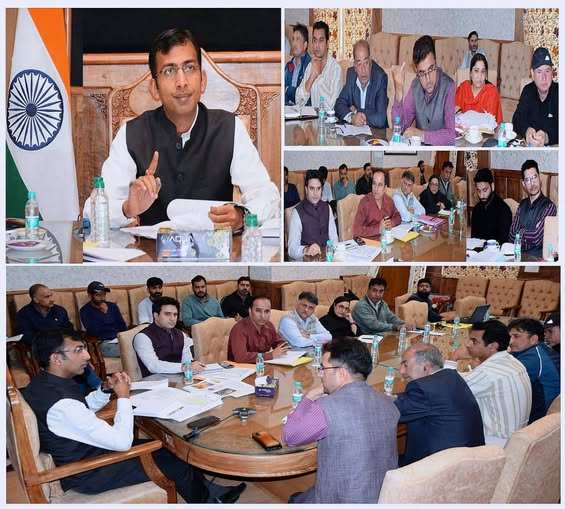
OCT 12:Divisional Commissioner Kashmir, Anshul Garg, chaired a crucial review meeting on building permissions within Eco-Sensitive Zones (ESZs), emphasizing the need for timely decisions, strict monitoring, and sustainable development across ecologically fragile areas.
The review primarily focused on pending and ongoing cases in Dachigam, Thajwas, and Overa-Aru—three of Kashmir’s key eco-sensitive regions known for their rich biodiversity and ecological importance. Garg directed concerned departments to expedite the decision-making process on legitimate building permission cases to avoid unnecessary delays that affect both residents and developmental projects.
Highlighting the balance between environmental preservation and sustainable development, Anshul Garg stressed that while human needs must be addressed, ecological safeguards remain paramount. He instructed that no unauthorized or illegal construction should be permitted in these zones and directed immediate enforcement action wherever violations are detected.
To strengthen green planning, the Divisional Commissioner also instructed the preparation of a comprehensive green corridor map within two months. The map will serve as a guiding framework for regulating development, conserving biodiversity, and maintaining ecological equilibrium in sensitive landscapes.
Officials from the Forest Department, Wildlife Department, Pollution Control Board, and local development authorities were directed to ensure inter-departmental coordination for effective monitoring. Garg reiterated that all construction activities in ESZs must comply with environmental norms and the Ministry of Environment, Forest and Climate Change (MoEFCC) guidelines.
He further emphasized the role of public awareness and local community participation in protecting natural habitats. By involving local stakeholders, the administration aims to ensure that conservation efforts align with community welfare and eco-tourism opportunities.
The review concluded with a strong message of zero tolerance toward environmental violations, underscoring the government’s commitment to preserving Kashmir’s fragile ecosystems while enabling responsible and sustainable growth.