














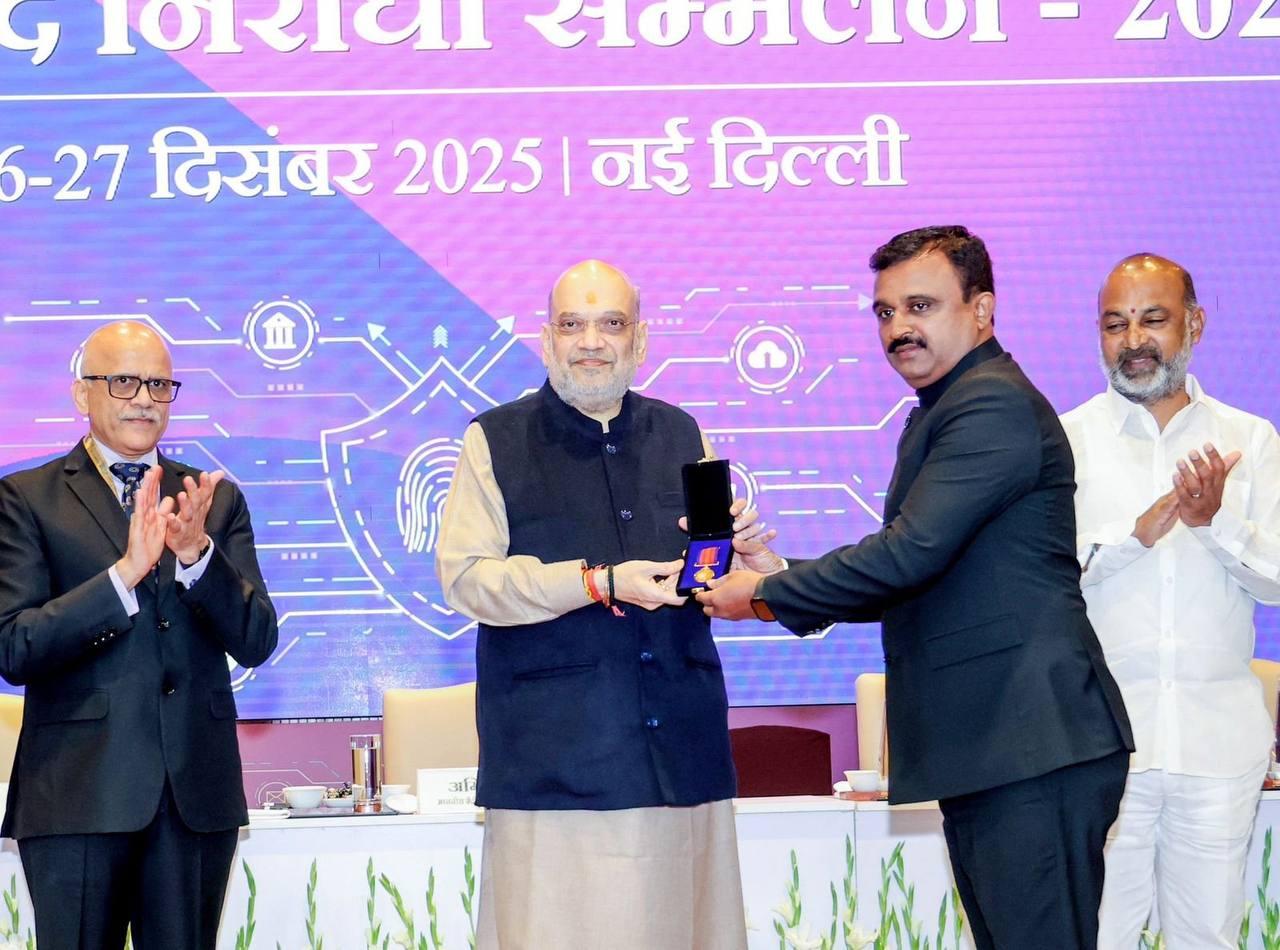
DEC 28 : Union Home Minister and Minister of Cooperation, Amit Shah, on Friday inaugurated the Anti-Terrorism Conference 2025 in New Delhi, reaffirming the Government of India’s uncompromising stance against terrorism and organised crime. Addressing senior security officials, policymakers, and law enforcement agencies, the Home Minister underscored the need for a common Anti-Terrorism Squad (ATS) structure across the country to ensure uniform preparedness against emerging and evolving security threats.
Highlighting the changing nature of terrorism and organised crime, Amit Shah said that fragmented approaches can no longer address complex and interconnected threats. He called for seamless coordination between central and state agencies to strengthen India’s internal security architecture. According to him, a unified ATS framework would help standardise training, intelligence sharing, operational protocols, and rapid response mechanisms nationwide.
In a significant move to reinforce the Government’s ‘Zero Tolerance’ policy towards terrorism, the Home Minister launched the Updated Crime Manual of the National Investigation Agency (NIA). The revised manual is expected to serve as a comprehensive guide for investigators, incorporating modern investigative techniques, legal frameworks, and best practices to tackle terror-related cases effectively.
Amit Shah also unveiled new national-level databases on weapons and organised crime, aimed at enhancing intelligence-led policing and data-driven investigations. These databases are designed to help agencies track criminal networks, identify patterns, and prevent terror financing and arms trafficking more efficiently.
Stressing the importance of dismantling the entire terror ecosystem, the Home Minister advocated a “360-degree strike” on terrorism. He said that the fight against terror must go beyond surface-level operatives and focus on breaking the invisible chains that sustain such networks, including financiers, logistics providers, and facilitators operating covertly across regions.
He urged all states and Union Territories to fully integrate with key national intelligence and investigation platforms such as NATGRID (National Intelligence Grid) and NIDAAN, stating that these systems are crucial for uncovering hidden linkages between terror modules and organised crime syndicates. Enhanced use of technology and real-time data sharing, he noted, would significantly improve preventive and responsive capabilities.
Amit Shah emphasized that internal security is a collective responsibility and requires constant vigilance, innovation, and cooperation among all stakeholders. He reiterated that under the leadership of Prime Minister Narendra Modi, India has adopted a proactive and decisive approach towards national security, ensuring that terror networks are neutralised before they can threaten peace and stability.
The Anti-Terrorism Conference 2025 provided a crucial platform for deliberations on emerging threats, cyber-terrorism, radicalisation, and cross-border criminal activities. The discussions are expected to shape future strategies and strengthen India’s counter-terror framework.
The conference concluded with a renewed resolve among participating agencies to work in close coordination, leveraging technology, intelligence, and policy reforms to safeguard the nation and uphold internal security with unwavering commitment