
















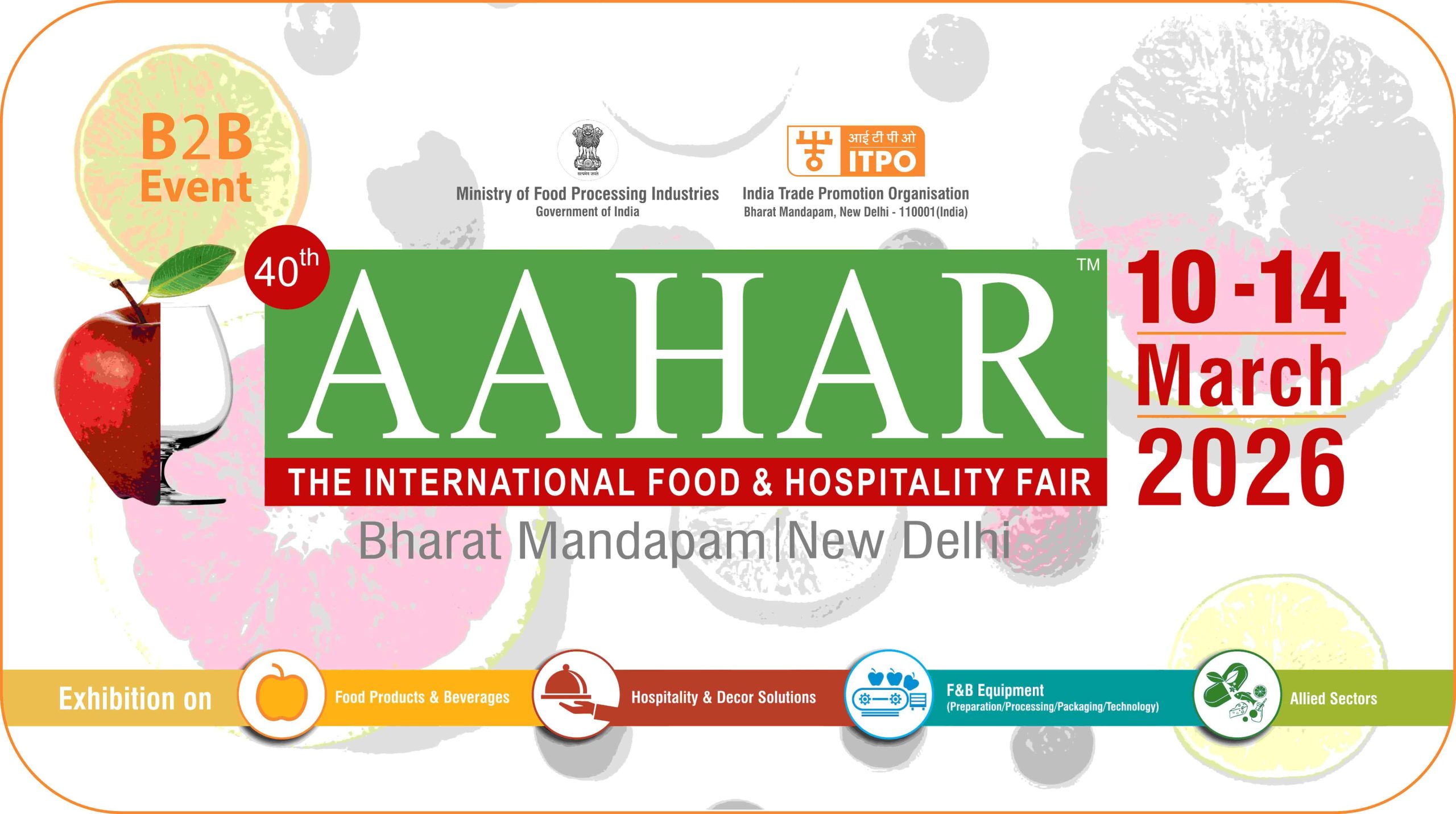
March 12: The 40th edition of AAHAR 2026 has emerged as a major platform highlighting India’s dynamic food processing sector and the entrepreneurial stories driving innovation in the industry. Organised in New Delhi, the five-day international exhibition from March 10 to 14 has brought together producers, exporters, hospitality businesses and technology providers from across India and abroad.
Hosted at the iconic Bharat Mandapam, the event features nearly 1,800 exhibitors showcasing processed foods, beverages, dairy products, bakery items, spices and agri-produce. Over the years, AAHAR has evolved into one of Asia’s most prominent trade exhibitions for the food and hospitality sector, facilitating business partnerships and knowledge exchange across the value chain.
Beyond product displays, the exhibition also highlights the journeys of entrepreneurs and enterprises transforming India’s food ecosystem through innovation, regional specialities and modern processing technologies.
Bringing Sikkim’s Traditional Flavours to National Markets
Among the notable participants is entrepreneur Sangidoma Bhutia from Gangtok, who represents the Himalayan state at the pavilion of the One District One Product initiative.
Bhutia runs the brand “Taste of Sikkim,” known for producing traditional pickles made from the region’s organic ingredients. Her entrepreneurial journey began more than 16 years ago with limited financial resources. Over time, she expanded her enterprise with the help of the Pradhan Mantri Formalisation of Micro Food Processing Enterprises Scheme, a flagship government initiative supporting small food processing units.
Through the scheme, she secured a ₹10 lakh loan and received a subsidy of ₹3.5 lakh, enabling her to invest in modern equipment and expand production. Her products prominently feature the GI-tagged Dalle Khursani chilli, which is processed into fermented pickles, spice blends and condiments.
Besides running her business, Bhutia also trains rural women in food processing skills, helping them build sustainable livelihoods. Her products are now reaching markets across India, including Delhi, Hyderabad and Chennai.
Traceable Tea Supply Chains from Karnataka
Another innovative participant at the exhibition is the tea brand Iron Kettle from Karnataka, which focuses on transparency and quality sourcing in the tea supply chain.
The company sources its tea from plantations in Assam and the Nilgiris, offering products across multiple categories including CTC tea, flavoured blends and green tea varieties.
To enhance consumer trust, Iron Kettle has introduced a QR-code-based traceability system that allows buyers to track their tea’s journey from farm to cup. By scanning the QR code on retail packs, consumers can access detailed information such as the farmer’s identity, the geo-tagged farm location, plucking time and processing details.
The company also deploys agronomy officers to train farmers in sustainable cultivation and high-quality plucking techniques, ensuring premium tea production standards.
Kanpur-Based Spice Enterprise Expands Nationwide
Small and medium-sized enterprises also form a major part of India’s food processing ecosystem. One such example is Subash Agro Industry Pvt Ltd from Kanpur, which has steadily grown since its establishment in 1992.
The company initially focused on producing everyday spices such as turmeric, coriander and chilli powder. Over the years, it has diversified into a wide range of products including papad, pickles, agarbatti, hing and soy nuggets.
Today, the enterprise offers more than 100 products and distributes them across several states including Uttar Pradesh, Madhya Pradesh, Bihar and Jharkhand. Participation in AAHAR provides the company with an opportunity to expand its market presence and connect with new distributors and buyers.
Frozen Fruit Innovations from Nagpur
Another enterprise attracting attention at the exhibition is Ganpati Frozen World from Nagpur, which specialises in value-added fruit ingredients for the food and hospitality sector.
The company produces frozen fruit pulps, kulfi premixes and fruit shots used widely in beverages, desserts and processed foods. By converting seasonal fruits into frozen ingredients preserved at around minus 18 degrees Celsius, the company enables year-round availability of flavours such as Alphonso mango, custard apple and jamun.
Ganpati Frozen World primarily supplies ingredients to food manufacturers and the HoReCa sector, helping businesses streamline large-scale food preparation.
Gujarat Startup Promotes Dehydrated Food Solutions
Innovative food processing startups are also making their mark at AAHAR. Aarambh Food Export, based in Bhavnagar, focuses on producing dehydrated fruits, vegetables and flavouring powders.
Founded in 2021, the company converts fresh produce into shelf-stable flakes and powders such as tomato, lemon, beetroot and onion flakes. These ingredients are widely used in instant foods, bakery products, beverages and seasoning blends.
The dehydration process helps reduce post-harvest losses while extending the shelf life of agricultural produce, making it a promising solution for India’s food processing industry.
A Platform for India’s Food Processing Growth
The diverse participation at AAHAR 2026 reflects the evolving nature of India’s food processing sector. From traditional regional flavours to cutting-edge food technology, the exhibition showcases how entrepreneurs, startups and established enterprises are exploring new opportunities in the market.
By bringing together producers, buyers, exporters and hospitality businesses under one roof, AAHAR continues to strengthen India’s food value chain and highlight the country’s growing role in the global food industry.