
















May 17, 2026:
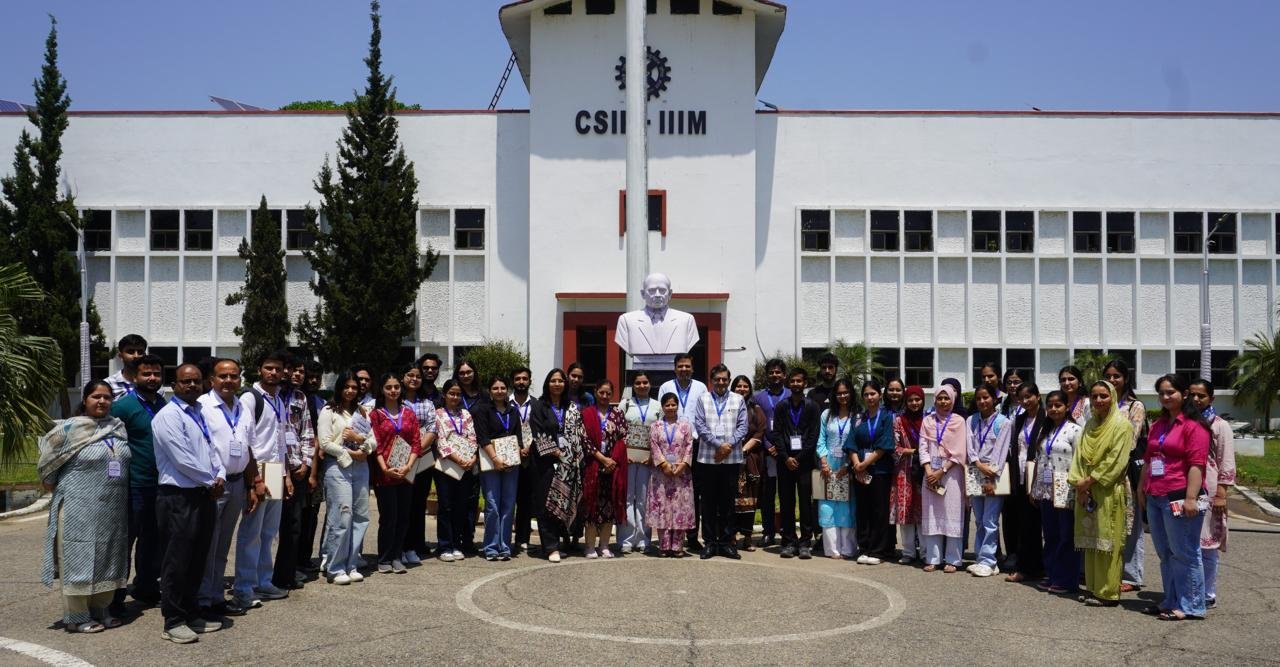
The successful organisation of “Yuva Kaushal Karyashala 4.0” by CSIR-Indian Institute of Integrative Medicine in Jammu highlights an important shift taking place in India’s educational and employment landscape — the increasing emphasis on practical skills, innovation, and industry-oriented learning for young people.
At a time when the country is witnessing rapid technological transformation and evolving employment patterns, institutions are under growing pressure to move beyond traditional academic frameworks and focus more actively on employability, entrepreneurship, and hands-on training. Programmes such as Yuva Kaushal Karyashala therefore represent more than routine workshops; they reflect a broader national effort to prepare youth for the demands of a competitive and innovation-driven economy.
India possesses one of the world’s largest youth populations, often described as the country’s greatest demographic advantage. However, demographic strength alone does not automatically translate into economic success. The real challenge lies in equipping young people with relevant skills that align with emerging industries, scientific advancements, research ecosystems, and modern employment opportunities.
This is where institutions like CSIR-IIIM play an increasingly important role.
By organising workshops focused on scientific awareness, research exposure, biotechnology, innovation, and practical learning, such institutions help bridge the long-standing gap between classroom education and real-world application. For many students, especially those from smaller towns and developing regions, exposure to scientific institutions and modern research environments can significantly shape career aspirations and confidence levels.
The importance of skill-based education has become even more evident in recent years as automation, artificial intelligence, biotechnology, digital industries, and research-driven sectors continue to reshape global employment structures.
Traditional degrees alone are no longer sufficient in many sectors unless accompanied by practical expertise, problem-solving ability, communication skills, and technological understanding. Programmes like Yuva Kaushal Karyashala encourage students to think beyond rote learning and become active participants in innovation and knowledge creation.
In regions such as Jammu and Kashmir, the significance of such initiatives becomes even greater.
Youth in the region possess enormous talent and academic potential, but often face limitations related to exposure, professional mentorship, industry access, and research opportunities. Skill development workshops conducted by nationally recognised institutions can therefore create pathways that connect local talent with larger national scientific and industrial ecosystems.
Another important aspect of such programmes is their role in promoting scientific temperament among young people.
Scientific awareness is not confined to laboratories or academic institutions alone. It influences problem-solving, critical thinking, entrepreneurship, healthcare innovation, environmental awareness, and technological advancement. Encouraging students to engage with science and innovation can contribute to long-term social and economic development.
Skill development is also directly connected with national growth strategies such as Startup India, Skill India, Digital India, and the vision of Viksit Bharat. India’s future competitiveness in sectors like pharmaceuticals, biotechnology, healthcare research, clean energy, and artificial intelligence will depend heavily on how effectively it trains and supports its young workforce today.
Importantly, workshops like Yuva Kaushal Karyashala also create motivation.
For many participants, interaction with scientists, researchers, and professionals can inspire confidence and open possibilities that may previously have seemed inaccessible. Such exposure often becomes the first step toward careers in research, entrepreneurship, innovation, and higher education.
However, skill development initiatives must remain continuous rather than occasional.
Sustained mentorship, internship opportunities, industry collaboration, incubation support, and research accessibility are essential to ensure that workshops translate into long-term outcomes. Building an innovation-driven youth ecosystem requires institutional continuity and policy support at multiple levels.
The larger message emerging from initiatives like CSIR-IIIM’s Yuva Kaushal Karyashala is clear: India’s youth cannot be prepared for the future through conventional education alone. The country’s progress increasingly depends on creating a generation that is skilled, adaptable, innovative, and scientifically aware.
In that context, programmes focused on practical learning and skill enhancement are not supplementary activities — they are becoming central to India’s educational and developmental future.