


















New Delhi, August 12, 2026: India is accelerating efforts to build a self-reliant and globally competitive nuclear energy sector, with a strong focus on indigenous technologies, Small Modular Reactors (SMRs), domestic manufacturing and greater private-sector participation.
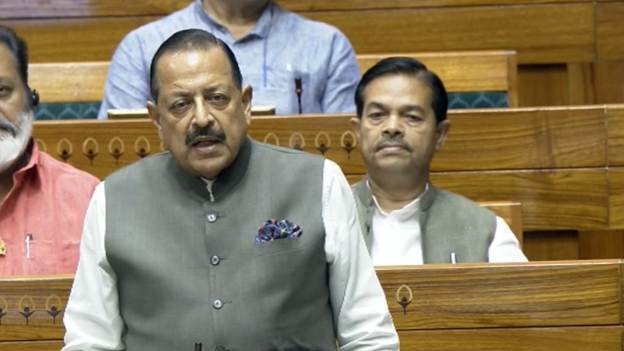
Minister of State Dr Jitendra Singh outlined the government’s roadmap in a written reply in the Lok Sabha, highlighting the country’s long-term nuclear strategy and its role in strengthening energy security.
India Targets 100 GWe Nuclear Capacity by 2047
The government’s nuclear expansion strategy is guided by India’s three-stage nuclear power programme, which seeks to make long-term use of the country’s thorium resources.
The Nuclear Energy Mission announced in the Union Budget 2025-26 has set an ambitious objective of expanding India’s nuclear power capacity to 100 GWe by 2047.
The government is pursuing two parallel approaches to achieve this goal. These include the deployment of large indigenous reactors, such as 700 MWe Pressurised Heavy Water Reactors (PHWRs), along with the development of advanced reactor technologies.
At the same time, Small Modular Reactors are being explored for brownfield sites, including locations associated with retiring fossil-fuel power plants, captive industrial facilities and remote areas requiring off-grid power.
Five Indigenous SMRs Planned by 2033
A major component of India’s next-generation nuclear programme is the development of indigenous SMRs.
The government aims to develop and operationalise at least five indigenous SMRs by 2033. The Bhabha Atomic Research Centre (BARC) is working on technologies including the 220 MWe Bharat Small Modular Reactor (BSMR-200) and the 55 MWe SMR-55.
BARC is also developing a High Temperature Gas Cooled Reactor with a capacity of up to 5 MWth, which could potentially be linked with a thermochemical process for hydrogen production.
Private Sector to Play a Bigger Role
The government is also seeking to expand India’s domestic nuclear industrial ecosystem.
Dr Jitendra Singh highlighted the Sustainable Harnessing and Advancement of Nuclear Energy for Transforming India (SHANTI) Act, 2025, which enables wider participation of public and private entities in areas such as nuclear manufacturing, engineering services, research and development and supply chains.
Indian industries are being supported through knowledge-sharing and technical assistance for emerging SMR technologies. Efforts are also underway to strengthen domestic suppliers and encourage private-sector research and development.
Several critical components are already being developed domestically, including low-alloy steel forgings for reactor pressure vessels and reactivity control drive mechanisms.
Thorium Remains Central to Long-Term Strategy
India’s nuclear programme also places significant emphasis on the future use of thorium.
Under the country’s three-stage programme, natural uranium is initially used in PHWRs. Spent fuel is then reprocessed to recover plutonium, which is used in the second stage involving Fast Breeder Reactors.
The third stage aims at large-scale utilisation of India’s thorium reserves through uranium-233 produced from thorium.
India has already carried out research into thorium-based fuels. Thorium oxide has been used in nuclear research and reactor programmes, while uranium-233 produced through thorium-related research has also been utilised for fuel fabrication for the KAMINI reactor at IGCAR, Kalpakkam.
Focus on Energy Security and Technological Self-Reliance
The government is combining reactor development, domestic manufacturing, nuclear fuel-cycle research and advanced technologies to strengthen India’s nuclear capabilities.
The roadmap also includes expanding indigenous infrastructure for nuclear medicine and medical isotope production.
With the simultaneous push for large reactors, indigenous SMRs, thorium research and private-sector participation, India is seeking to build a stronger nuclear ecosystem capable of supporting its long-term energy requirements while reducing dependence on overseas technology and supply chains.
The government has positioned this expansion as an important part of India’s broader objective of achieving energy security, technological self-reliance and a globally competitive nuclear industry.