


















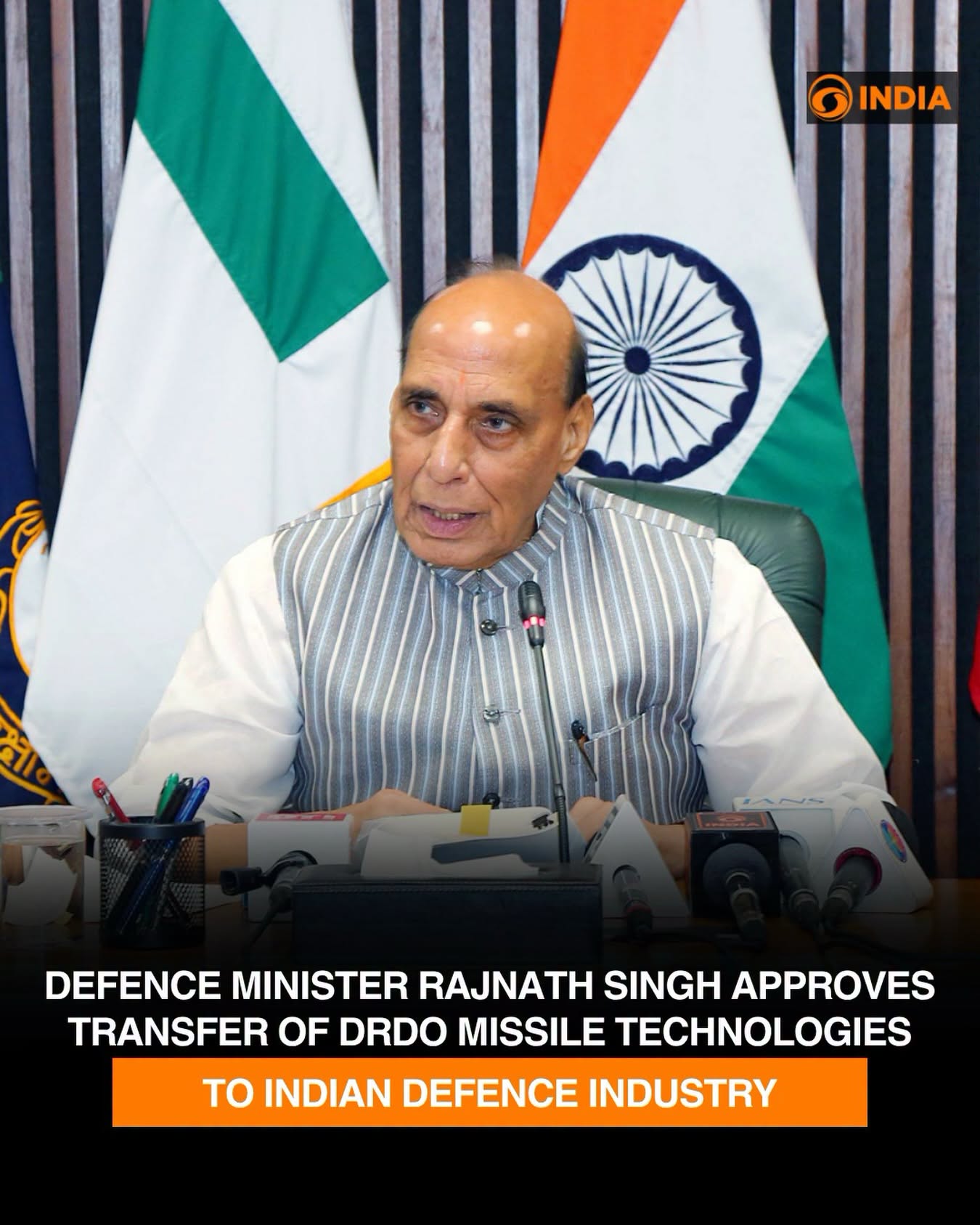
New Delhi, August 25, 2026: Defence Minister Rajnath Singh has approved the transfer of technology for all conventional missile systems developed by the Defence Research and Development Organisation (DRDO) to eligible Indian defence industries for indigenous production.
The move is aimed at accelerating the transition of defence technologies from the development stage to large-scale manufacturing, while strengthening India’s domestic defence industrial base and creating greater opportunities for Micro, Small and Medium Enterprises (MSMEs) and technology partners.
DRDO Missile Technologies to Be Transferred to Indian Industries
Under the decision, eligible Indian defence companies will be able to access technology for conventional missile systems developed by DRDO for indigenous production.
The initiative is expected to facilitate wider industrial participation in the manufacturing of defence systems and help translate India’s indigenous research and development capabilities into large-scale production.
The move also reflects the government’s continuing focus on strengthening domestic capabilities across the defence manufacturing ecosystem.
Focus on Aatmanirbharta in Defence
The technology transfer is expected to provide further momentum to Aatmanirbharta in defence, with greater emphasis on developing and manufacturing critical defence equipment within India.
Reducing dependence on imported defence equipment has remained an important component of India’s defence modernisation strategy.
By enabling eligible domestic industries to manufacture missile systems based on indigenous DRDO-developed technologies, the initiative could contribute to increased domestic value addition and a stronger self-reliant defence manufacturing ecosystem.
Boost for India’s Defence Industrial Base
The decision is also expected to strengthen India’s defence industrial base by enabling greater participation from domestic manufacturers.
The transition from technology development to production requires a broad industrial ecosystem involving large defence companies, MSMEs, component manufacturers, technology providers and specialised suppliers.
Opening up DRDO-developed missile technologies to eligible industries could therefore create additional opportunities across the defence supply chain.
Greater Opportunities for MSMEs and Technology Partners
One of the key expected outcomes of the initiative is increased participation by MSMEs and technology partners.
Smaller companies play an important role in supplying specialised components, technologies and manufacturing capabilities to the defence sector.
Greater integration of these companies into indigenous missile production could help expand India’s defence manufacturing network, encourage innovation and create new industrial capabilities.
The initiative may also provide opportunities for technology partners to contribute to the production and further development of indigenous defence systems.
From Development to Large-Scale Manufacturing
The technology transfer seeks to bridge the gap between successful defence research and actual industrial production.
DRDO has developed a range of indigenous defence technologies over the years. Making these technologies available to eligible Indian industries can help accelerate their movement from development and validation to larger-scale manufacturing.
This approach can also support faster production and improve the availability of indigenous defence equipment for India’s armed forces.
Reducing Import Dependence
The initiative is expected to contribute to reducing India’s dependence on imported defence systems and components.
A stronger domestic manufacturing ecosystem can help retain greater economic value within the country while supporting the development of specialised skills, supply chains and production capabilities.
In the long term, increased indigenous production can also strengthen India’s ability to maintain and upgrade its defence systems using domestic capabilities.
Enhancing Domestic Value Addition
The transfer of DRDO technologies to Indian industries is expected to increase domestic value addition in defence manufacturing.
Greater domestic production can create opportunities for Indian companies to develop expertise in areas such as advanced manufacturing, systems integration, electronics, engineering and specialised defence technologies.
This can contribute to the broader development of India’s high-technology industrial ecosystem.
Strengthening Operational Capabilities
The initiative is also expected to support India’s operational capabilities by facilitating indigenous production of conventional missile systems.
A robust domestic defence manufacturing base can provide greater flexibility in production, maintenance and technology development while supporting the long-term requirements of the armed forces.
The availability of indigenous manufacturing capabilities is particularly important for building a resilient defence supply chain.
A Step Towards a Self-Reliant Defence Sector
The decision comes as India continues to expand its domestic defence manufacturing capabilities and encourage greater private-sector participation.
The transfer of DRDO-developed missile technologies represents an important step towards connecting India’s defence research ecosystem with its industrial manufacturing capabilities.
By bringing together DRDO, defence industries, MSMEs and technology partners, the initiative is expected to strengthen the country’s overall defence innovation and production ecosystem.
Conclusion
Defence Minister Rajnath Singh’s approval to transfer technology for all conventional missile systems developed by DRDO to eligible Indian defence industries is expected to accelerate indigenous production and strengthen India’s defence industrial base.
The initiative aims to move technologies from development to large-scale manufacturing, while opening greater opportunities for MSMEs and technology partners.
With a focus on Aatmanirbharta, reduced import dependence, increased domestic value addition and stronger operational capabilities, the move is expected to further advance India’s efforts towards a self-reliant and technologically capable defence sector.