



















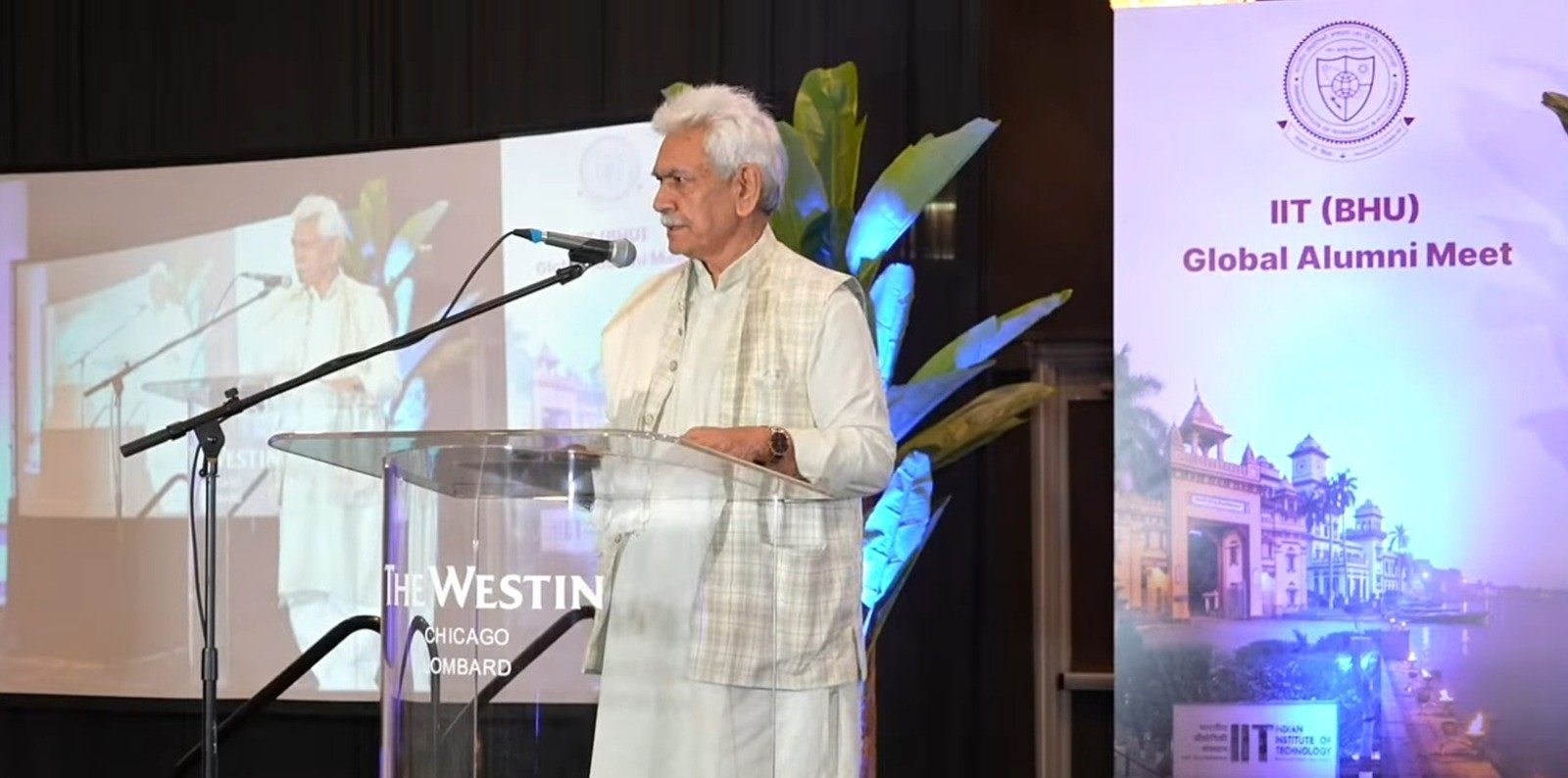
Chicago: India’s growing ambitions in technology, artificial intelligence and global leadership were highlighted at the IIT (BHU) Global Alumni Meet in Chicago, where the importance of combining technological progress with human values emerged as a central theme.
Addressing the gathering, the speaker paid tribute to Mahamana Pandit Madan Mohan Malaviya, recalling his contribution to engineering education and his broader vision of building India’s industrial capabilities.
The legacy of Malaviya was presented as an example of how education and institution-building can influence a country’s long-term development. His emphasis on knowledge, education and national progress continues to hold relevance as India enters an increasingly technology-driven era.
AI Seen as Major Driver of Economic Growth
Artificial intelligence was another major focus of the address. The speaker said AI has the potential to accelerate economic growth by bringing together human capabilities and machine intelligence.
As AI becomes increasingly integrated into industries, businesses and public services, its impact is expected to extend beyond technology companies. From manufacturing and healthcare to education, finance and research, artificial intelligence is emerging as a key force shaping the global economy.
However, the address also stressed that technological advancement cannot be separated from responsibility.
Ethics and Human Oversight Remain Essential
While recognising AI’s transformative potential, the speaker underlined the need for strong ethical safeguards and human oversight.
The message was clear: technology should remain a tool that serves people rather than becoming a force that operates without accountability. Human judgment, ethical principles and responsible governance will therefore remain important as increasingly sophisticated AI systems become part of everyday life.
The emphasis on human oversight comes at a time when governments, businesses and researchers around the world are debating questions surrounding AI safety, privacy, employment and accountability.
The challenge for India will be to encourage innovation while ensuring that technological development remains aligned with public welfare.
A Confident and Aspirational India
The address also focused on India’s changing position in the world. The speaker described the emergence of a new India as one that is stronger domestically, more confident internationally and increasingly prepared to contribute to shaping the future.
The country’s growing technology ecosystem, expanding digital infrastructure, skilled workforce and increasing global engagement were presented as important elements of this transformation.
Under the leadership of Prime Minister Narendra Modi, the speaker said India is working to strengthen its position on the global stage and create an increasingly influential role for itself in the emerging world order.
The message reflected a broader national ambition: that India’s development should not only benefit its own citizens but also contribute to solving challenges faced by humanity.
India’s Technology Moment
India’s rise in artificial intelligence could become an important part of its next phase of economic development. With a large pool of young professionals, engineers, researchers and technology entrepreneurs, the country has significant potential to become a major contributor to the global AI ecosystem.
But technological leadership will ultimately depend on more than innovation alone. Investment in research, education, responsible AI frameworks and human capital will be equally important.
The IIT (BHU) alumni gathering in Chicago therefore offered a larger reflection on India’s future—one where scientific advancement, economic growth and national ambition are expected to move alongside ethics and human responsibility.
As India seeks a greater role in shaping the future of technology, the central question will not simply be how quickly AI can advance, but how wisely humanity chooses to use it.

 Global Alumni Meet in Chicago, focusing on innovation and human)