



















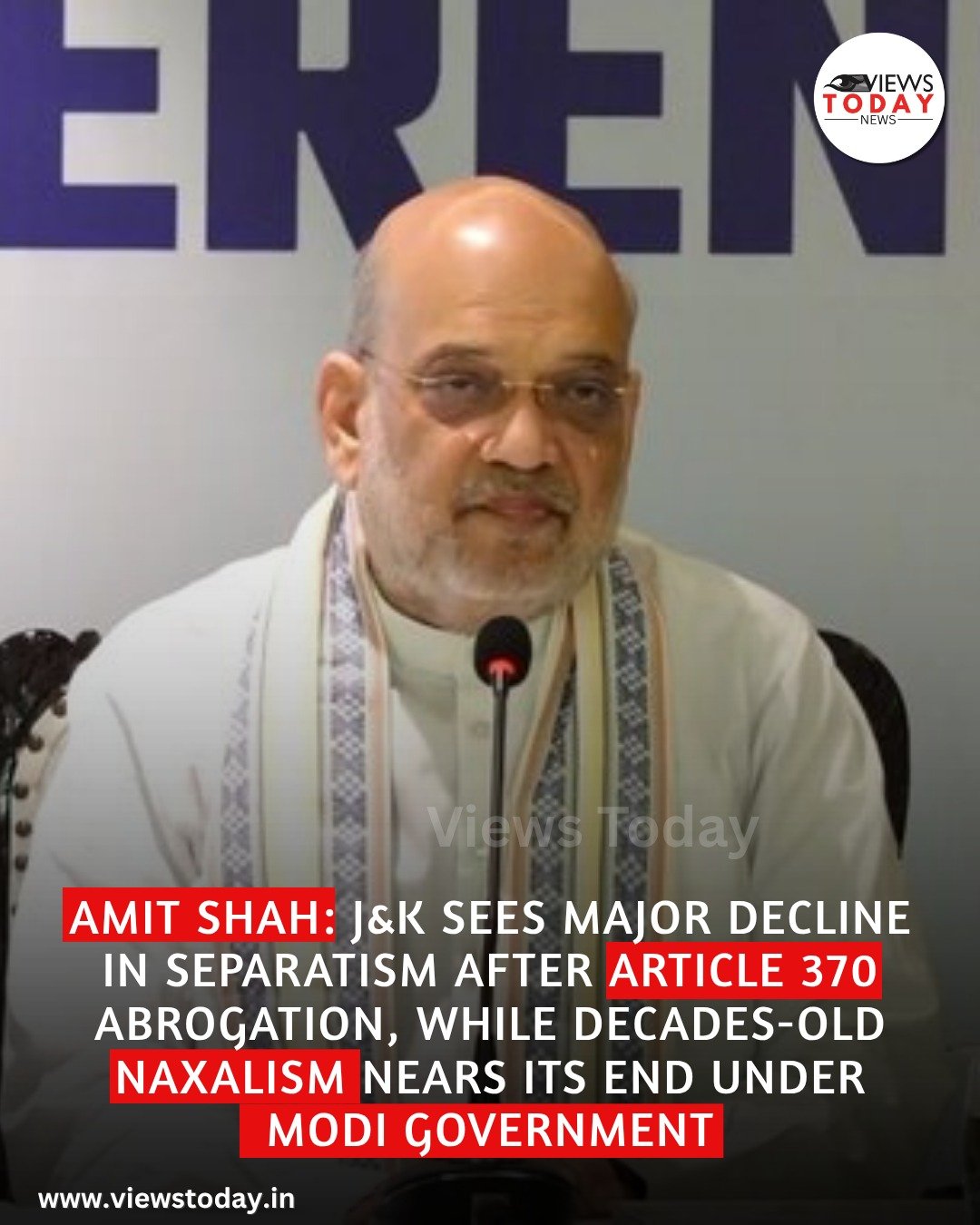
New Delhi: Union Home Minister Amit Shah has highlighted what he described as major changes in India’s internal security landscape, pointing to the decline in separatist activities in Jammu and Kashmir, the near-end of Left-Wing Extremism and progress towards peace in the Northeast under the Narendra Modi-led government.
Speaking about the government’s security and development approach, Shah said the situation in Jammu and Kashmir has changed considerably since the abrogation of Article 370 in August 2019. He linked the reduction in separatist activity and violence to a combination of stronger security measures, governance reforms and development initiatives.
The change in J&K has been particularly visible among the younger generation. For years, separatist politics and violence affected everyday life, tourism and economic activity in the region. The government has maintained that the decline in violence has created greater space for investment, tourism, education and employment.
J&K Witnesses Security Shift
The post-2019 period has brought a substantial change in the security environment in Jammu and Kashmir. Terror-related incidents and street violence have fallen significantly compared with previous years, while tourism and infrastructure development have received greater attention.
For the Centre, the abrogation of Article 370 was presented as a step towards fully integrating Jammu and Kashmir with the rest of the country. Since then, the administration has focused on strengthening institutions, improving connectivity and expanding development projects.
However, sustaining peace remains an ongoing challenge. Economic opportunities and employment for young people will be crucial to ensuring that the security gains of recent years translate into long-term stability.
Naxalism Loses Ground
Shah also pointed to the dramatic decline of Left-Wing Extremism, commonly referred to as Naxalism, which had remained a major internal security challenge for decades.
Large parts of central and eastern India were once affected by Maoist violence. The conflict claimed thousands of lives over the years and affected development in remote and tribal regions.
The government has pursued a strategy combining security operations with development and rehabilitation. Better road connectivity, mobile networks, welfare delivery and greater government presence in previously inaccessible areas have accompanied action against armed extremist groups.
The result has been a sharp contraction of areas affected by Naxal violence. What was once described as India’s “Red Corridor” has been reduced considerably, with several former hotspots now experiencing improved security and increased development activity.
Northeast Takes the Peace Route
Shah also highlighted developments in the Northeast, where several insurgencies had persisted for decades.
The Centre has pursued negotiations with various armed groups and regional stakeholders, leading to multiple peace agreements and surrenders. Thousands of cadres have laid down their arms and entered the mainstream, according to government figures.
The reduction in violence has created opportunities for governments to focus more strongly on infrastructure, connectivity, education, investment and employment across the region.
For the Northeast, the success of the peace process will ultimately depend on effective implementation of agreements and ensuring that communities see tangible benefits from improved stability.
The Road Ahead
The decline in separatist violence in Jammu and Kashmir, the weakening of Naxalism and progress in peace talks in the Northeast mark an important phase in India’s internal security journey.
But security cannot be viewed separately from development. Roads, schools, hospitals, employment, entrepreneurship and access to opportunities are equally important in preventing alienation and ensuring lasting peace.
The government’s challenge now is to consolidate the gains made over the past several years. If improved security is matched by inclusive growth and meaningful opportunities for young people, regions once associated with conflict can increasingly become centres of tourism, investment and economic activity.
India’s internal security story is therefore moving from a focus on containing violence towards building conditions where violence has little room to return.