



















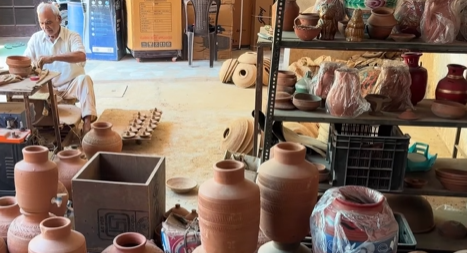
18 May: In an age dominated by refrigerators, plastic containers, and modern kitchen appliances, a 75-year-old potter from Udhampur is quietly preserving a centuries-old tradition that is once again finding relevance during rising summer temperatures and growing environmental awareness.
Tarseem Lal, a veteran artisan known for crafting traditional clay pots and earthen utensils, continues to shape मिट्टी के घड़े by hand despite changing market trends and declining interest in traditional pottery over the years.
As intense summer heat and recurring heatwaves push many households toward natural cooling alternatives, clay pots are witnessing a revival in demand across several parts of the country. Earthen pots, once common in almost every Indian household, are increasingly being appreciated again for their ability to naturally cool water without electricity while also remaining environmentally friendly.
For artisans like Tarseem Lal, this renewed interest has brought not only livelihood opportunities but also hope that traditional pottery may survive in future generations.
For decades, modern materials such as steel, plastic, and synthetic storage products had gradually replaced traditional clay utensils in daily use. Many local potters struggled to sustain their craft as machine-made alternatives became cheaper, faster, and more commercially dominant.
However, the growing emphasis on sustainability, eco-friendly lifestyles, and the “Vocal for Local” movement has slowly started bringing attention back to handmade local products and traditional artisans.
Tarseem Lal believes that pottery is not merely a profession but part of cultural heritage and rural identity. Every handcrafted clay pot, according to him, reflects patience, skill, and a connection with nature that machine-produced products cannot replicate.
Apart from cooling water naturally, clay pots are also considered healthier by many households because they preserve natural taste and avoid the use of chemicals associated with plastic storage.
The revival of earthenware also aligns with increasing environmental concerns surrounding plastic pollution and unsustainable consumer habits. Clay products are biodegradable, locally sourced, and energy-efficient, making them an eco-friendly alternative in today’s climate-conscious world.
Despite the renewed demand, traditional potters continue to face several challenges, including limited market access, declining youth participation, rising raw material costs, and competition from mass-produced products.
Artisans like Tarseem Lal say one of their biggest concerns is the lack of younger generations entering the craft. Many rural artisans fear that traditional pottery skills may gradually disappear if proper support, training, and financial incentives are not provided.
Cultural experts believe preserving local crafts such as pottery is important not only for employment generation but also for protecting regional heritage and indigenous knowledge systems.
In Jammu and Kashmir, traditional crafts have long formed an essential part of local identity and rural economy. Encouraging local artisans through exhibitions, digital marketplaces, tourism support, and government welfare programmes could help strengthen such traditional occupations.
The story of Tarseem Lal also reflects the resilience of local artisans who continue working quietly despite changing lifestyles and commercial pressures.
At a time when modern society is increasingly rediscovering sustainable living practices, traditional clay pottery is once again proving its relevance — both as an eco-friendly solution and as a symbol of cultural continuity.
For the 75-year-old potter from Udhampur, every clay pot he shapes carries not just water, but generations of tradition, hard work, and hope that the younger generation will continue preserving this timeless craft.