


















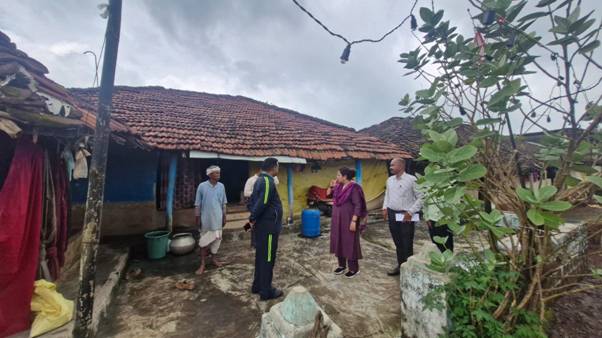
SEP 28: In a milestone for inclusive development, Paatalkot valley in Chhindwara district witnessed the inauguration of its first health care centre, bringing long-awaited medical services to one of India’s most remote tribal belts. The centre was opened by Dr. Rashmi Choudhary, Assistant Commissioner, National Education Society for Tribal Students (NESTS), New Delhi, during her recent visit under the Aadi Karmayogi Abhiyan.
Paatalkot, located deep in the Tamia block, is home to the Gond and Bharia tribes, both classified as Particularly Vulnerable Tribal Groups (PVTGs). With around 4,000 residents spread across 12 scattered villages, the valley has long remained cut off from essential amenities. Residents were compelled to rely on steep trails and long journeys for basic healthcare, making this inauguration a historic relief.
In recent years, several government schemes have brought transformative changes to the valley. Initiatives under the Pradhan Mantri Janman Yojana, Dharti Abba Janjatiya Gram Utkarsh Abhiyan, and Aadi Karmayogi Abhiyan have delivered roads, drinking water, housing, electricity, and schools. Children now access education at the Eklavya Residential School in Tamia, while tourism-based homestay projects in Chimtipur have opened new livelihood opportunities.
However, healthcare remained a major gap. During her interaction with villagers at Sindhouli and Rated, Dr. Choudhary learned of the grievances regarding the non-functional Ayushman Arogya Kendra, despite the building being ready. Taking swift action, she directed health officials to operationalize the centre immediately. By the evening of 27 September 2025, the health facility was formally inaugurated and made functional with staff and essential facilities.
“This is a historic day for Paatalkot. For the first time, our people will not have to walk miles for basic medical needs,” said a villager from Sindhouli.
The initiative is being celebrated as a turning point in Paatalkot’s development journey, demonstrating the government’s commitment to last-mile delivery and empowerment of remote tribal communities.