
















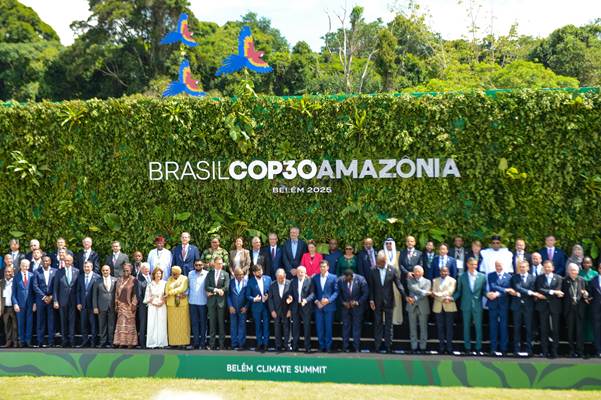
NOV 08: At the Leaders’ Summit of the UNFCCC CoP30 held in Belém, Brazil, India reiterated its steadfast commitment to equitable and inclusive climate action based on the principles of equity and Common but Differentiated Responsibilities and Respective Capabilities (CBDR-RC). Delivering India’s National Statement, Ambassador Shri Dinesh Bhatia underscored the nation’s approach to sustainable growth guided by national circumstances and shared global responsibility.
Marking the 10th anniversary of the Paris Agreement and 33 years since the Rio Summit, India called upon developed countries to accelerate emission reductions and deliver on their long-standing commitments for adequate, predictable, and concessional climate finance. The statement emphasized that while developing nations are undertaking ambitious climate action, global efforts remain insufficient to meet temperature goals.
Highlighting India’s low-carbon development pathway under the leadership of Prime Minister Shri Narendra Modi, the statement noted that the country has reduced emission intensity of GDP by 36% between 2005 and 2020, with non-fossil fuel power now exceeding 50% of installed capacity. India’s renewable energy capacity stands at nearly 200 GW, making it the world’s third-largest producer of renewables.
India also welcomed Brazil’s initiative to establish the Tropical Forests Forever Facility (TFFF), recognizing its importance for conserving global tropical forests, and announced participation as an Observer. The country reaffirmed its support for multilateralism and its commitment to safeguarding the integrity of the Paris Agreement architecture.
India urged all nations to make the coming decade one of implementation and equity — defined not only by climate targets but by concrete action, resilience, and shared responsibility built on trust, fairness, and sustainable partnership.