


















 in New Delhi)
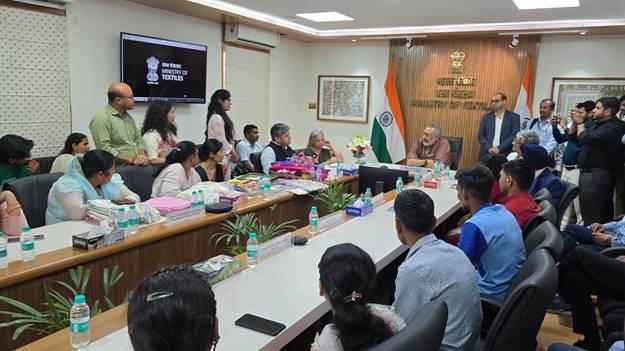
May 28: Union Minister of Textiles, Shri Giriraj Singh, recently led a pivotal meeting of the Textile Advisory Group (TAG) in New Delhi, laying the foundation for a comprehensive transformation of the Indian textile industry. With the goal of building a $350 billion textile economy by 2030, the meeting focused on enhancing productivity, innovation, sustainability, and seamless integration across the textile value chain.
At the heart of the discussion was the “Mission for Cotton Productivity,” a strategic push to improve cotton yield and quality while supporting the Prime Minister’s 5F vision—Farm to Fibre to Factory to Fashion to Foreign. Shri Singh emphasized the urgent need for data mapping and gap analysis to align production capabilities with global market demands. He urged industry leaders to embrace technological innovations and increase value creation at every stage of the supply chain.
Minister of State for Textiles, Shri Pabitra Margherita, echoed the call for unity and collaborative action. He highlighted the importance of empowering farmers through sustainable cultivation practices and providing them with access to high-quality seeds and modern farming methods. The integration of eco-friendly fibers and improved processing methods are expected to uplift rural livelihoods while meeting global quality standards.
Textiles Secretary Smt. Neelam Shami Rao stressed the importance of holistic growth across the value chain. She called on stakeholders to create a future-ready roadmap that strengthens industry linkages and promotes the adoption of cutting-edge technology. Her remarks reinforced the government’s commitment to a textile ecosystem that is globally competitive, environmentally responsible, and inclusive of all stakeholders—from farmers to exporters.
One of the meeting’s notable highlights was the potential use of alternative fibers like milkweed, known for its superior thermal and physical properties. Recognized for its sustainability, milkweed fiber presents both environmental and economic benefits and could emerge as a promising income source for farmers.
Industry leaders welcomed the inclusive approach of the government, appreciating its focus on technological advancements, sustainable practices, and public-private collaboration. With alignment from multiple ministries and research institutions, the Textile Advisory Group’s roadmap is poised to unlock a new era of prosperity.
As India works to realize its Vision 2030, the focus on India textile sector growth through innovation, integration, and inclusivity signals a strong commitment to becoming a global textile powerhouse.