


















)
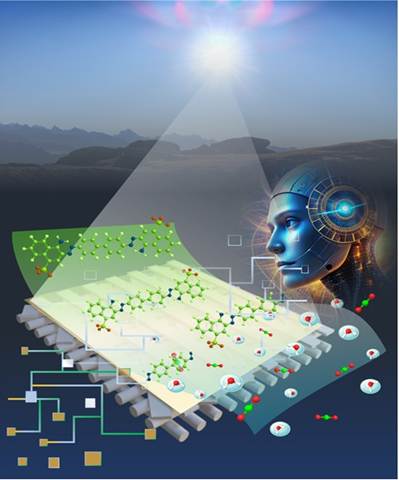
JUNE 24: A team of Indian scientists has developed a cutting-edge, eco-friendly water purification system that uses a unique combination of sunlight, gentle vibrations, and Artificial Intelligence (AI) to remove harmful dyes from industrial wastewater. This low-cost, biodegradable innovation could revolutionize water treatment across industries and remote communities.
Researchers at the Institute of Nanoscience and Technology (INST), Mohali — an autonomous institute under the Department of Science & Technology (DST) — have engineered a 3D-printed scaffold made from biodegradable Polylactic Acid (PLA). This scaffold is coated with Bismuth Ferrite (BiFeO₃), a powerful catalyst that activates under both sunlight and mechanical energy through a process called piezo-photocatalysis.
The innovation effectively breaks down toxic dyes like Congo Red and Methylene Blue, commonly found in industrial effluents from textile and pharmaceutical sectors. These pollutants pose serious risks to human health and aquatic ecosystems. Traditional treatment methods involve costly and hazardous chemicals, but the new system avoids this by tapping into renewable energy sources.
Even during cloudy weather, the vibration mechanism ensures the cleaning process continues uninterrupted. In tests, the system removed 98.9% of Congo Red and 74.3% of Methylene Blue, outperforming conventional methods.
What sets this innovation apart is the integration of Artificial Intelligence. Scientists developed predictive models using Artificial Neural Networks (ANNs) to optimize performance across various environmental conditions. These AI models achieved up to 99% accuracy, enabling dynamic, real-time system adjustments for maximum efficiency.
The BFO catalyst was synthesized using a sol-gel method, while PLA scaffolds were 3D-printed in-house. The entire system is low-cost, biodegradable, reusable, scalable, and chemical-free, making it suitable for widespread adoption. This breakthrough aligns with India’s vision of sustainable development and the Aatmanirbhar Bharat mission, offering potential for industrial and rural deployment alike.
The findings were published in the reputed journal Nano Energy (Elsevier) and mark a leap forward in sustainable water purification technologies.