


















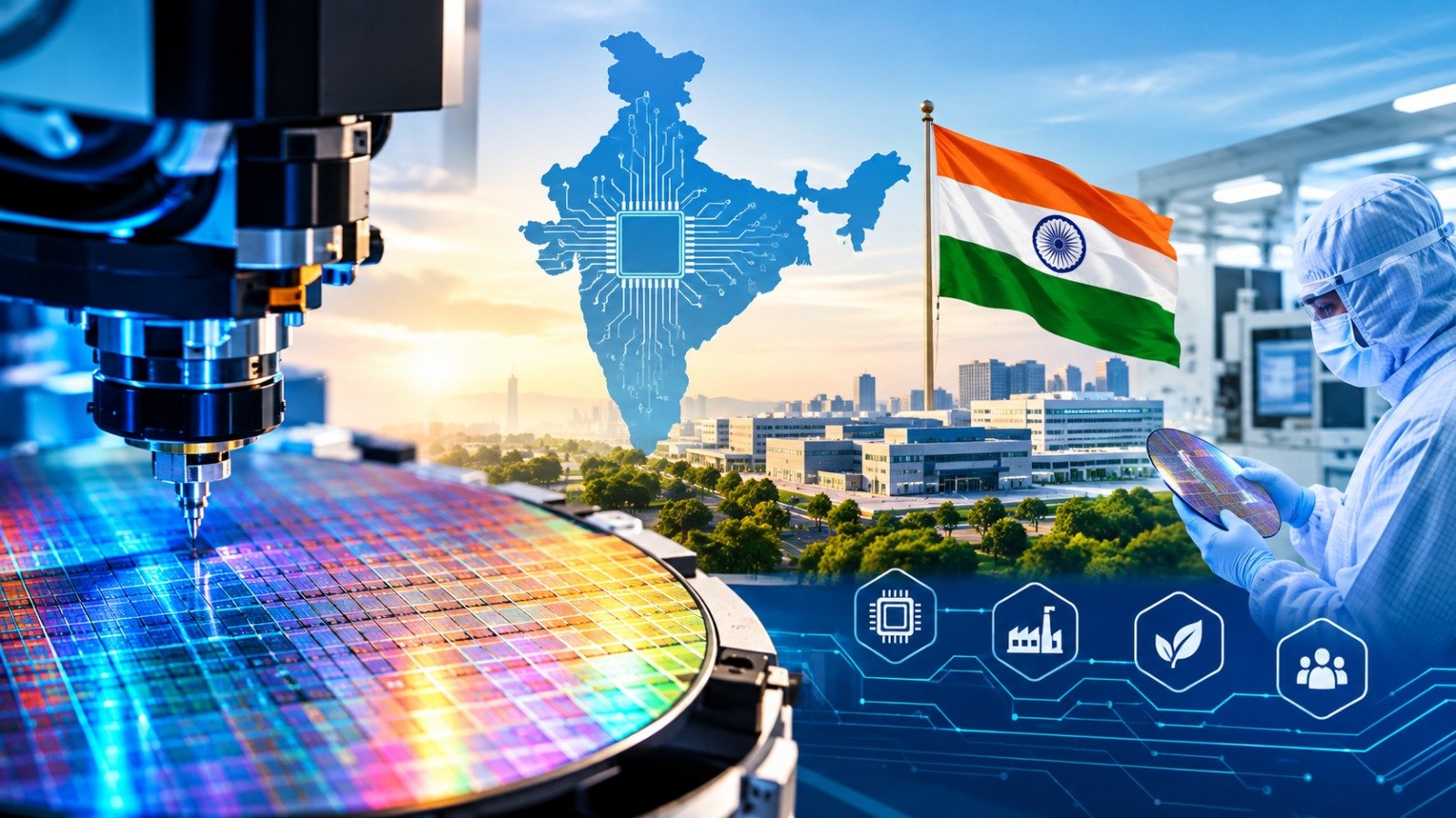
New Delhi, September 15, 2026: India is entering a significant phase in its semiconductor journey as the country moves from policy ambition towards building a broader, integrated chip ecosystem spanning design, fabrication, advanced packaging, testing, equipment, research and skilled talent.
Prime Minister Narendra Modi is scheduled to inaugurate SEMICON India 2026 at Yashobhoomi in Dwarka on September 17. Being held under the theme “Silicon to Systems: Building the Ecosystem”, the three-day event will bring together global semiconductor companies, investors, policymakers, researchers and industry leaders.
The event comes as India seeks to strengthen its position in an industry that has become central to the global economy and national security.
From electronics manufacturing to semiconductor capability
Semiconductors power a vast range of modern products, including smartphones, automobiles, aircraft, medical equipment, satellites and defence systems. Global supply-chain disruptions during the COVID-19 pandemic highlighted the strategic risks associated with excessive dependence on concentrated sources of chip production.
India has since accelerated efforts to develop domestic capabilities.
The country’s electronics manufacturing sector has expanded sharply over the past decade. Electronics production increased from about Rs 1.9 lakh crore in 2014-15 to Rs 13.11 lakh crore in 2025-26, while electronics exports rose from nearly Rs 38,000 crore to Rs 4.24 lakh crore.
Mobile phone production also grew from Rs 18,000 crore to Rs 6.27 lakh crore during the period. Mobile phone exports increased from around Rs 1,500 crore to Rs 2.59 lakh crore.
Smartphones have emerged as India’s largest exported commodity in FY 2025-26, while the country now manufactures approximately 99.2 per cent of the mobile phones used domestically. The electronics manufacturing sector currently supports around 2.5 million jobs.
This expanding manufacturing base has provided an important foundation for India’s semiconductor ambitions.
Semicon India Programme enters a new phase
The government launched the Semicon India Programme in 2021 with an outlay of Rs 76,000 crore, covering areas ranging from chip design and fabrication to packaging, testing, equipment, materials and manpower development.
In July 2026, the government approved Semicon India Programme 2.0 with an outlay of Rs 1,27,500 crore, strengthening the country’s focus on six areas: chip design, semiconductor equipment and materials, fabrication facilities, advanced packaging, research and development, and talent development.
So far, 12 semiconductor projects across six states have received approval, involving investment commitments exceeding Rs 1.64 lakh crore. These projects cover silicon and compound semiconductor fabrication, display fabrication and advanced packaging.
Three facilities have already commenced commercial production, indicating that India’s semiconductor strategy is progressing from policy announcements towards operational manufacturing capacity.
Building India’s semiconductor talent pool
Infrastructure alone cannot establish a globally competitive semiconductor industry. India is therefore also investing in engineers, designers and specialised technical talent.
The government has set a target of developing 85,000 skilled semiconductor engineers during this decade.
Through the Chips to Startup (C2S) programme, Electronic Design Automation tools have been deployed across 320 academic institutions, with more than 68,000 students trained.
Meanwhile, 24 semiconductor design projects have received financial support, while 105 start-ups and MSMEs have received EDA tool support under the Design Linked Incentive Scheme.
By April 2026, 211 chips had been taped out by 75 institutions, with seven chips fabricated at different technology nodes, including nodes as advanced as 12 nanometres.
The ChipIN Centre at C-DAC has further expanded access to sophisticated chip-design infrastructure. Its facilities have reached more than one lakh engineers from over 500 organisations, including academic institutions and start-ups.
Strengthening global semiconductor partnerships
India’s semiconductor strategy also extends beyond domestic manufacturing. The country has formally joined the Pax Silica coalition, alongside the United States and partner countries, to strengthen global silicon supply chains.
The initiative covers the wider silicon ecosystem, including critical minerals, semiconductor fabrication, advanced artificial intelligence systems and deployment infrastructure. Such partnerships are intended to diversify supply chains and strengthen cooperation among technology partners.
SEMICON India 2026 showcases growing ecosystem
SEMICON India 2026 will provide a major platform for showcasing India’s progress. The exhibition is expected to feature more than 600 exhibitors, including 300 international companies, spread across 15,000 square metres.
More than 150 speakers are expected to participate, alongside six country pavilions and 12 state pavilions. The event will also feature a start-up showcase, student hackathon, workforce development pavilion and women’s forum.
For India, the significance of SEMICON India 2026 extends beyond a single industry exhibition. The country’s semiconductor strategy is increasingly focused on creating an end-to-end ecosystem that connects research, chip design, manufacturing, packaging, talent, start-ups and global supply chains.
If sustained, this ecosystem approach could help India strengthen technological self-reliance while positioning the country as a more significant player in the global semiconductor and digital economy.