


















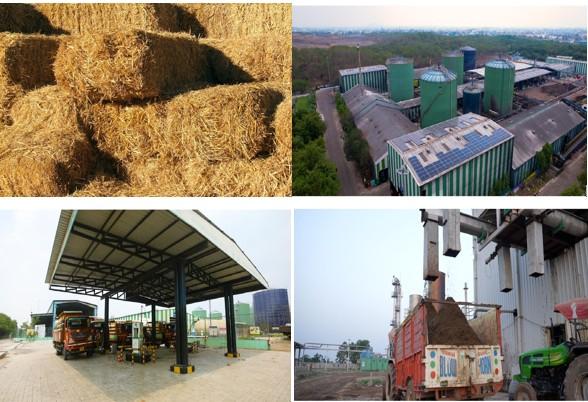
JUNE 28: The Ministry of New and Renewable Energy (MNRE) has notified revised guidelines for Waste-to-Energy (WtE) projects under the National Bioenergy Programme, marking a significant shift toward performance-based incentives and streamlined processes. The updated framework is aimed at encouraging broader participation from industries—especially MSMEs—in India’s clean energy journey through more efficient waste management and energy generation from bio-waste.
These revisions prioritize ease of doing business, increased transparency, and a more flexible disbursement of Central Financial Assistance (CFA). One of the most notable changes is the simplification of procedures for approvals, documentation, and inspections, enabling quicker implementation and smoother operations of WtE projects.
A core highlight is the new performance-linked CFA model. Previously, developers had to reach 80% generation capacity before receiving full CFA. Under the revised rules, CFA can now be disbursed in two stages:
-
50% of the CFA will be released after obtaining the Consent to Operate from the State Pollution Control Board, secured against a bank guarantee.
-
The remaining 50% will be released upon achieving 80% of the rated or eligible capacity, whichever is lower.
Importantly, even if plants fall short of 80% generation during performance inspection, a pro-rata disbursal is permitted—provided they achieve a minimum Plant Load Factor (PLF) of 50%. Projects performing below this threshold will not qualify for CFA.
The inspection process has also been updated for improved credibility and reduced delays. Joint inspections will now be led by the National Institute of Bio-Energy (SSS-NIBE) along with State Nodal Agencies (SNAs), Biogas Technology Development Centers (BTDCs), or MNRE-empaneled agencies. Developers who do not opt for advance CFA will need to undergo only one performance inspection, cutting down on procedural burdens.
Developers are also allowed to claim CFA within 18 months from either the commissioning date or the in-principle approval—whichever is later, offering greater operational flexibility.
These forward-looking revisions signal the government’s strong commitment to enabling sustainable waste management, accelerating clean energy adoption, and supporting a business-friendly environment. By linking support to actual project performance, MNRE aims to promote reliability, accountability, and long-term impact in India’s WtE sector.



 has notified revised guidelines for Waste-to-Energy (WtE) projects under the National Bioenergy Programme)