


















Dry Fruit Kesar Sund Panjeeri: Ingredients, Benefits and Traditional Goodness | Baniya Super Market
Introduction
Indian traditional foods are valued not only for their taste but also for the ingredients and culinary traditions passed down through generations. One such preparation is Dry Fruit Kesar Sund Panjeeri, a rich and flavourful blend of dry fruits, nuts, saffron and desi ghee.
Popular in many North Indian households, panjeeri is often enjoyed during colder months, family gatherings, and special occasions. Its ingredients provide a combination of energy, healthy fats, protein, and other essential nutrients, making it a satisfying addition to a balanced diet.
At Baniya Super Market, Dry Fruit Kesar Sund Panjeeri brings together the familiar flavours of traditional Indian food and the richness of carefully selected ingredients. Whether you enjoy it as a small treat with warm milk or as part of your family’s seasonal food traditions, understanding its ingredients can help you appreciate this classic preparation even more.
In this guide, we explore the main ingredients of Dry Fruit Kesar Sund Panjeeri, their nutritional properties, potential benefits, and simple ways to enjoy it.
What Is Dry Fruit Kesar Sund Panjeeri?
Sund Panjeeri is a traditional Indian preparation made using a combination of ingredients such as ghee, nuts, dry fruits, and other components depending on the recipe. Kesar, or saffron, adds a distinctive aroma, delicate flavour, and golden colour.
Unlike ordinary sweets made primarily with sugar, dry fruit panjeeri can provide nutrients from nuts, seeds and other ingredients. However, its nutritional profile depends on the recipe, quantities and preparation method.
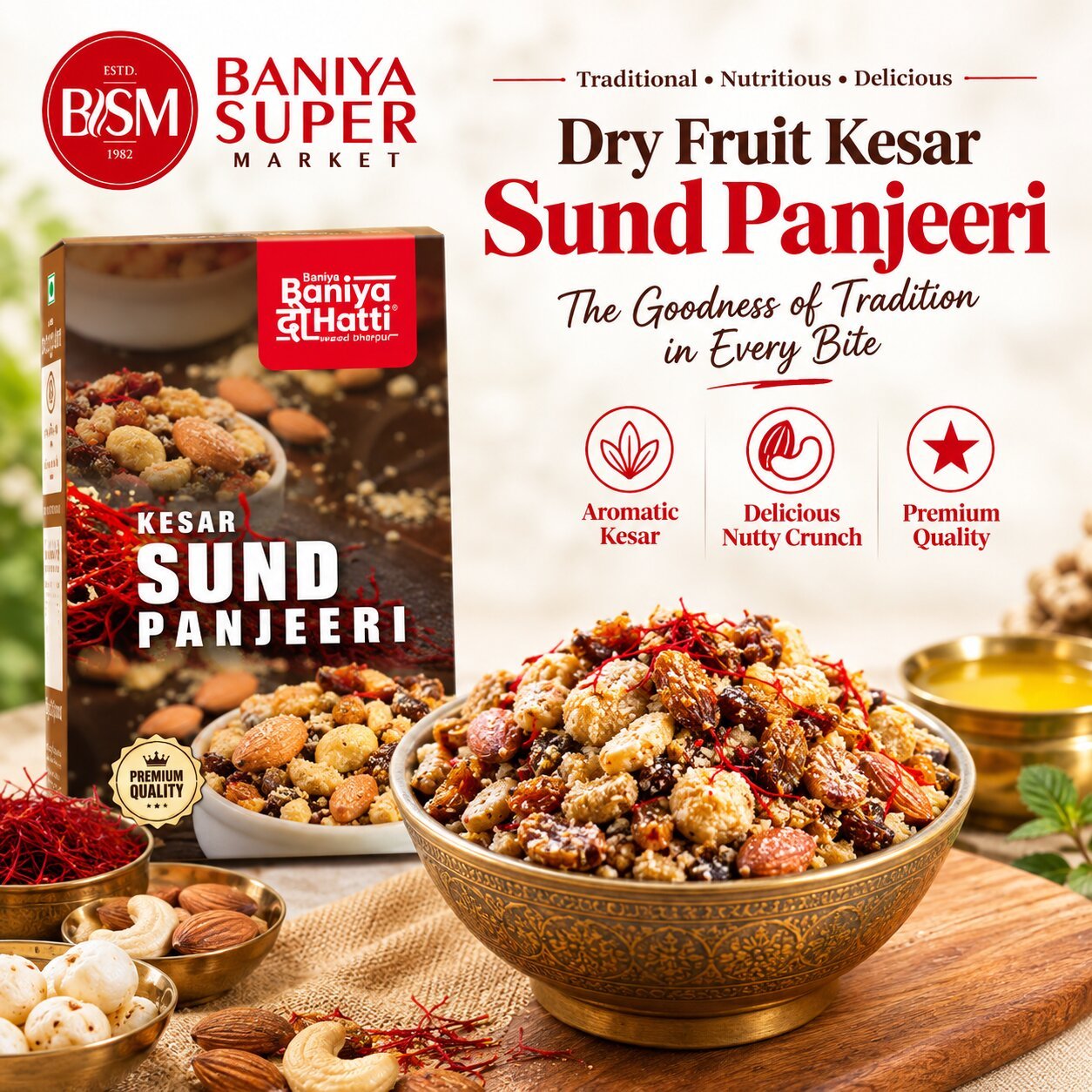
Baniya Super Market’s Dry Fruit Kesar Sund Panjeeri combines the traditional appeal of panjeeri with ingredients including almonds, cashews, fox nuts, raisins, saffron, and desi ghee.
Key Ingredients in Dry Fruit Kesar Sund Panjeeri
1. Almonds (Badam)
Almonds are a popular ingredient in traditional Indian foods because of their flavour and nutritional value.
Nutritional benefits of almonds:
- Vitamin E: Helps protect cells from oxidative damage.
- Healthy fats: Primarily unsaturated fats that support overall health.
- Protein: Contributes to the body’s tissue maintenance and repair.
- Dietary fibre: Supports normal digestion and helps promote fullness.
- Magnesium: Plays a role in normal muscle and nerve function.
When included in panjeeri, almonds contribute a pleasant nutty flavour and a satisfying texture. They also make the preparation more nutritionally diverse.
2. Cashews (Kaju)
Cashews add a naturally creamy taste and a rich texture to dry fruit preparations.
They provide several nutrients, including:
- Magnesium for normal muscle and nerve function.
- Copper, which supports connective tissue formation and iron metabolism.
- Protein and unsaturated fats.
- Zinc, which contributes to normal immune function.
Cashews complement the flavour of desi ghee and saffron, helping create a rich and balanced taste in traditional panjeeri.
3. Fox Nuts (Makhana)
Fox nuts, commonly known as makhana, are frequently used in Indian snacks and traditional preparations.
They provide carbohydrates and some protein, while generally being low in fat when prepared without added oil or ghee. Their nutritional profile changes when combined with other ingredients.
Why are fox nuts used in panjeeri?
- They add a light, pleasant texture.
- They provide carbohydrates that contribute to energy intake.
- They complement nuts such as almonds and cashews.
- They help create variety in the preparation’s texture and flavour.
When fox nuts are combined with nuts and ghee, the result is a more substantial food than plain roasted makhana.
4. Raisins (Kishmish)
Raisins are dried grapes that bring natural sweetness to traditional recipes.
Their nutritional properties include:
- Carbohydrates that provide energy.
- Small amounts of dietary fibre.
- Potassium, which contributes to normal muscle function and fluid balance.
- Plant compounds that contribute to their overall nutritional profile.
Raisins can add sweetness to panjeeri without relying entirely on added sugar. However, they still contain concentrated natural sugars, so portion size matters, especially for people monitoring their blood glucose.
5. Saffron (Kesar)
Saffron is a prized spice known for its distinctive fragrance, golden colour and delicate flavour. It is used in Indian sweets, milk preparations and festive recipes.
Saffron contains naturally occurring compounds, including crocin and safranal, that have been studied for their antioxidant properties.
The role of saffron in panjeeri:
- Adds a distinctive aroma and colour.
- Enhances the flavour of nuts and ghee.
- Gives the preparation a traditional, premium character.
Although saffron has been researched for various potential health effects, the small quantities typically used in food should not be considered a treatment for any medical condition.
6. Desi Ghee
Desi ghee is an important ingredient in many traditional Indian preparations. It contributes richness, aroma and a smooth texture.
Ghee provides energy because it is predominantly fat. It also helps carry the flavours of spices such as saffron throughout the preparation.
Potential dietary contributions of ghee:
- Supplies concentrated energy.
- Helps the body absorb fat-soluble vitamins from the overall diet.
- Improves the flavour and texture of traditional recipes.
Ghee is also high in saturated fat. For this reason, it is best enjoyed in moderate amounts as part of a balanced diet rather than treated as a food that should be consumed without limits.
7 Potential Benefits of Dry Fruit Kesar Sund Panjeeri
The potential benefits of panjeeri depend on the ingredients, portion size and the rest of your diet. Here are seven reasons why its ingredients can contribute to a varied and balanced eating pattern.
1. Provides Energy
Nuts, raisins and ghee contain energy-producing nutrients. Carbohydrates provide a readily available source of energy, while fats supply concentrated energy.
A small serving of dry fruit panjeeri may be useful when you want a satisfying snack between meals. Its energy density also means that large portions can add substantial calories.
2. Supplies Healthy Fats
Almonds and cashews contain unsaturated fats, which can support cardiovascular health when they replace some saturated fats in the diet.
Although panjeeri also contains ghee, the nuts contribute a useful mix of fats and other nutrients. Moderation remains important because the complete preparation can be calorie-dense.
3. Contributes to Normal Muscle and Nerve Function
Almonds and cashews provide minerals such as magnesium, which is involved in normal muscle contraction, nerve signalling and many other processes in the body.
Panjeeri can contribute some of these nutrients, but it should be enjoyed alongside other varied foods rather than relied upon as a primary source of minerals.
4. Supports Digestive Health
Almonds and raisins contain dietary fibre, which contributes to normal bowel function.
The amount of fibre in a serving of panjeeri depends on the recipe and portion size. Drinking enough water and eating a varied diet that includes fruits, vegetables, whole grains and legumes are also important for digestive health.
5. Provides Antioxidant Nutrients and Plant Compounds
Almonds provide vitamin E, while saffron contains naturally occurring compounds with antioxidant activity.
Antioxidants help protect cells from oxidative damage. The presence of these ingredients is a nutritional advantage, but it does not mean that eating panjeeri alone will prevent disease or provide a specific medical benefit.
6. Makes a Satisfying Seasonal Snack
During colder months, many families prefer richer, warming foods. Panjeeri fits naturally into these seasonal eating traditions because of its nutty flavour and substantial texture.
It can be enjoyed on its own in a small portion or paired with warm milk. Its suitability depends on your personal dietary needs and the overall composition of your meals.
7. Brings Traditional Ingredients Together
One of panjeeri’s strengths is the combination of several ingredients in one preparation. Nuts, dried fruit, saffron and ghee each contribute different flavours and nutritional properties.
This variety can make the food enjoyable and satisfying while connecting modern households with familiar culinary traditions.
It is important to remember that panjeeri is a food, not a medicine. It cannot guarantee improved immunity, prevent illness or replace a balanced diet.
How to Enjoy Dry Fruit Kesar Sund Panjeeri
There are several simple ways to include panjeeri in your routine.
As a standalone snack: Enjoy a small portion when you want something flavourful and filling.
With warm milk: A small serving alongside warm milk is a traditional combination, especially during colder months.
As part of a family gathering: Serve it as a traditional sweet or snack during special occasions.
As an occasional dessert: Its rich flavour makes it suitable for those moments when you want something different from conventional sweets.
Since panjeeri contains calorie-dense ingredients, choose a portion that fits your dietary needs. People managing diabetes should pay attention to the total carbohydrate content, including the natural sugars in raisins and any added sweeteners.
How to Store Dry Fruit Kesar Sund Panjeeri
Proper storage helps preserve flavour, texture, and freshness.
- Follow the storage instructions provided on the product packaging.
- Keep the product in a cool, dry place, away from direct sunlight and moisture.
- Close the container securely after each use.
- Use a clean, dry spoon to serve it.
- Check the packaging for the best-before date and any specific refrigeration instructions.
If you notice an unusual smell, visible mould or other signs of spoilage, do not consume the product.
Why Choose Baniya Super Market Dry Fruit Kesar Sund Panjeeri?
Traditional food is often appreciated for the quality of its ingredients, its familiar taste, and the convenience it brings to everyday life.
Baniya Super Market Dry Fruit Kesar Sund Panjeeri brings together the appeal of a traditional preparation with the flavours of almonds, cashews, fox nuts, raisins, saffron and desi ghee.
It offers a convenient way to enjoy this classic combination without preparing the entire recipe from scratch at home.
Whether you are exploring traditional Indian foods, looking for a seasonal snack or simply enjoy the flavour of dry fruits and saffron, this preparation is worth discovering.
To explore the product, visit the official Baniya Super Market website:
Shop Dry Fruit Kesar Sund Panjeeri at Baniya Super Market
Review the product listing and packaging for current ingredients, allergen information, storage instructions and other product-specific details before purchasing.
Frequently Asked Questions
1. What are the main ingredients in Dry Fruit Kesar Sund Panjeeri?
The featured Baniya Super Market preparation includes almonds, cashews, fox nuts, raisins, saffron and desi ghee. Always refer to the current product label for the complete ingredient list.
2. What are the benefits of eating dry fruit panjeeri?
Depending on its recipe, panjeeri can provide energy, unsaturated fats, protein, fibre, vitamins and minerals. Its nutritional contribution depends on the portion consumed and the rest of your diet.
3. Is Dry Fruit Kesar Sund Panjeeri suitable for winter?
Panjeeri is traditionally enjoyed in many North Indian households during colder months. It is a rich, satisfying food, but there is no need to consume it in large quantities or only during winter.
4. Can I eat panjeeri with milk?
Yes. You can enjoy a small serving alongside warm milk if it suits your dietary preferences. Check the ingredients if you have milk allergies or other dietary restrictions.
5. Can people with diabetes eat panjeeri?
People with diabetes should consider the total carbohydrate content, portion size, and any added sweeteners. Raisins contain natural sugars, and the product may have other ingredients that affect blood glucose. Consult your healthcare professional or dietitian for individual guidance.
6. Is Dry Fruit Kesar Sund Panjeeri a meal replacement?
It is better considered a snack or traditional sweet rather than a complete meal. A balanced diet should include a suitable variety of vegetables, fruits, whole grains, protein sources, and other foods.
7. Where can I buy Dry Fruit Kesar Sund Panjeeri online?
You can explore Baniya Super Market Dry Fruit Kesar Sund Panjeeri through the official website. Check the current product listing for availability, price, ingredients, and delivery details.
Conclusion
Dry Fruit Kesar Sund Panjeeri is a traditional preparation that combines the flavours of nuts, dried fruit, saffron and desi ghee. Its ingredients can contribute energy, healthy fats, fibre and several essential nutrients when enjoyed as part of a balanced diet.
From the nutty richness of almonds and cashews to the fragrance of saffron and the sweetness of raisins, each ingredient adds something distinctive to the preparation.
If you appreciate traditional Indian flavours and the convenience of a ready-made preparation, discover Dry Fruit Kesar Sund Panjeeri from Baniya Super Market and enjoy this familiar taste in moderation.
Enjoy traditional goodness with a balanced approach to everyday nutrition.