



















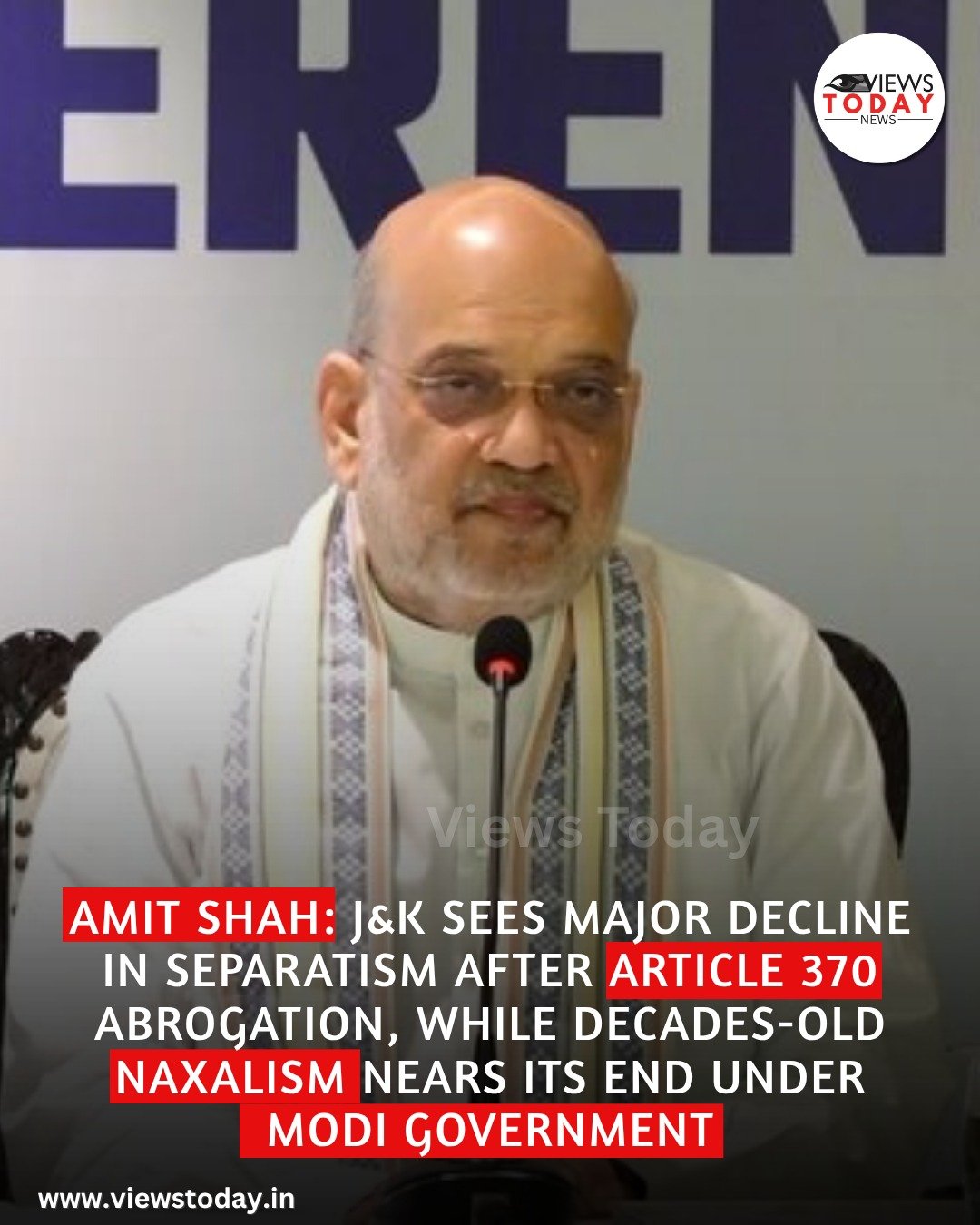
Over the past several years, India has witnessed a significant shift in its internal security landscape. From Jammu & Kashmir to the Northeast and the former Naxal-affected regions, areas once associated with violence, separatism and insurgency are increasingly witnessing a stronger push towards peace, development and integration.
For Jammu & Kashmir, the period since 2019 has been particularly significant. The abrogation of Article 370 marked a major political and administrative change, followed by efforts to strengthen governance, infrastructure, investment and connectivity across the Union Territory. According to government data, terrorist-initiated incidents in J&K declined from 228 in 2018 to 12 in 2025. Stone-pelting incidents, which averaged around 2,654 annually between 2010 and 2014, have also remained near-zero since 2022.
The numbers alone do not tell the complete story, but they point towards a broader change in the security environment. The challenge now is to ensure that this improvement translates into sustained economic opportunities, employment, tourism and greater public confidence.
The Red Corridor Loses Its Grip
Perhaps the most striking transformation has been the decline of Left-Wing Extremism, popularly known as Naxalism.
For decades, Naxal violence remained one of India’s most difficult internal-security challenges. Remote tribal areas were caught between armed groups and security forces, while poor connectivity and limited access to government services often deepened the problem.
That picture has changed dramatically.
According to the Ministry of Home Affairs, the number of LWE-affected districts fell from 126 to zero by March-April 2026. The government has described India as effectively free from Left-Wing Extremism after nearly six decades of violence. LWE-related incidents also fell from 870 in 2014 to 33 in 2026, as of July 29, while fatalities declined sharply.
This transformation has not been the result of security operations alone. The government’s approach has combined security measures with road construction, telecommunications, welfare delivery, development projects and rehabilitation of surrendered cadres.
The idea of a vast “Red Corridor” stretching across large parts of central and eastern India has consequently lost much of the influence it once possessed.
Northeast Moves From Conflict to Confidence
The Northeast presents another important example of how dialogue and development can work alongside security measures.
Since 2019, the Centre has signed a series of peace agreements with insurgent groups and other stakeholders. Government figures state that 10,900 youths have surrendered their weapons and joined the mainstream, while 12 significant peace agreements have been signed since 2019.
Agreements involving Tripura, Bodo groups, Karbi organisations and other stakeholders have helped address longstanding disputes. The reduction in violence has also allowed greater attention to connectivity, infrastructure, investment and economic development.
The lesson is important: lasting peace cannot be achieved through force alone. It requires an environment in which people believe that education, employment, entrepreneurship and participation in democratic institutions offer a better future than violence.
From Security to Development
The larger challenge for the Modi-led government now is to consolidate these gains.
In Jammu & Kashmir, peace must be accompanied by jobs, private investment, tourism and opportunities for young people. In former Naxal-affected areas, improved security must translate into better schools, healthcare, roads, digital connectivity and livelihoods. In the Northeast, peace agreements must continue to be implemented on the ground.
India’s internal-security story has therefore entered a new phase. The focus is gradually moving from containing violence to preventing its return and creating conditions for inclusive development.
The decline of separatist violence in J&K, the weakening of Naxalism and the progress of peace initiatives in the Northeast represent important developments. The real measure of success, however, will be whether these security gains become permanent foundations for prosperity.
For a country as diverse as India, peace is not merely the absence of violence—it is the foundation on which development, opportunity and national integration are built.