


















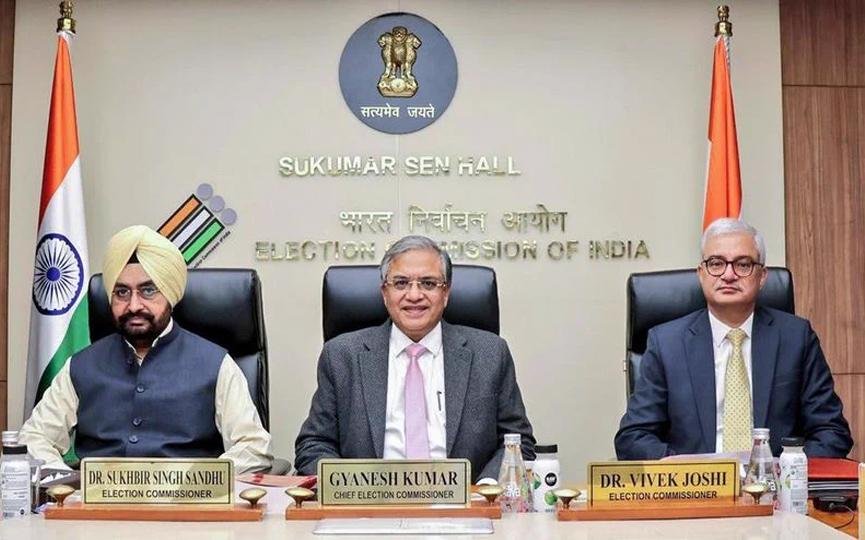
New Delhi: The Election Commission of India (ECI) has said that all decisions taken by the Commission, including the Special Intensive Revision (SIR) of electoral rolls, were the outcome of unanimous decisions by the full Commission.
In a statement issued on September 23, the poll body said it functions as a multi-member constitutional authority under Article 324 of the Constitution, statutory rules and established institutional conventions. It said written notes, observations, technical suggestions and internal checks are routine components of its decision-making process.
ECI Explains Internal Deliberations
The Commission said operational queries and inputs raised by members during the drafting stage are part of standard administrative practice. According to the ECI, such suggestions are intended to strengthen electoral procedures and safeguard voter rights.
It also said that differences in views and observations before a final decision are a normal feature of institutional deliberations. The Commission emphasised that not only the Commissioners but also its officers are authorised to make suggestions for improving the electoral system.
The ECI further stated that official orders, decisions and administrative directions issued by it carry legal sanction and follow statutory procedures under the Chief Election Commissioner and Other Election Commissioners (Appointment, Conditions of Service and Term of Office) Act, 2023.
Commission Rejects Selective Reading of Internal Notes
The poll panel said that highlighting selected internal notes or observations recorded over a 10-month period, while overlooking the larger body of approvals, decisions, instructions and initiatives, presents only one part of its functioning.
According to the Commission, it has introduced around 40 new initiatives in recent months and undertaken several electoral reforms, including electoral-roll revision and SIR across the country. The ECI said these decisions were unanimously taken by the full Commission over the past year.
Major Elections Also Cited
The Commission pointed to the conduct of major elections in Bihar, Kerala, Tamil Nadu, Puducherry, Assam and West Bengal during the period.
The ECI said these exercises involved extensive administrative and operational work, including multiple approvals and instructions from the Commission.
ECI Addresses ECINet Security
The poll body also addressed questions concerning its digital platforms, including ECINet.
The Commission said its digital systems operate under strict data-security protocols intended to prevent unauthorised tampering and manipulation. It added that IT security checks and audit controls are standard safeguards used for national databases.
Statutory Officers Have Defined Powers
The ECI also clarified the role of statutory authorities such as Electoral Registration Officers (EROs) and District Election Officers (DEOs).
According to the Commission, these officials exercise their powers relating to voter registration and deletion within the framework of applicable electoral law.
The ECI’s statement comes amid public discussion over reports concerning internal observations by members of the Commission during the electoral-roll revision process. While acknowledging that written observations and differing views can occur during deliberations, the Commission has maintained that its final decisions, including those concerning SIR, were unanimous.