


















OCT 13:India is entering a new era of inclusive and gender-equitable growth, with women emerging as central to the nation’s vision of Viksit Bharat@2047. The Government’s commitment to building inclusive workplaces and empowering women across all sectors is reshaping the country’s economic and social fabric.
The Female Labour Force Participation Rate (LFPR) has seen a remarkable rise—from 23.3% in 2017–18 to 41.7% in 2023–24, nearly doubling within six years. Similarly, the Worker Population Ratio (WPR) for women has also increased significantly, reflecting expanding opportunities and growing inclusivity in the Indian workforce.
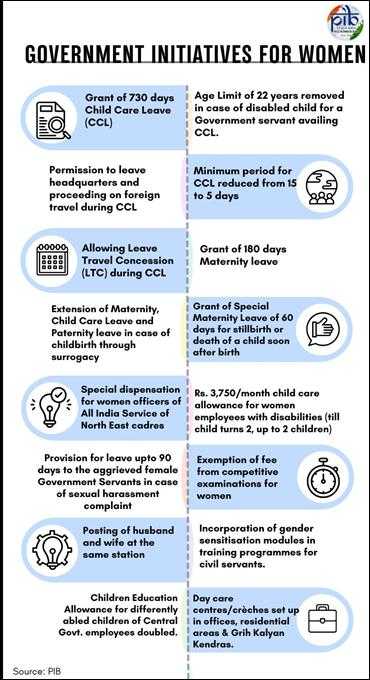
Legal and institutional frameworks have played a pivotal role in this transformation. The Maternity Benefit (Amendment) Act, 2017, offering 26 weeks of paid leave, and the Sexual Harassment of Women at Workplace Act, 2013 (POSH), have strengthened safety and support for women employees. The Code on Social Security, 2020 and the Occupational Safety, Health, and Working Conditions Code, 2020 extend crucial protections and welfare benefits to women across both organized and unorganized sectors.
Complementing these reforms, flagship schemes like Pradhan Mantri Mudra Yojana (PMMY)—where 68% of beneficiaries are women—Stand-Up India, and Mission Shakti have catalyzed entrepreneurship and created a robust ecosystem for women’s empowerment. Initiatives such as SHe-Box and One Stop Centres have further strengthened grievance redressal and safety mechanisms.
India’s progress is also reflected globally—among BRICS nations, India recorded the largest increase in female workforce participation between 2015 and 2024, underscoring its leadership in inclusive development.
The government’s sustained focus on skill development, equal pay, and workplace safety is ensuring that women not only participate but lead in shaping India’s growth narrative. As the nation marches towards 2047, Nari Shakti—women’s collective power—stands as a defining pillar of economic resilience and national progress.
Empowered, skilled, and secure women are not just part of India’s workforce—they are the driving force behind a stronger, more inclusive, and globally competitive Viksit Bharat.