














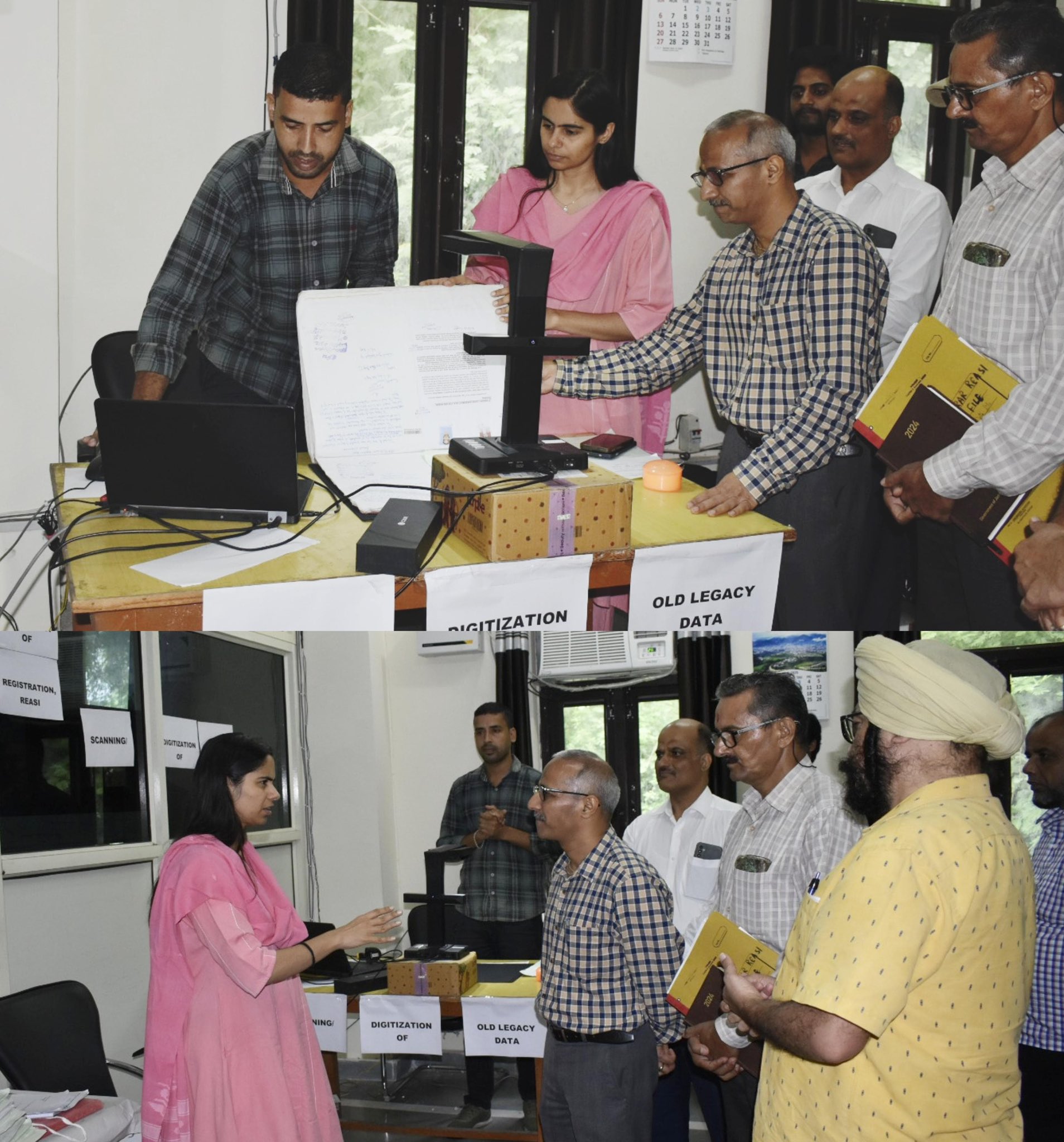
Aug 6: In a milestone for land governance reform in Jammu and Kashmir, Reasi has emerged as the pioneer in launching the digitization of legacy land and property records at the Registrar Office. Spearheaded by Deputy Commissioner Nidhi Malik and Additional Inspector General of Registration (AIGR) Pankaj Gupta, this initiative marks a significant step towards transparency, accessibility, and citizen empowerment.
Legacy records from 1995 to 2020 will be scanned, digitized, and uploaded in a format compatible with the National Generic Document Registration System (NGDRS). This integration is part of the broader Digital India Land Records Modernization Programme (DILRMP), a national reform aimed at overhauling how land-related services are managed and delivered.
More than just a technical upgrade, this reform redefines public service. The digitization initiative is expected to be completed in two to three months, after which citizens will be able to access property documents online—eliminating the need for laborious physical verification and outdated manual processes.
DC Nidhi Malik rightly described this as a “citizen-centric step” that preserves crucial historical data while streamlining future transactions. In a region where land ownership has often been a source of confusion, conflict, or delay, such clarity is not just beneficial—it is transformative.
The launch event was a testament to inter-departmental cooperation. From the support of the Revenue Department and the technical backing of the National Informatics Centre (NIC), to the leadership of the Registration Department under IGR Dr. Bashir Ahmad Bhat, this is a model of governance rooted in collaboration and reform.
As AIGR Jammu Pankaj Gupta stated, “This reform will not only improve the retrieval of land records but will also enhance public trust in the registration system.”
The broader implications are equally important. This initiative paves the way for legal certainty, reduced disputes, faster economic transactions, and a more reliable real estate environment—critical for development, investment, and urban planning.
As Reasi leads by example, it is hoped that other districts will swiftly follow suit. For Jammu and Kashmir, this is more than digitization—it’s democratization of access, accountability, and opportunity.