


















OCT 01: October 2 is celebrated in India as Gandhi Jayanti and globally as the International Day of Non-Violence, a dual recognition honoring Mahatma Gandhi’s enduring legacy. Declared by the United Nations in 2007, the day promotes peace, tolerance, and non-violence across the world. Countries including Belgium, USA, Spain, Serbia, Switzerland, Thailand, Kazakhstan, and the Netherlands host commemorative events reflecting Gandhi’s universal influence.
The philosophy of Satyagraha, coined by Gandhi during his struggle against racial discrimination in South Africa, remains the cornerstone of non-violent resistance. Gandhi’s campaigns, from the Dandi March to the Quit India Movement, demonstrated the power of moral force over weapons, inspiring global leaders such as Martin Luther King Jr. and Nelson Mandela.
At the United Nations, Gandhi’s principles are commemorated through lectures, like the Fifth Ahimsa Lecture, emphasizing education for human flourishing, empathy, and moral imagination. In India, Gandhi Jayanti is observed with tributes at Raj Ghat, cultural programmes, and initiatives reflecting his ideals, such as the Swachh Bharat Mission, Self-Help Groups, SVAMITVA scheme, Khadi and Village Industries promotion, and the Mahatma Gandhi National Rural Employment Guarantee Act.
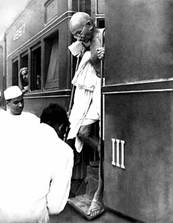
Government initiatives inspired by Gandhian philosophy have achieved significant results: over 12 crore toilets built under Swachh Bharat, 10 crore women mobilized into SHGs, 65 lakh property cards under SVAMITVA, and 1.94 crore people employed through Khadi and village industries. The newly inaugurated Railway Coach at Gandhi Darshan in New Delhi commemorates Gandhi’s journeys across India and his efforts to understand and unite the nation.
Globally and nationally, Gandhi’s philosophy of non-violence, truth, and social justice continues to guide societies toward peace, inclusion, and compassion, emphasizing that moral courage and dialogue remain more powerful than force in shaping a better world.