
















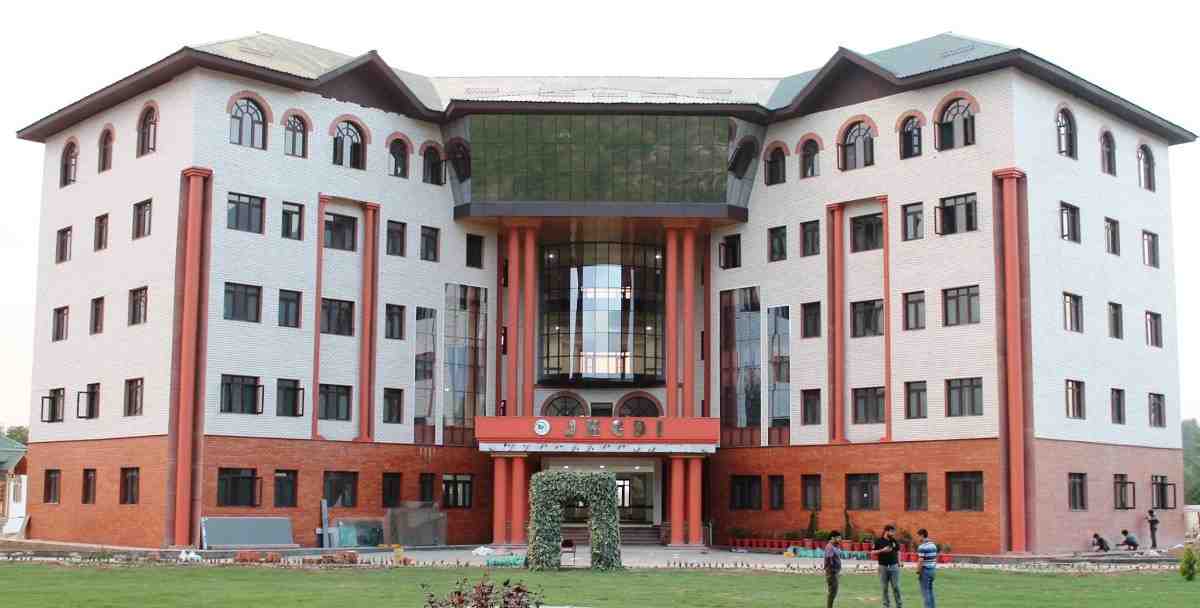
APRIL 05: In a significant push toward fostering entrepreneurship and self-reliance among youth, the Jammu & Kashmir Entrepreneurship Development Institute (JKEDI) successfully concluded the 3rd batch of its Entrepreneurship Skill Development Programme (ESDP) at Government Industrial Training Institute Jammu.
Conducted under the Raising and Accelerating MSME Performance (RAMP) initiative, the programme witnessed the participation of 30 aspiring entrepreneurs who completed the training aimed at equipping them with essential business and enterprise skills.
Building the Foundations of Entrepreneurship
The ESDP was carefully structured to provide a holistic understanding of entrepreneurship. Participants were trained in key areas such as:
- Business opportunity identification
- Preparation of viable business plans
- Market linkages and customer engagement
- Digital marketing strategies
- Financial literacy and funding awareness
- Government schemes supporting MSMEs and startups
Through a blend of interactive sessions, practical exercises, and expert mentorship, the programme ensured that trainees not only gained theoretical knowledge but also developed practical insights necessary for launching and sustaining businesses.
A Step Toward Self-Reliance and Employment Generation
Addressing the valedictory session, Principal Ab. Rashid Sheikh congratulated the participants and highlighted the growing importance of skill-based entrepreneurship in today’s economic landscape.
He emphasized that entrepreneurship is not just about starting a business—it is about creating opportunities, generating employment, and contributing to the broader economic ecosystem. He encouraged participants to utilize their newly acquired skills to build sustainable ventures and become job creators rather than job seekers.
Role of JKEDI in Economic Growth
District Nodal Officer JKEDI Rajesh Kotwal underlined the transformative role of entrepreneurship in driving economic development and reducing unemployment.
He urged participants to take full advantage of JKEDI’s continued support mechanisms, including mentoring, handholding, and access to government-backed schemes. His message was clear: ideas alone are not enough—execution, persistence, and institutional support are key to success.
Learning Beyond the Classroom
One of the defining aspects of the programme was its focus on experiential learning. Participants engaged in discussions, case studies, and real-world problem-solving exercises, enabling them to better understand market dynamics and business challenges.
Such exposure is crucial in preparing first-generation entrepreneurs, especially in regions where access to structured business education may be limited.
Voices of the Participants
The programme concluded with a valedictory session where participants shared their experiences and expressed appreciation for the initiative.
Many highlighted how the training boosted their confidence, refined their business ideas, and provided clarity on navigating the complexities of starting an enterprise.
Strengthening the MSME Ecosystem
Initiatives like ESDP under the RAMP programme are part of a larger vision to strengthen the Micro, Small, and Medium Enterprises (MSME) ecosystem in Jammu & Kashmir.
By nurturing entrepreneurial talent at the grassroots level, such programmes contribute to:
- Local economic development
- Employment generation
- Innovation and diversification
- Reduced dependency on traditional job markets
Conclusion: A Catalyst for Change
The successful completion of the Entrepreneurship Skill Development Programme by JKEDI marks another step toward building a culture of innovation and self-reliance in the region.
As these 30 young individuals step forward with new ideas and ambitions, they carry with them not just skills, but the potential to transform their communities and contribute to the region’s economic growth.