
















May 19, 2026:
The growing focus on digital infrastructure and youth participation in sports reflects an important shift in Jammu and Kashmir’s development priorities. Recent remarks by Cabinet Minister Satish Sharma underline how technology and sports are increasingly being viewed as tools for long-term social and economic transformation in the Union Territory.
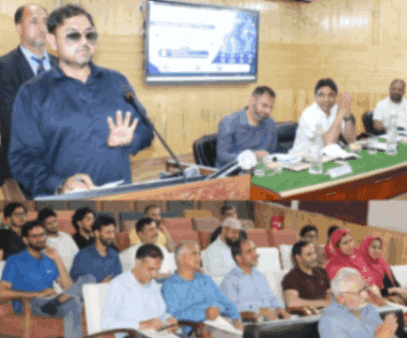
Addressing a programme organised in connection with World Telecommunication and Information Society Day, the minister stressed the importance of expanding digital connectivity, improving communication systems, and creating more opportunities for youth through sports and skill-oriented engagement.
The message carries significance at a time when regions across the country are rapidly adapting to technology-driven governance and digitally connected economies.
For Jammu and Kashmir, a stronger digital infrastructure is not only about internet access or communication networks. It directly affects education, healthcare, employment opportunities, governance, business growth, and access to public services, particularly in remote and geographically challenging areas.
Reliable connectivity today has become essential for students attending online classes, entrepreneurs running businesses, professionals working remotely, and citizens accessing government services. Strengthening digital systems can therefore play a major role in reducing regional inequalities and improving public access to opportunities.
The emphasis on technology also reflects changing economic realities. Modern economies increasingly depend on innovation, digital literacy, cybersecurity, and technology-based entrepreneurship. For young populations, digital access often determines future career opportunities and participation in emerging industries.
At the same time, the minister’s focus on sports points toward another crucial area of youth development.
Sports in Jammu and Kashmir have gradually evolved beyond recreational activity and are now seen as an important avenue for talent development, employment opportunities, fitness, tourism, and positive social engagement.
The Union Territory possesses enormous natural potential for multiple sporting disciplines, including cricket, football, winter sports, water sports, and adventure activities such as mountain biking and trekking. However, infrastructure limitations and a lack of professional exposure have historically restricted the growth of local talent.
Encouraging sports participation can create healthier communities while also helping young people develop confidence, discipline, leadership qualities, and competitive spirit.
Experts often point out that regions with strong sports ecosystems tend to witness better youth engagement and greater social participation. Organised sporting activities also contribute to community interaction and can help reduce social isolation among young populations.
Importantly, the connection between digital infrastructure and sports development is becoming increasingly relevant.
Technology today influences every aspect of modern sports, including training methods, analytics, fitness monitoring, event management, talent scouting, and online coaching platforms. Better connectivity can help local athletes access national-level training resources and exposure previously unavailable in remote regions.
The broader vision presented through the minister’s remarks appears aimed at preparing Jammu and Kashmir for future growth by focusing on both infrastructure and human potential.
However, meaningful change will depend on implementation at the grassroots level. Digital expansion must reach rural and underserved areas, while sports infrastructure requires consistent investment, trained coaches, modern facilities, and long-term institutional support.
Youth-centric policies become effective only when opportunities are accessible across districts and communities rather than remaining concentrated in urban centres.
The emphasis on technology and sports together nevertheless reflects a developmental approach increasingly centred around inclusion, participation, and future readiness.
As Jammu and Kashmir continues to modernise, investments in digital systems and youth engagement may prove crucial in shaping the region’s economic growth, educational progress, and social stability in the years ahead.