


















NOV 30:India’s export sector—comprising textiles, garments, leather, electronics, pharmaceuticals, auto components, gems & jewellery, and IT-enabled services—continues to play a central role in generating employment and foreign exchange. To support this rapidly evolving ecosystem, the Government has consolidated 29 existing labour laws into four comprehensive Labour Codes, creating a unified framework aimed at boosting industrial efficiency while ensuring strong worker protections.
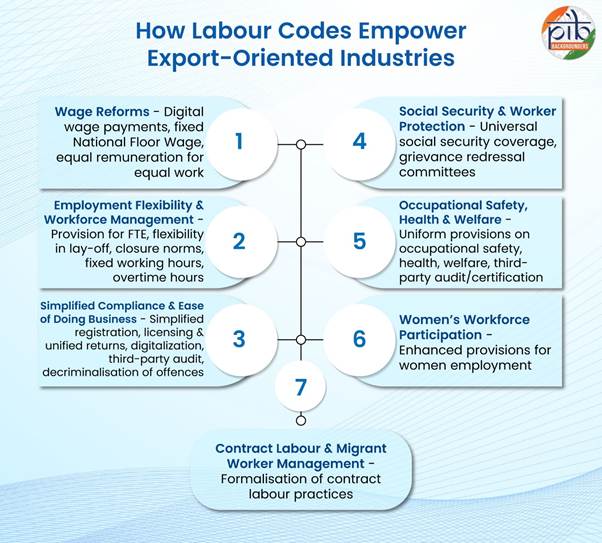
A major reform under the new Labour Codes is the uniform definition of wages, which eliminates inconsistencies across earlier laws and brings transparency to payroll management. Export-oriented industries operating in multiple states particularly benefit from predictable wage structures, enabling smoother compliance related to social security, bonus, and gratuity. The introduction of a National Floor Wage, combined with digital wage payments, enhances fairness, promotes transparency, and aligns Indian wage practices with global compliance standards.
Greater flexibility in workforce management—through Fixed Term Employment, revised rules for layoffs and closures, and expanded provisions for working hours—equips export industries to respond quickly to fluctuations in global demand. Employers gain operational agility, while workers employed under fixed-term contracts receive the same statutory benefits as permanent staff.
Compliance processes have been significantly eased through single registrations, unified returns, digital record-keeping, and a more facilitative inspector-cum-facilitator system. Third-party audits, digital inspections, and compounding of minor offences reduce unnecessary litigation and support a more business-friendly environment, especially for units operating multiple facilities or contractors.
Worker welfare is strengthened through universal social security coverage, mandatory grievance redressal committees, and comprehensive provisions relating to occupational safety and health. Uniform standards for working conditions, canteens, medical facilities, sanitation, and welfare officers help improve workplace quality across diverse sectors. Women’s employment is supported with provisions allowing night-shift work under strict safety guidelines, enabling their greater participation in export-driven industries.
For migrant, contract, gig, and unorganised workers, the Codes ensure nationwide portability of benefits, formalisation of employment through appointment letters, and access to retraining support via a dedicated reskilling fund. Enhanced leave provisions, timely wage payments, and strict protections against gender discrimination put workers’ dignity, safety, and financial security at the forefront.
Overall, the Labour Codes collectively strengthen India’s export competitiveness by balancing ease of doing business with ease of living for workers, supporting sustainable economic and inclusive development.