















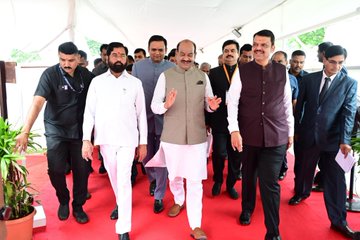
JUNE 23: Lok Sabha Speaker Shri Om Birla today emphasized the importance of strengthening financial oversight through the effective use of technology, training, and a citizen-focused governance approach. Speaking at the inauguration of the National Conference of Chairpersons of Estimates Committees of Parliament and State/UT Legislatures at Vidhan Bhawan, Mumbai, Shri Birla called for a renewed commitment to efficiency, transparency, and financial discipline in public expenditure.
The two-day conference marks the 75th anniversary of the Estimates Committee of the Indian Parliament—an occasion commemorated with the release of a special souvenir. Addressing the gathering, Shri Birla stated that financial oversight mechanisms must evolve to reflect the changing needs of citizens while remaining inclusive and transparent.
Shri Birla highlighted that the Estimates Committee has played a pivotal role in reforming budgetary practices and enhancing the accountability of public spending. Over the past 75 years, the Committee has consistently ensured that financial allocations align with the national development goals, contributing significantly to democratic governance.
He underscored that Parliamentary Committees are platforms for constructive debate, discussion, and accountability—not for opposition or unfounded allegations. Through its work, the Estimates Committee has led significant reviews and provided transformative recommendations on various sectors such as the restructuring of government secretariats, railway operations, performance of public sector enterprises, and revival of major river systems like the Ganga.
Notably, Shri Birla shared that nearly 90 to 95% of the Committee’s recommendations have been accepted by governments, reflecting the high regard for its insights and analyses. He reiterated the need to modernize oversight tools, promote digital governance, and build capacity among legislators to enhance their understanding of complex financial frameworks.
He concluded by calling on all participants to uphold the Committee’s legacy and further its mission by leveraging data, digital tools, and policy innovations. The Speaker reaffirmed that public accountability and people-centric governance must remain at the core of all financial and legislative initiatives.