



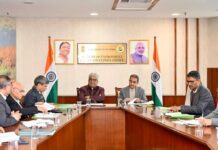











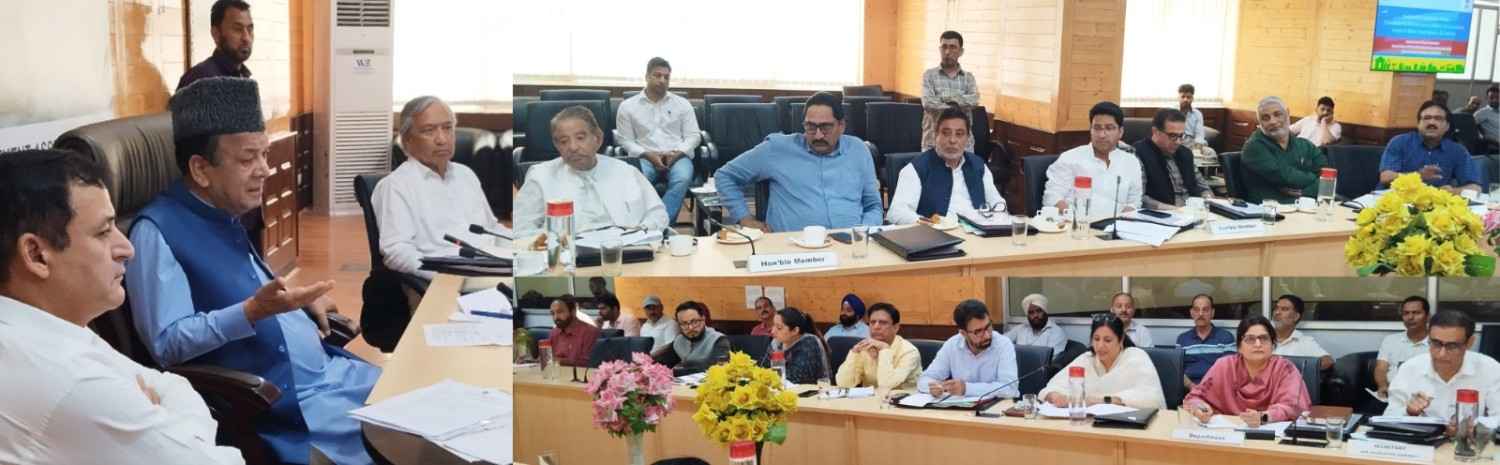
JULY 30: The Department of Rural Development today presented the draft Rural Sanitation and Fecal Sludge Management Policy before the House Committee on Environment at the Assembly Complex in Srinagar. The session, aimed at addressing sanitation challenges in rural areas, was chaired by Hon’ble Speaker Abdul Rahim Rather and co-chaired by Minister Javed Ahmad Dar.
The meeting focused on laying the foundation for sustainable and environmentally sound sanitation practices across Jammu and Kashmir’s rural regions. The proposed policy emphasizes structured sanitation operations, safe collection and treatment of fecal sludge, and strict environmental safeguards to protect water and soil health.
The committee welcomed the consultative and inclusive nature of the draft, which was prepared in coordination with various stakeholders, including technical experts, local governance bodies, and environmental groups. During the discussion, committee members recommended piloting decentralized treatment plants in selected villages to test feasibility before wider implementation.
Emphasis was also placed on strengthening village-level institutions, particularly Panchayati Raj bodies, to manage and oversee sanitation systems at the grassroots. Members further called for intensive community awareness campaigns to encourage behavioral change around waste management and hygiene.
Suggestions were made to involve local youth and NGOs in capacity-building programs and monitoring, ensuring that the policy’s implementation is community-driven. The committee also stressed the importance of aligning the policy with national environmental and public health standards, ensuring long-term impact and regulatory compliance.
Minister Javed Ahmad Dar reaffirmed the government’s commitment to improving rural hygiene and public health infrastructure, noting that the policy reflects a step toward more resilient and self-sustained sanitation systems. He also highlighted the necessity of community participation to make these efforts truly effective on the ground.
The draft policy is expected to undergo further refinement before formal adoption. Once approved, it will serve as a comprehensive roadmap for rural sanitation reform in Jammu and Kashmir.