


















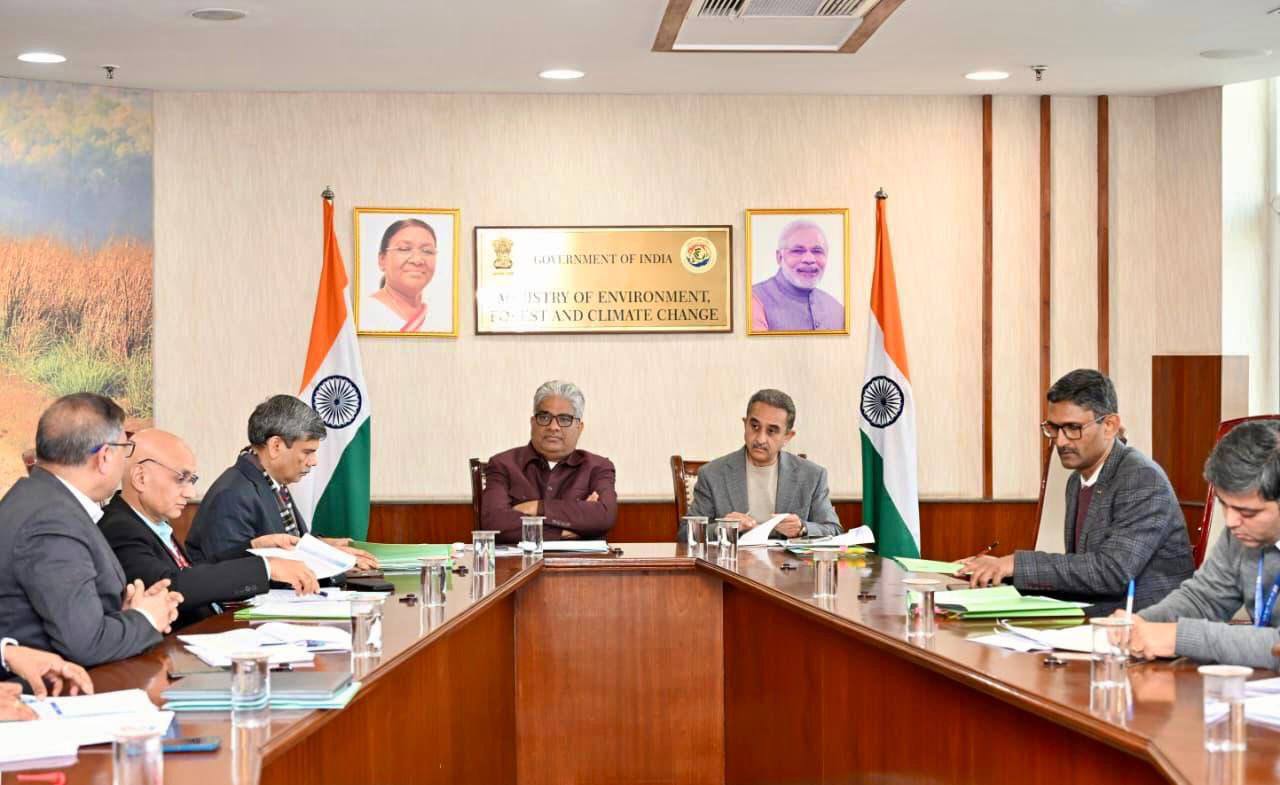
JAN : 6 A key review meeting of the Central Pollution Control Board (CPCB) was chaired in New Delhi to assess the functioning and effectiveness of the Extended Producer Responsibility (EPR) Portal and the EPR Electronic Trading Platform. The meeting was held in the presence of the Minister of State Shri K. V. Singh, with a focus on strengthening compliance mechanisms and ensuring effective implementation of waste management guidelines across sectors.
The deliberations centred on improving the management of waste generated from products such as plastics, electronic waste and batteries—areas that pose significant environmental challenges if not handled in a structured and accountable manner. The EPR framework places the responsibility of post-consumer waste management on producers, importers and brand owners, making it a cornerstone of India’s evolving environmental governance.
During the meeting, officials reviewed the performance of the EPR Portal, which serves as a digital backbone for registration, tracking, verification and compliance of obligated entities. Emphasis was laid on enhancing transparency, streamlining processes and ensuring real-time monitoring to prevent misuse or procedural gaps. The EPR Electronic Trading Platform was also discussed as a critical tool to facilitate the buying and selling of EPR certificates in a regulated and credible manner.
The chair underscored the need for strict adherence to notified guidelines and timely fulfilment of EPR obligations by all stakeholders. Effective enforcement, data integrity and inter-agency coordination were highlighted as essential to build confidence in the system and ensure that environmental objectives are met without placing undue burden on compliant industries.
The meeting also examined ways to strengthen verification mechanisms so that recycling claims are authentic and environmentally sound. This is particularly important in the context of plastics, e-waste and batteries, where improper disposal can lead to soil, water and air pollution, posing serious risks to public health and ecosystems.
Officials noted that digital platforms such as the EPR Portal play a transformative role in modern environmental regulation by enabling evidence-based decision-making and reducing manual intervention. Improving user experience, grievance redressal mechanisms and capacity-building for stakeholders were identified as priorities to ensure wider adoption and effective compliance.
The review reaffirmed that under the leadership of Prime Minister Shri Narendra Modi, the Government of India is committed to making the circular economy a defining feature of national policy. By encouraging recycling, reuse and responsible production, the EPR framework supports sustainable consumption patterns while reducing pressure on natural resources.
A robust circular economy not only addresses environmental concerns but also opens new avenues for green jobs, innovation and sustainable industrial growth. Strengthening EPR implementation aligns with India’s broader climate commitments and its vision of balancing economic development with environmental stewardship.
The CPCB review meeting concluded with a shared resolve to further refine systems, enhance enforcement and work collaboratively with industry and other stakeholders. The outcome is expected to contribute significantly towards cleaner cities, reduced waste burden and a more sustainable future, reinforcing India’s commitment to protecting the environment through progressive and technology-driven policy frameworks


 was chaired in New Delhi to assess the functioning)