













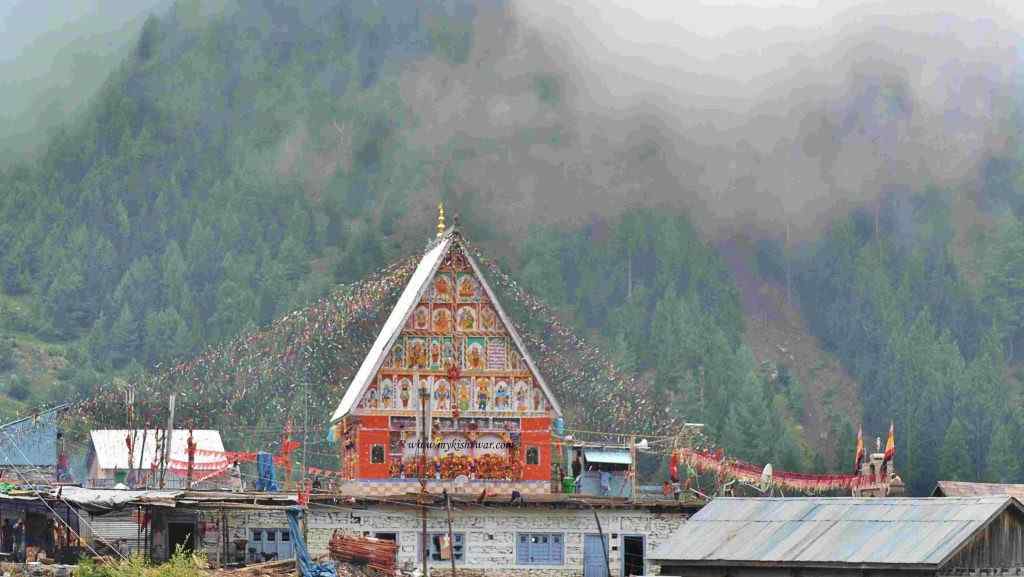
4 Aug: In a heartwarming and historic development, devotees visiting the sacred Shri Machail Mata Temple in Padder, Kishtwar, can now offer fresh flowers at the Bhawan—for the first time ever.
This seemingly simple gesture is a monumental milestone in enhancing the pilgrim experience at this remote and revered shrine, and reflects the combined effort of District Administration Kishtwar, led by Deputy Commissioner Pankaj Kumar Sharma and ADC Pawan Kumar Kotwal, working in coordination with the Department of Floriculture, Parks & Gardens, under the supervision of Assistant Floriculture Officer Arjun Singh Parihar.
Fresh flowers have always been an integral part of Hindu rituals, symbolizing purity and devotion. Yet, Machail Temple’s location—deep in the mountainous Padder valley with difficult terrain and limited access—has long made this offering impractical. Overcoming these challenges required ingenuity, community involvement, and commitment.
Eight flower growers from the region and one dedicated local youth from Padder took on the task, despite the logistical hurdles posed by the long foot journey and delicate shelf life of fresh flowers. Their success is not just a service to faith, but a quiet revolution in rural enterprise.
The initiative was also bolstered by the local business community and flower cultivators, who have long supported pilgrims with prasad and other arrangements. Their partnership adds both cultural and economic depth to this floral milestone.
With road connectivity set to improve in the coming years, this initiative is expected to blossom further. The growing demand for fresh flowers during the annual Machail Mata Yatra, which draws lakhs of devotees, can open new avenues of livelihood through floriculture, especially in marigold and seasonal blooms.
This simple step of introducing fresh flowers to the Machail Bhawan is more than symbolic. It is a reminder that faith, development, and opportunity can go hand-in-hand, even in the most remote corners of our country.